
IBM Patents a System That Surrounds Your Real Searches With AI-Generated Decoys
Every time you search for something online, you're leaving a trail that advertisers and data brokers can follow. IBM has patented a way to muddy that trail by having an AI generate convincing fake searches that travel alongside your real ones.
How IBM's fake-search privacy shield actually works
Imagine you spend an afternoon searching for symptoms of a medical condition. By the end, any company watching your search history has a pretty good idea of what you're dealing with. That kind of profiling is exactly what this IBM patent is designed to prevent.
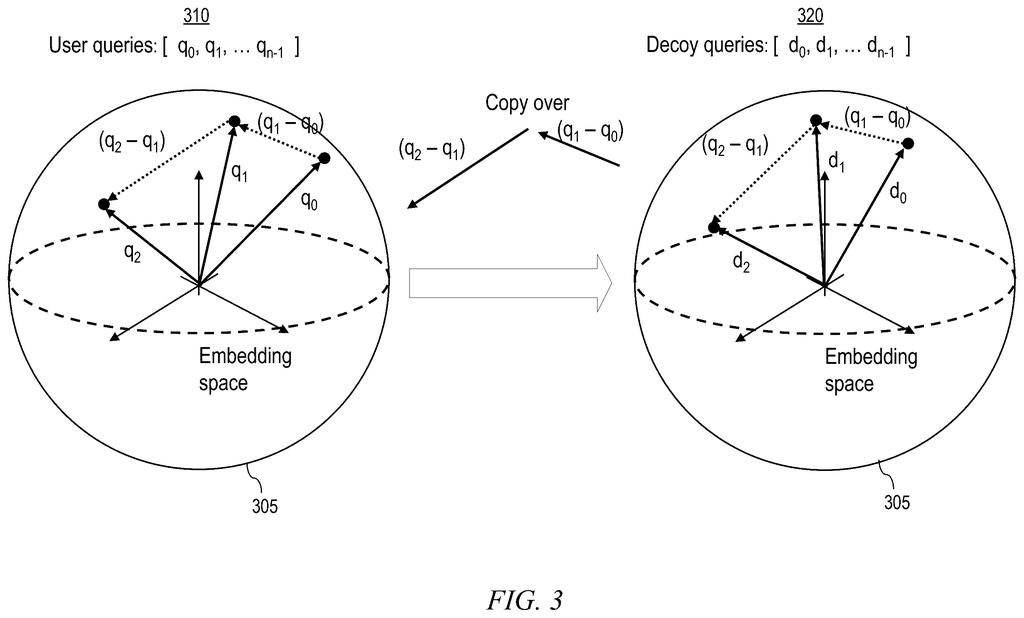
The system generates a stream of fake searches, called decoys, that run alongside your real ones. The clever part is how those decoys are built: instead of random noise, the AI pays attention to how your real searches are shifting over time and mimics that same pattern of drift in a completely unrelated topic. So if your real searches move from "back pain" toward "surgery options," the decoy searches might shift in a parallel way through, say, gardening topics.
The result is that anyone watching your query history sees two plausible-looking stories at once. They can't easily tell which one is you.
… generating, for the pairing, a difference vector between a vector embedding of the second user search query and a vector embedding of the first user search query; and applying the difference vector to a vector embedding of a previous decoy search query to generate a subsequent decoy search query in a decoy search query sequence …
Translation: It tracks how your search topics shift and uses that pattern to build matching fake searches.
How the AI mirrors your search pattern in a fake topic
The patent describes a system that tracks the direction and distance between consecutive real search queries using a technique called vector embeddings. A vector embedding is a way of turning a word or phrase into a list of numbers that captures its meaning, so that concepts close in meaning end up close together in a mathematical space.
When you go from searching "lower back pain" to "herniated disc symptoms," the system calculates the gap between those two points in that meaning-space. That gap is called a difference vector. Think of it as an arrow pointing from one idea to another.
The system then takes that same arrow and applies it to a completely different starting point in an unrelated topic area, the previous decoy query. The result is a new decoy query that has moved the same conceptual distance in the same conceptual direction as your real query, just in a different subject entirely.
This process repeats for each new real query you make, so the decoy sequence stays internally coherent and convincing. An observer watching both streams would see two evolving, believable lines of inquiry, with no reliable way to determine which is genuine.
Mechanisms are provided for obfuscating query sequences using a large language model (LLM) semantic embedding space.
Translation: An artificial intelligence system hides your real search habits by mixing them with fake ones.
What this means for search privacy and data brokers
Search history is one of the most valuable data assets advertisers and data brokers collect. A sequence of searches can reveal health concerns, financial stress, relationship problems, or political views. Most existing privacy tools either block queries entirely (breaking functionality) or add random noise (which is statistically easy to detect and strip out).
IBM's approach is different because the decoys aren't random. They're structurally identical in shape to your real searches, just anchored to a different topic. That makes them much harder to dismiss statistically. For everyday users, this kind of protection could eventually show up in browsers, VPNs, or enterprise privacy tools, anywhere that search-query logging is a concern.
This is a genuinely thoughtful privacy patent. The insight that decoys should mirror the *pattern* of real queries, not just add random junk, is the kind of detail that separates a real engineering idea from a defensive filing. Whether IBM ships this as a product or licenses it is another question, but the core concept is worth paying attention to.
There are more where this came from
We read every patent application Big Tech publishes and send you the ones worth knowing. Plain English, free, every week.
The drawings
5 drawing sheets from US 2026/0228435 A1 · click any drawing to enlarge


Want this weekly breakdown for a company we don't cover? Patentlyze Pro →
Be the first to weigh in