
Google Patent Uses Recycled AI Prompts to Teach Frozen Models New Tasks
Training a large AI model from scratch is expensive and slow. Google has patented a way to skip most of that work by reusing what a model already learned from one task to jumpstart a completely different one.
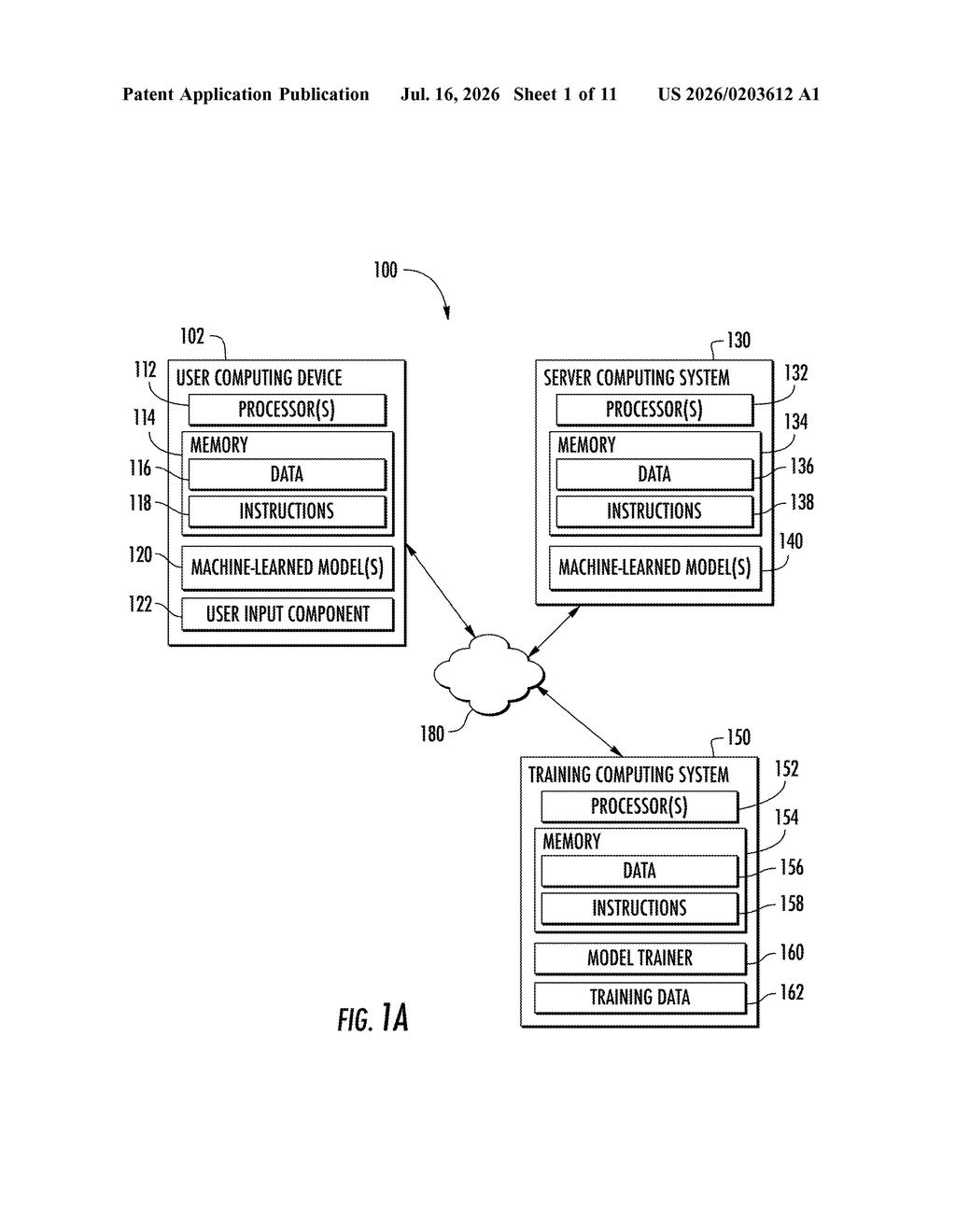
What Google's prompt-recycling system actually does
Imagine you spent months teaching an assistant to write legal contracts, and then someone asked you to use that same assistant for customer service emails. Normally you'd have to start its training all over again. Google's patent describes a shortcut: take the instructions the assistant already learned (called "prompts") and use them as a starting point for the new job.
The key detail is that the underlying AI model never changes at all. Instead of rewriting the model's internal knowledge, Google's system only tweaks a thin layer of instructions that sit on top of it. Those instructions are initialized by borrowing from prompts the model already knows, then adjusted until they work well for the new task.
The system can pull from several previously learned prompts at once, picking the ones most similar to what the new task needs. Think of it like a chef adapting an existing recipe rather than inventing a dish from nothing.
How source prompts combine to build a new target prompt
The patent describes a technique called soft prompt transfer. A "prompt" here isn't a typed question, it's a set of numerical parameters that tell a pre-trained AI model how to behave on a specific task. "Soft" means these prompts live in the model's mathematical space rather than being plain text.
The process works in four steps:
- Collect source prompts, gather prompts that were previously trained for different tasks (say, summarization, translation, or question answering).
- Run them against the new task, feed those old prompts, along with examples of the new task, through the frozen (unchanged) AI model and measure how well each one performs.
- Pick and blend, use the results to initialize a new "target prompt," potentially weighting source prompts by how similar their original tasks are to the new one (similarity is measured by comparing task embeddings, which are numeric fingerprints of what a task is about).
- Fine-tune the prompt only, adjust the target prompt's parameters until performance improves, while leaving the model's billions of underlying weights completely untouched.
The model itself is described as "frozen," meaning Google isn't proposing to retrain it. Only the thin layer of prompt parameters changes.
What this means for the cost of training AI models
Retraining a large AI model for every new task costs real money in compute time and energy. Prompt tuning already cuts that cost dramatically compared to full fine-tuning, but it still requires finding a good starting point. If you initialize a prompt randomly, it takes longer to converge. Google's system addresses that by giving the optimization a warm start, using knowledge the model already has. That could make it practical to adapt a single shared model to dozens of specialized tasks at a much lower cost.
For you as a user, the downstream effect would be AI products that can be updated or retrained for new use cases faster and with less overhead, which matters every time a company needs to roll out a new AI feature without rebuilding its models from scratch.
This is infrastructure-level research, not a flashy product feature, but it's the kind of work that makes everything else cheaper. Prompt transfer is a real open problem in production AI systems, and Google's approach of reusing learned prompts as initialization is a practical answer. It's worth paying attention to if you follow the economics of AI deployment.
There are more where this came from
We read every patent application Big Tech publishes and send you the ones worth knowing. Plain English, free, every week.
Want this weekly breakdown for a company we don't cover? Patentlyze Pro →
Be the first to weigh in