
Disney Patents Hidden Tracking Dots That Keep Projected Images Locked to Moving Robot Characters
Imagine a theme park robot whose face changes expression not through mechanical parts, but through light projected perfectly onto its skin, even as it twists and turns. Disney's new patent is the infrastructure that makes that possible.
What Disney's animatronic projection tracking actually does
Picture an animatronic figure at a Disney park that moves its head, arms, and body during a show. Now imagine projecting a detailed, animated image onto its surface, like a face that shifts emotions or clothes with patterns that ripple as it moves. The big problem: if the figure shifts even slightly, the projected image slips out of place, creating a jarring visual mess.
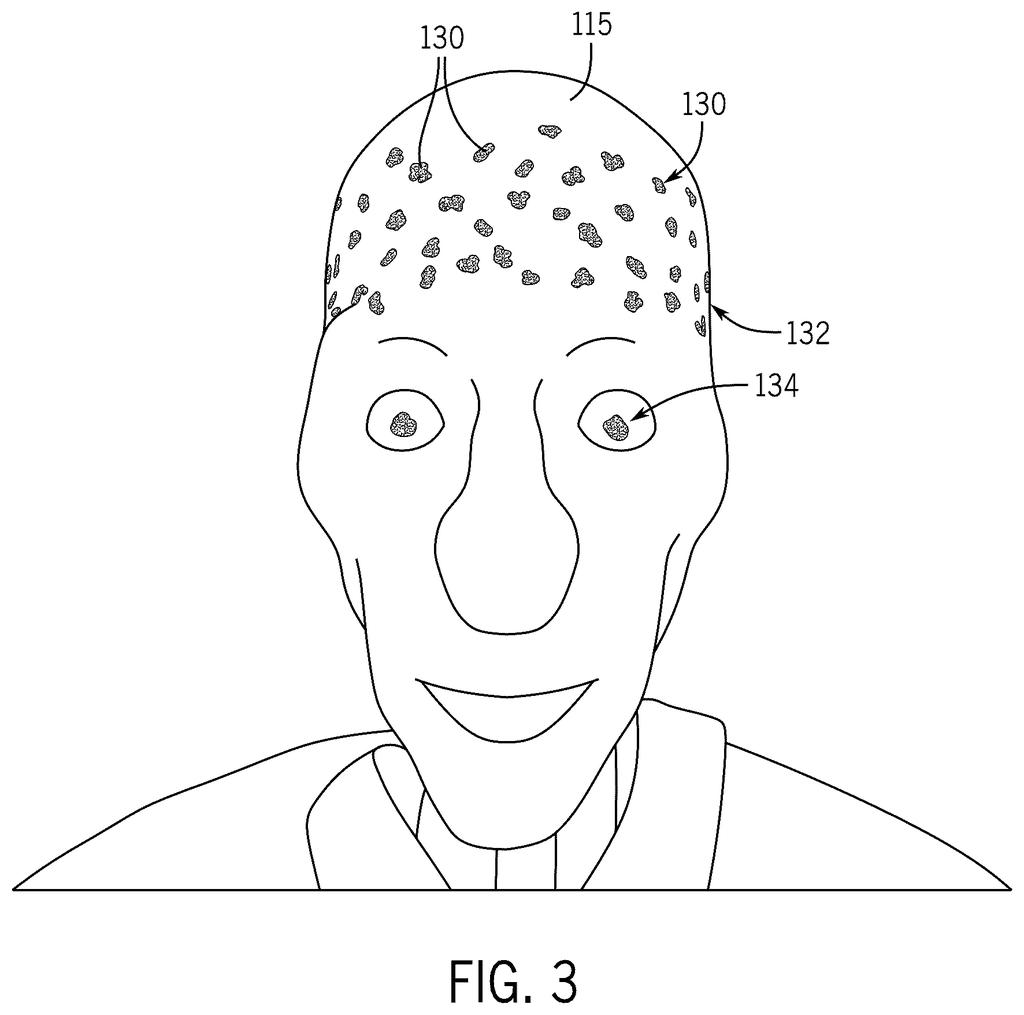
Disney's solution is to bake tiny tracking markers directly into the figure's rubber or silicone skin during manufacturing. These markers are invisible to the naked eye because they react to UV or infrared light, not regular light. A camera watches the figure, detects where those hidden markers are at any given moment, and feeds that information to a controller, which then adjusts the projected image in real time so it always lands exactly where it should.
The result is a projection that stays perfectly aligned with the figure no matter how it moves, like a second skin made of light that never slips.
determine positions of the plurality of markers based on the light signature; and modify the projected content based on the positions of the plurality of markers.
Translation: The system tracks where the robot parts are so it can adjust the projected images in real time.
How the markers, camera, and projector work together
The system has four main components working in a loop:
- Embedded markers: Tiny reference points built directly into the animatronic's silicone or foam skin during the molding process. They can be made from UV- or infrared-reactive pigment, small LEDs, or fiber optic strands, all invisible under normal stage lighting.
- Invisible light source: A UV or IR lamp illuminates the figure. Only the markers respond, producing what the patent calls a "light signature" that regular ambient light won't interfere with.
- Camera: Captures that light signature continuously, tracking exactly where each marker is in space as the figure moves.
- Controller: Takes the marker position data and warps the projected image in real time (a process called dynamic projection mapping, meaning the projector's output is reshaped on the fly to match a moving surface) so the visuals stay registered to the figure's surface.
The manufacturing side is also covered: markers are placed inside a mold before the skin material is poured in, so they cure in place and become a permanent, seamless part of the skin. This means the tracking reference points can never shift relative to the surface they're meant to track, which is the main reason prior approaches using external markers or camera-only tracking tend to drift.
A light source may generate an invisible light, and the light signature may be produced or resulting from the invisible light interacting with the markers.
Translation: Special hidden lights interact with the embedded markers to track the robot without people noticing.
What this means for theme park animatronic experiences
For theme park visitors, this is the difference between a convincing illusion and one that visibly glitches every time the robot moves its head. Projection mapping onto static objects is already mature technology, but doing it on a figure that's actively performing has always been the hard part. By anchoring the tracking system inside the skin itself, Disney sidesteps the calibration drift that plagues external marker setups.
More broadly, this patent points toward a design philosophy where animatronic figures can look far more expressive and detailed without adding mechanical complexity. Instead of engineering dozens of tiny motors to move facial features, you could project them. That could mean lower maintenance costs, faster updates to a character's appearance, and visual effects that would be physically impossible with traditional puppetry.
This is a genuinely clever piece of engineering for a very specific problem. The insight of baking tracking markers into the skin at the manufacturing stage, rather than attaching them afterward, is the kind of detail that separates a system that works in a demo from one that holds up through thousands of show cycles. Disney's parks run attractions for years, so the durability and permanence of this approach matters far more than it might in a research setting.
There are more where this came from
We read every patent application Big Tech publishes and send you the ones worth knowing. Plain English, free, every week.
The drawings
10 drawing sheets from US 2026/0225258 A1 · click any drawing to enlarge


Want this weekly breakdown for a company we don't cover? Patentlyze Pro →
Be the first to weigh in