
Microsoft Patents an AI System That Groups Similar Photos Into Stacks
Your camera roll is a mess of near-identical shots, and Microsoft wants to fix that without asking you to do any sorting yourself. A new patent describes an AI system that automatically groups similar photos into stacks so your gallery stays clean.
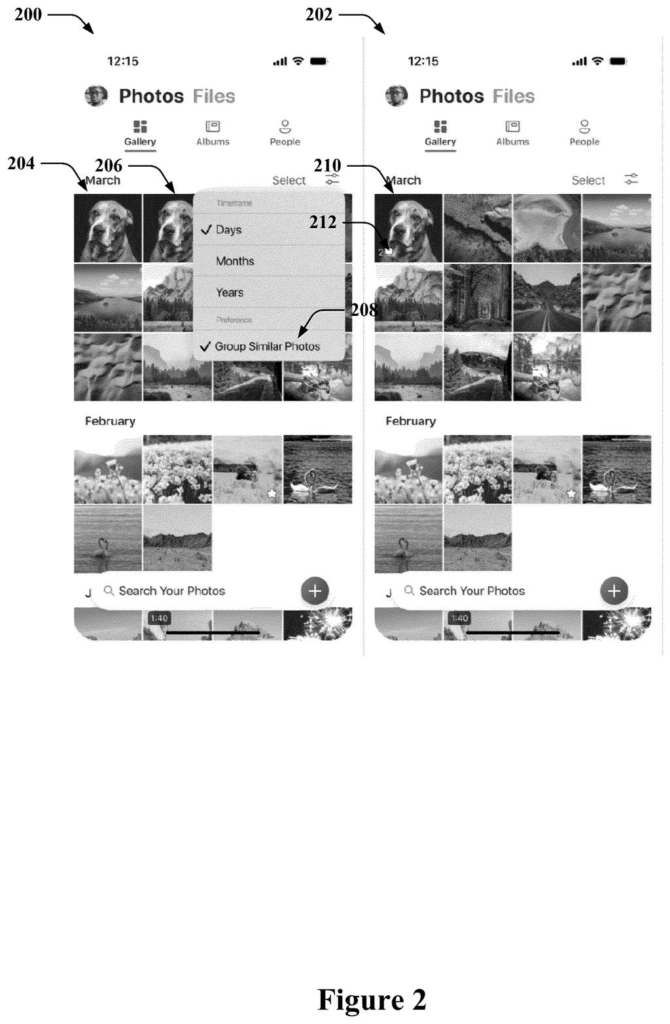
What Microsoft's photo-stacking gallery feature actually does
Imagine you took 15 photos at a birthday dinner: a few blurry attempts, a couple of decent group shots, and one great one. Right now, your gallery shows all 15 in a row. Microsoft's patent describes a system that would automatically spot those similar photos and collapse them into a single stack, showing only the best one on top.
The system first sorts your photos into time windows, so only photos taken around the same time get compared with each other. It then uses an AI model to analyze the visual content of each photo and groups the ones that look alike. The result is a gallery that shows you one tidy thumbnail per moment, with the rest tucked underneath.
You'd see a cleaner, less overwhelming grid of your memories. Tapping a stack would presumably reveal everything inside it, but the default view stays uncluttered.
… grouping a portion of the multiple images within the given slice into the stack of images based on comparing respective embeddings for the portion of images, wherein grouping the portion of the multiple images includes associating, in a database table, an identifier of each of the portion of images with a stack identifier; …
Translation: The system sorts photos into the same stack by comparing their digital feature data and linking their IDs in a database.
How the AI sorts and clusters photos into a single stack
The patent describes a three-step pipeline for automatic photo stacking inside an image gallery application.
- Time slicing: The system first divides your photos into buckets based on their timestamps. Photos taken hours or days apart would never get grouped together, keeping context intact.
- Embedding generation: Within each time window, the system runs each photo through an AI model to produce an embedding (a compact numerical fingerprint that captures what the photo looks like). Photos of the same subject or scene produce similar fingerprints; unrelated photos produce very different ones.
- Grouping and display: Photos whose fingerprints are close enough get assigned a shared stack identifier in a database. When you open the gallery, the app queries that database to figure out which photos belong together, then shows only one representative image per stack.
One notable detail: the database query happens when the image app moves to the foreground (meaning it becomes the active window). That timing choice likely keeps the grouping logic up to date without draining resources in the background.
A single top image representing the stack of images can be displayed in the gallery view.
Translation: Only the best photo from the group is shown on screen to keep your photo library neat.
What this means for Microsoft Photos and OneDrive users
Photo clutter is a genuine problem on any platform, and most solutions so far have required manual albums or face-recognition features that only cover one dimension of similarity. Microsoft's approach would handle any kind of visual repetition, not just faces, which could make it useful for burst shots, screenshots, or scanned documents.
This fits neatly into Microsoft's push to add AI features to Microsoft Photos and OneDrive on Windows. If it ships, you'd likely see it as a toggle in the gallery view rather than a forced change. Whether it works well in practice depends heavily on how good those visual fingerprints are at telling apart genuinely different photos from near-duplicates.
This is a useful but unglamorous feature that most people would appreciate the moment they tried it. The AI-embedding approach is more flexible than older duplicate-detection methods because it captures overall scene similarity, not just pixel-level matches. Don't expect it to be a headliner announcement, but it could make Windows Photos worth using again.
There are more where this came from
We read every patent application Big Tech publishes and send you the ones worth knowing. Plain English, free, every week.
The drawings
4 drawing sheets from US 2026/0228021 A1 · click any drawing to enlarge


Want this weekly breakdown for a company we don't cover? Patentlyze Pro →
Be the first to weigh in