
Salesforce Patents a Web Page That Reshapes Itself Based on What You Click
Salesforce is patenting a system where every web page you load watches what you click and immediately rewrites itself to better match what you actually want, no page refresh required.
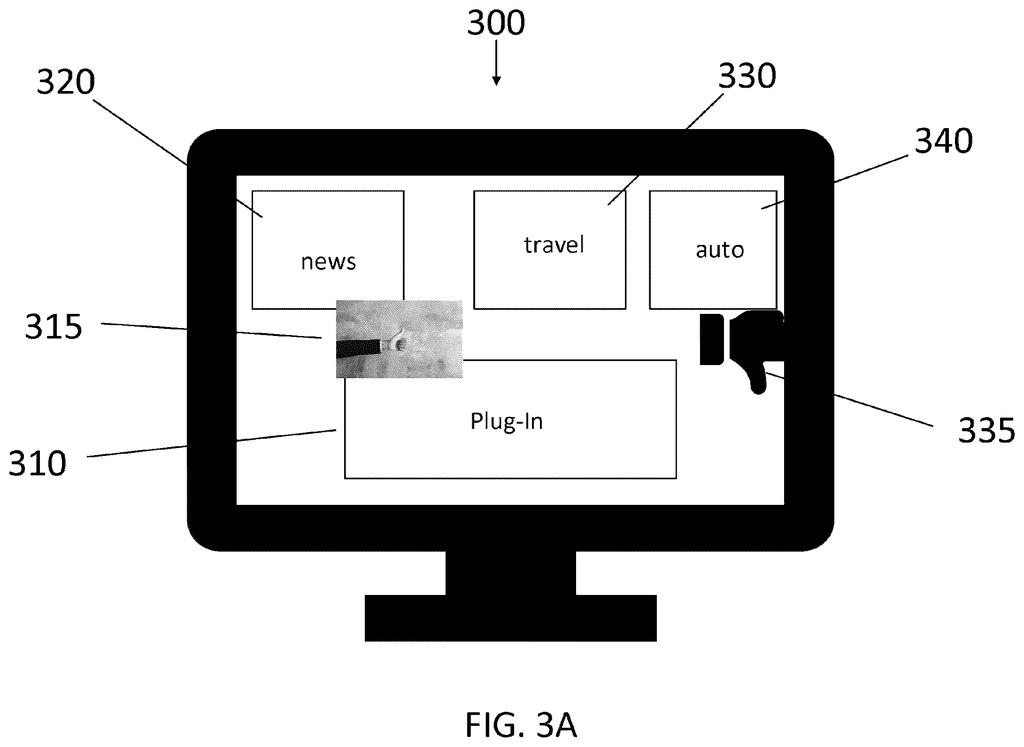
How Salesforce's self-adjusting web pages actually work
Imagine logging into your company's Salesforce dashboard every morning and finding the same generic layout, even though you always ignore half the panels and hunt for the same three reports. This patent describes a system that tries to fix that.
When you load a page, an AI makes its best guess about what content you want based on your history and preferences, then builds the page around that guess. But here's the key part: each section of the page gets a small interactive button or control next to it. When you click those controls to adjust or dismiss something, the system doesn't just remember your preference for next time. It immediately updates its model of what you like and rewrites the relevant sections of the current page on the spot.
The result is a page that learns from you in real time, not just across sessions. Every interaction is feedback the AI folds back into the next version of what it shows you.
… inserting a plug-in mechanism in response to the web page to incorporate a plurality of selectable graphical user interface (GUI) elements associated with respective components of the plurality of components of the web page …
Translation: Adding interactive controls to the page so you can click around and change what you see.
How the plug-in layer reads clicks and rewrites components
The patent describes a three-stage loop built on top of Salesforce's existing web application platform.
Stage one: initial load. When a user requests a page, the system pulls an "initial assessment" of that user's preferences, likely built from past behavior, role, or explicit settings, and uses it to decide which components (widgets, panels, data views) to include.
Stage two: plug-in overlay. After the page loads, a plug-in mechanism injects a set of selectable GUI elements (think small controls, thumbs-up/down buttons, or adjustment toggles) anchored to each page component. These controls let users signal whether a component is useful or not, or tweak its content.
Stage three: iterative refinement. Each time a user interacts with one of those controls, the system does two things simultaneously:
- Updates its preference model by combining the new signal with the old assessment
- Rewrites the affected component on the live page right away, without a full reload
The loop is iterative, meaning this update cycle can repeat many times within a single session, each click making the preference model a little more accurate.
… dynamically determining an updated assessment of the user's preference based at least in part on the user selection and the initial assessment of the user's preferences …
Translation: Figuring out what you want next by combining your latest click with your past behavior.
What this means for Salesforce CRM and enterprise dashboards
For Salesforce specifically, this kind of per-session personalization is a logical extension of its existing AI features (Einstein, Agentforce) into the page-rendering layer itself. Enterprise CRM dashboards are notoriously one-size-fits-all, and sales reps, support agents, and managers all want very different information front and center. A system that adapts within the session, not just across logins, could meaningfully reduce the time people spend reconfiguring their views.
For end users, the practical upside is fewer clicks to get to what you actually need. The tradeoff worth watching is how much of your click behavior Salesforce stores and how that preference data is governed, especially in enterprise contracts with strict data-handling requirements.
This is a solid, practical patent for a company whose products are used by people who spend entire workdays staring at dashboards. The real-time refinement angle is more interesting than a basic 'we remember your layout' approach, because it treats every session as a fresh opportunity to calibrate rather than just replaying past preferences. Whether it shows up as a visible feature or just makes Salesforce pages feel slightly less cluttered over time is the more interesting question.
There are more where this came from
We read every patent application Big Tech publishes and send you the ones worth knowing. Plain English, free, every week.
The drawings
7 drawing sheets from US 2026/0227887 A1 · click any drawing to enlarge


Want this weekly breakdown for a company we don't cover? Patentlyze Pro →
Be the first to weigh in