
Microsoft Patents Shadow Testing Method to Improve AI Decision Thresholds
Every AI system that approves or denies something has a threshold buried inside it. Microsoft's new patent describes a way to swap that threshold out safely, without anyone noticing the switch.
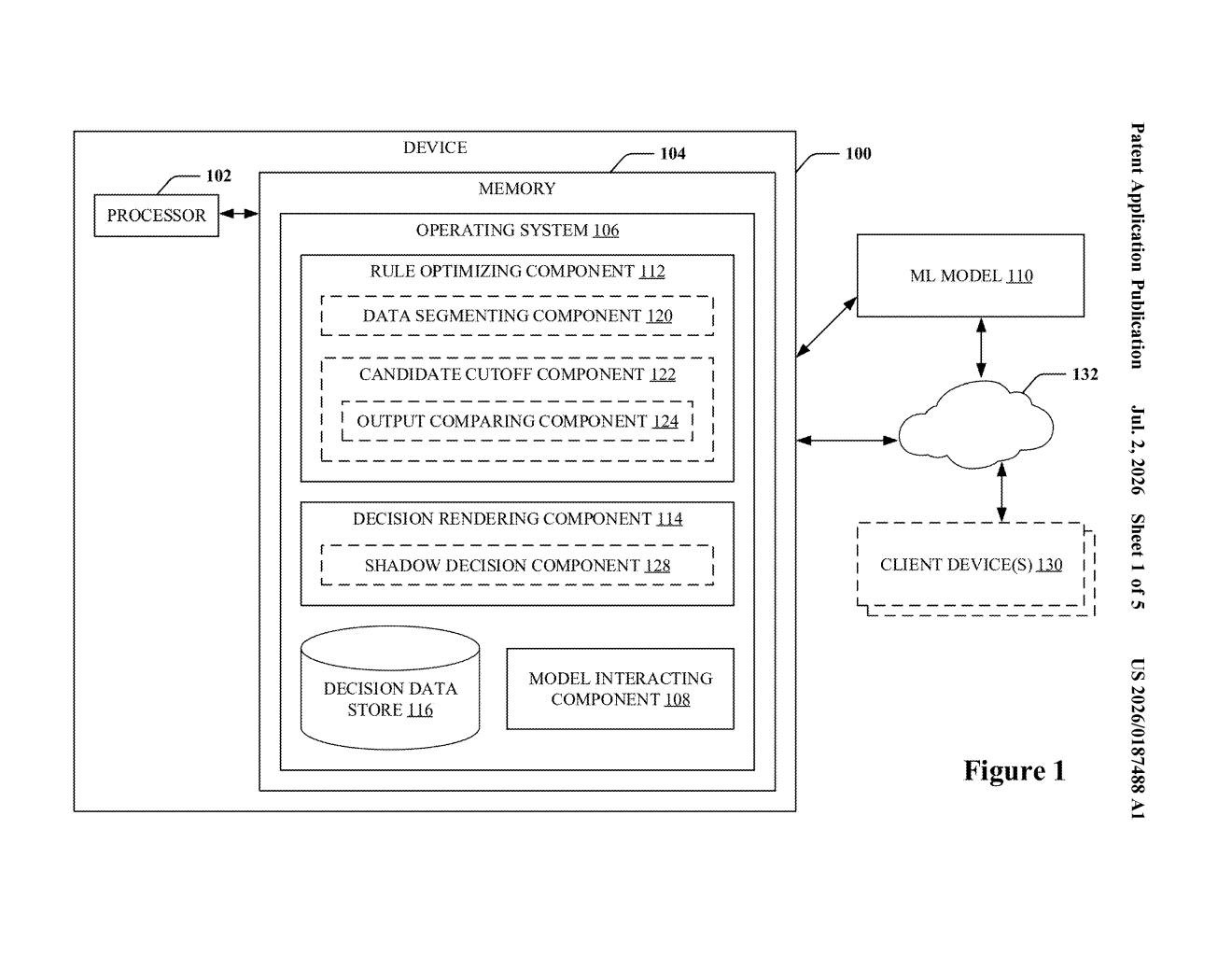
How Microsoft's AI threshold-testing system works
Imagine a bank's AI flagging fraudulent transactions. Somewhere inside that system is a number: a confidence score above which the AI says 'deny' and below which it says 'approve.' That number is almost never perfect, and changing it is risky because a bad change could mean thousands of wrong decisions before anyone catches it.
Microsoft's patent describes a system that tests a new threshold in the background at the same time as the current one is running. Every real decision still uses the old rule, but the system records what would have happened under the new rule. Those shadow decisions get compared against a pre-set limit for how many mistakes are acceptable.
If the new threshold would have stayed within that error budget across enough real cases, the system automatically promotes it to replace the old one. No manual review, no scheduled downtime, no guesswork about whether the change is safe.
How the shadow-decision and budget logic interact
The patent describes a device and software process for updating the cutoff value (the score an ML model must exceed before triggering a 'yes' or 'no' decision) in a controlled, data-driven way.
The key mechanism works in three stages:
- Segmentation: Historical data is divided into groups based on shared parameters, for example customer type, region, or product line. Each segment gets its own candidate cutoff tailored to its history.
- Shadow running: For every incoming data entry, the system renders two decisions simultaneously. The current decision uses the live, already-approved cutoff. The shadow decision uses the candidate cutoff being evaluated. Only the current decision has any real effect; the shadow result is just logged.
- Budget comparison: The logged shadow decisions are checked against a pre-configured error budget (essentially a ceiling on how many wrong calls are tolerable). If the shadow decisions fit within the budget, the candidate cutoff is promoted to become the new live rule for that segment.
The promotion step is per-segment, meaning one customer group could get a new threshold while another stays on the old one. This makes the system more granular than a single global parameter swap.
What this means for high-stakes AI deployments
For any company running ML models that make high-stakes binary decisions, including credit approvals, content moderation, fraud detection, or medical triage tools, changing a decision threshold is one of the most consequential and least visible operations in the system. Getting it wrong doesn't produce a visible crash; it just silently produces more bad decisions.
This patent describes a way to automate that process with a built-in safety check. It's not flashy AI capability work, but it's the kind of operational infrastructure that determines whether a deployed model stays calibrated over time as real-world data shifts. For Microsoft's enterprise customers running AI workloads on Azure or through Copilot-adjacent services, this kind of guardrail is exactly what procurement and compliance teams ask about.
This is unglamorous plumbing work, but it's the right kind. The hardest part of running AI in production isn't building the model; it's keeping the model's behavior safe as the world changes. Microsoft is building the tooling to automate that upkeep, and that has real value for enterprise customers who can't afford to babysit a threshold every quarter.
There are more where this came from
We read every patent application Big Tech publishes and send you the ones worth knowing. Plain English, free, every week.
Want this weekly breakdown for a company we don't cover? Patentlyze Pro →