
Qualcomm Patents a System That Keeps Your Phone's Frame Rate From Stuttering
Frame rate drops and stutters are one of the most common complaints about mobile gaming and video apps. Qualcomm's new patent describes a chip-level system that watches your frame rate in real time and automatically adjusts processor speeds to keep things smooth.
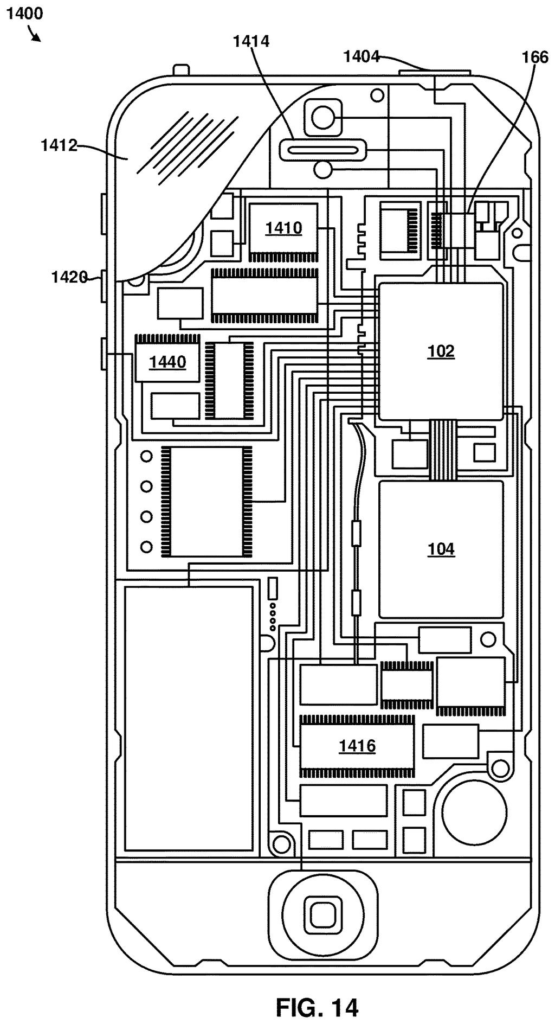
What Qualcomm's frame rate stabilization actually does
Imagine you're playing a game on your phone and the action suddenly slows to a choppy crawl, then snaps back to normal. That kind of stuttering usually happens because the phone's processor is running too slow or too fast for what the app needs at that moment.
Qualcomm's patent describes a system that constantly compares the frame rate your app is targeting (say, 60 frames per second) against the frame rate it's actually delivering right now. Based on that gap, it calculates exactly how much to speed up or slow down the chips inside your device.
Critically, it doesn't just boost one chip. It divides the workload across your phone's different processors (think the main CPU cores and the graphics processor) in proportion to how hard each one is already working. The goal is a steady, consistent picture without burning through your battery by running everything at full blast all the time.
applying a target FPS value and a current FPS value to a Proportional-Integral-Derivative (PID) controller to generate a frequency adjustment value; and adjusting a processing frequency based on the frequency adjustment value.
Translation: It feeds the desired and actual frame rates into a math controller to figure out how to tweak processor speeds.
How the PID controller tunes chip speed per processor
At the center of this system is a PID controller (Proportional-Integral-Derivative, a classic feedback control algorithm borrowed from industrial engineering). A PID controller looks at three things: how far off you are right now, how long you've been off, and how fast the error is changing. Together, those three signals produce a single correction value that tells the chip how much to adjust its clock speed.
The patent describes the process in two stages:
- First, compare the target FPS (the frame rate the app wants) against the current FPS (what's actually being rendered), then feed that difference into the PID controller to produce a frequency adjustment value.
- Second, distribute that adjustment across whichever processing units are running (CPU cores, GPU, etc.) in proportion to each unit's current load ratio, meaning busier chips get a bigger share of the speed change.
The system also sets upper and lower frequency limits for each processor, so it can throttle back when performance overshoots the target, not just boost when it undershoots. That two-way control is what makes it a stabilization scheme rather than a simple performance boost.
The computing device may distribute the frequency adjustment value based on load ratio in each processing unit to set the scaling max/min frequencies in each processing unit.
Translation: The system spreads out the speed changes across different processor parts depending on how busy each one is.
What this means for mobile gaming and battery life
Frame rate instability is a real pain point on Android devices, where many apps run at variable speeds depending on scene complexity. A closed-loop system like this could make mid-range Snapdragon phones feel far more consistent than they do today, especially in games that already declare a target frame rate to the operating system.
There's also a battery angle worth paying attention to. By preventing the chip from overshooting the target frame rate, the device avoids burning extra power on frames the screen can't even display. For you as a user, that could mean longer gaming sessions without the phone getting hot or draining faster than expected.
This is a solid, practical engineering patent rather than a moonshot idea. PID controllers are well-understood tools, and applying one specifically to FPS stabilization across multiple processor types is a sensible approach to a real problem. It's not flashy, but if it ships in Snapdragon silicon it could meaningfully close the smoothness gap between Android and Apple's tightly integrated hardware.
There are more where this came from
We read every patent application Big Tech publishes and send you the ones worth knowing. Plain English, free, every week.
The drawings
15 drawing sheets from US 2026/0227942 A1 · click any drawing to enlarge


Want this weekly breakdown for a company we don't cover? Patentlyze Pro →
Be the first to weigh in