
Patent: Camera That Reads Light Flickers Catches Factory Defects in Real Time
Most factory cameras take pictures the same way your phone does, snapping full frames many times per second. Sony is patenting a different approach: a sensor that only reacts when something actually changes in its view, which could make catching tiny product defects much faster and cheaper.
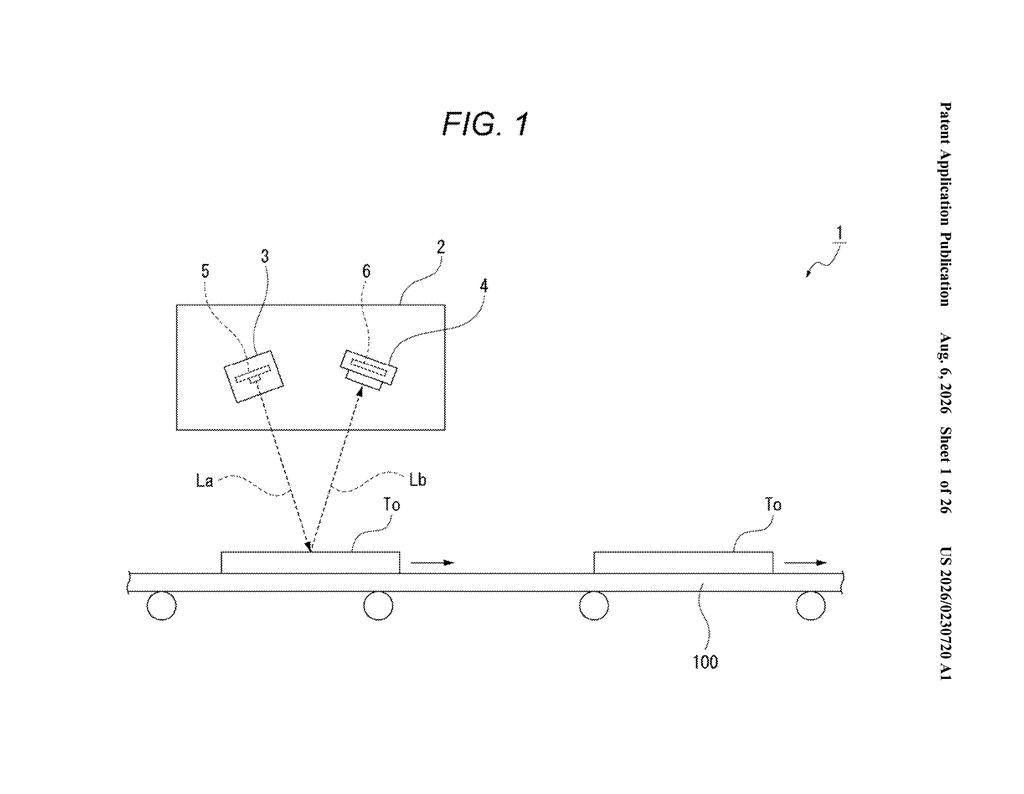
How Sony's light-change camera spots manufacturing flaws
Imagine a quality inspector on a factory line whose job is to watch thousands of products roll by and spot anything wrong. Today, most automated inspection systems work like a video camera, capturing full images dozens of times per second and then analyzing each one. That's a lot of data to process, and fast-moving lines can still slip defects through.
Sony's patent describes a different kind of camera called an event-based vision sensor. Instead of recording everything all the time, it only reports when the brightness at a specific point in the image actually changes. Think of it like a motion-sensitive light in your hallway: it ignores everything static and only responds when something moves.
The idea is that a defect on a product surface, such as a scratch, dent, or discoloration, creates a distinct pattern of brightness changes as it passes under a light. The system watches for those patterns and flags the product as defective. Because it only processes pixels that change, it can potentially react much faster and use far less computing power than a standard camera setup.
an event-based vision sensor that captures an image of an inspection object and detects changes in luminance for each pixel as an event …
Translation: A special camera tracks brightness shifts at the pixel level instead of recording regular video frames.
How the sensor turns pixel-level light shifts into defect alerts
The core of the patent is an event-based vision sensor, a type of image sensor that works very differently from a conventional camera. Rather than capturing full image frames at a fixed rate, each pixel in the sensor independently fires an output signal the moment it detects a meaningful change in light intensity. The output is called an event, and the stream of events is called event data.
A control unit (essentially a processor or analysis system) receives that event data and uses it to decide whether a defect is present on the object being inspected. The patent does not prescribe a single detection algorithm, leaving room for a range of approaches from simple threshold rules to machine-learning classifiers.
This architecture has a few practical advantages over frame-based inspection cameras:
- Latency is very low because there is no need to wait for a full frame to be captured and read out.
- Data volume is reduced because pixels that see no change send no data.
- High-speed or high-contrast scenes, common on lit conveyor belts, are handled more naturally because each pixel responds independently at its own speed.
The patent is broad in scope, covering the sensor-plus-controller pairing as a system, the information-processing device on its own, the inspection method, and the software program that implements it.
… a control unit that performs determination of defect presence in the inspection object on the basis of event data that is output from the event-based vision sensor according to the detected event …
Translation: A computer processor analyzes that pixel data instantly to figure out if the product has any flaws.
What this means for high-speed production line inspection
Factory inspection is a real bottleneck in manufacturing. Conventional machine-vision cameras are fast, but they still generate enormous amounts of redundant image data that takes time and computing power to analyze. Event-based sensors sidestep that by producing data only when something worth examining actually happens, which could allow inspection systems to keep pace with faster production lines without requiring heavier processing hardware.
Sony Semiconductor Solutions already makes image sensors used across industrial, automotive, and consumer markets, so this patent fits a clear line of business. If event-based inspection makes it into production systems, it would likely show up first in precision electronics or semiconductor manufacturing, where defect tolerances are extremely tight and line speeds are high. For the average consumer, the downstream effect would be fewer defective products making it off the factory floor.
This is a focused, sensible patent from a company that actually makes image sensors for a living. Event-based vision is a genuinely different approach to machine vision, not a marketing spin on existing technology, and Sony applying it to industrial inspection is a logical fit. The patent itself is quite broad and foundational, which means it may face scrutiny during examination, but the underlying idea is technically credible and commercially relevant.
There are more where this came from
We read every patent application Big Tech publishes and send you the ones worth knowing. Plain English, free, every week.
The drawings
26 drawing sheets from US 2026/0230720 A1 · click any drawing to enlarge


Want this weekly breakdown for a company we don't cover? Patentlyze Pro →
Be the first to weigh in