
Finger Cuff Patent Maps Artery Pressure for Accurate BP Readings
Google is patenting a finger cuff that presses an array of tiny pressure sensors against your skin to detect your pulse and calculate your blood pressure, no upper-arm cuff required.
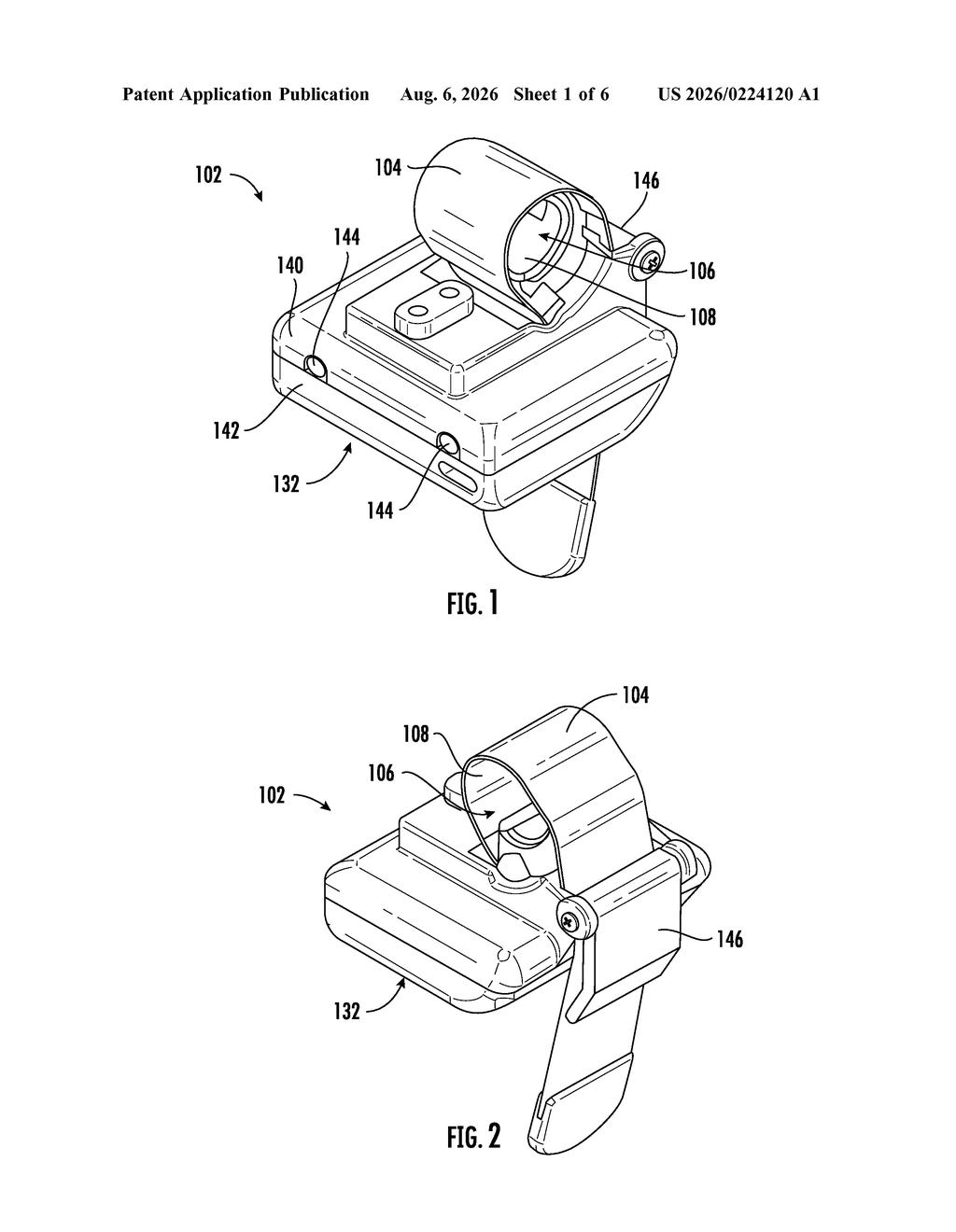
What Google's finger cuff blood pressure device actually does
Imagine wrapping something around your finger that can tell you your blood pressure just as accurately as the bulky arm cuff at your doctor's office. That's the idea behind this Google patent.
The device is a finger cuff with a small inflatable bladder inside, like a miniature version of a traditional blood pressure cuff. As it inflates, it presses a grid of barometric pressure sensors (the same kind that detect altitude changes in your phone) against your finger. Those sensors detect the tiny pulses your artery makes with each heartbeat. There are also optical sensors nearby, similar to the heart-rate sensor on a smartwatch, adding another way to read what's happening in your blood vessels.
A built-in computer chip receives all that data from multiple sensor points at once and uses it to estimate your blood pressure. The key difference from a regular cuff: instead of one pressure reading, you get a whole map of pressure across your finger, which can make the measurement more precise.
… an array of barometric pressure sensors arranged on the inner surface of the cavity of the finger cuff, the array of barometric pressure sensors configured to map a pressure surface near an artery in the finger to provide a plurality of data channels for measuring the blood pressure …
Translation: A grid of pressure sensors inside the cuff maps the forces around a finger artery to gather multiple streams of blood pressure data.
How the pressure array and optical sensors work together
The patent describes a finger cuff assembly built around an array of barometric pressure sensors arranged on the inner surface of a finger-sized cavity. An array means multiple sensors laid out in a grid pattern, rather than a single point of contact. This lets the device map how pressure is distributed across the skin above your finger's artery, producing what the patent calls "a plurality of data channels" (multiple independent streams of data, all coming in at the same time).
An inflatable bladder sits alongside the sensor array. When it inflates, it pushes the sensor grid firmly against the finger, mimicking what a traditional blood pressure cuff does to your upper arm. As pressure ramps up, the sensors start picking up arterial pulses, the rhythmic bumps your artery makes with each heartbeat.
Optical sensors are also mounted on the inner surface, next to the pressure array. These work similarly to the photoplethysmography (PPG) sensors in smartwatches, which shine light into the skin and measure how much bounces back as blood volume changes.
A control module (a small processing chip) receives all the incoming data streams and uses an algorithm to estimate blood pressure. Using multiple pressure channels instead of one is the central claim: it gives the system more information to work with, potentially reducing the error that comes from imperfect sensor placement.
… an inflatable bladder arranged with the array of barometric pressure sensors, wherein inflating the bladder increases a pressure on the array of barometric pressure sensors against the finger.
Translation: A built-in air pocket inflates to press the sensor grid firmly against the patient finger.
What this means for wearable blood pressure monitoring
Traditional blood pressure cuffs need to wrap around your upper arm, making them impractical for continuous or on-the-go monitoring. Wrist-based devices exist but are notoriously sensitive to positioning. A finger-based system that uses a full sensor array rather than a single measurement point could be more forgiving of minor fit variations, which is a real obstacle that has kept earlier finger-cuff designs from catching on.
For Google, this fits a broader push into health monitoring hardware. Pixel Watch and Fitbit devices already track heart rate and ECG, and blood pressure is widely considered the next major health metric wearables haven't cracked yet. A patent like this signals Google is exploring hardware-level solutions, not just software algorithms, to get there.
This is a serious engineering approach to a genuinely hard problem. Mapping arterial pressure across a grid of sensors is a more principled solution than the single-point finger cuffs that have struggled with accuracy for years. Whether it works well enough in practice to compete with clinical-grade devices is a different question, but the design logic here is sound and worth tracking.
There are more where this came from
We read every patent application Big Tech publishes and send you the ones worth knowing. Plain English, free, every week.
The drawings
6 drawing sheets from US 2026/0224120 A1 · click any drawing to enlarge


Want this weekly breakdown for a company we don't cover? Patentlyze Pro →
Be the first to weigh in