
Google Patents Earbuds That Detect Your Gestures by Listening to Your Ear Canal
What if your earbuds could tell when you nod, clench your jaw, or raise your hand — without any camera, touchpad, or voice command? Google's latest patent describes exactly that, using nothing but tiny sound pulses bouncing around inside your ear.
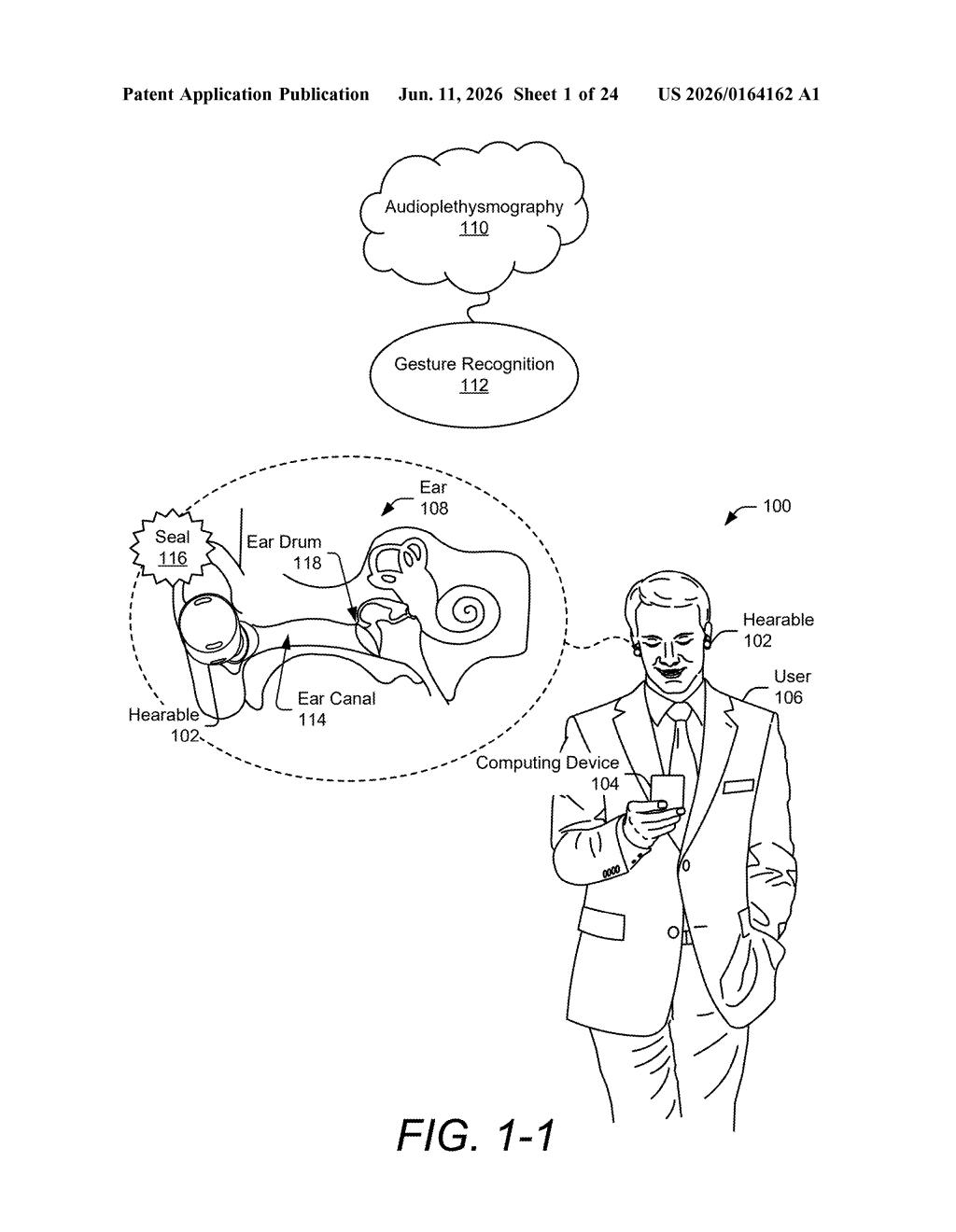
What Google's gesture-sensing earbud actually does
Imagine you're in a meeting and your phone starts ringing. You can't shout 'ignore call' out loud, and your hands are full. Google's patent describes earbuds that could let you handle it with a quick jaw clench or a subtle head tilt — no touching, no talking required.
The idea is that your earbuds constantly send a quiet, inaudible sound signal into your ear canal. When you move a muscle in your face or jaw — or even shift your hand near your head — the shape of that sound signal changes in a detectable way. The earbuds pick up that change and interpret it as a specific gesture.
That gesture then controls something: skip a track, answer a call, adjust volume, or trigger a function on a connected phone or computer. The patent specifically calls out people with disabilities or physical limitations as a key use case, since this approach doesn't require any precise tapping or touching.
How sound waves inside your ear canal detect movement
The patent describes a system where an earbud — what the filing calls a hearable — continuously transmits an acoustic signal into the ear canal. The ear canal acts like a small acoustic tube: the signal bounces around inside and returns to a microphone in the device. This return signal is called the acoustic receive signal.
When you make a gesture — anything from clenching your teeth to raising your arm — it subtly deforms the tissues around your ear canal. That deformation changes how the sound signal behaves inside the canal: its amplitude, frequency content, or timing shift in measurable ways. The system analyzes those waveform characteristic changes (shifts in the shape of the sound wave) to figure out which gesture you made.
The patent distinguishes between two gesture types:
- Muscle-based gestures — movements driven by muscles near the jaw, face, or neck (like biting down or raising an eyebrow)
- Object-based gestures — physical interactions with nearby objects or body parts (like a hand movement near the ear)
Once a gesture is recognized, the system uses it to control either the earbud itself or any paired device, such as a smartphone or laptop. The entire interaction is voice-free and hands-free — no wake word, no screen tap required.
What this means for hands-free and accessible device control
For most people, this would mean a genuinely discreet way to control audio devices in social settings where talking to your earbuds would be awkward — a crowded subway, a quiet office, or a formal event. The controls would be invisible to people around you.
The accessibility angle is the more compelling one. For users with limited hand mobility, speech impairments, or conditions that make touchscreen interaction difficult, a gesture system that only requires small muscle movements near the face could open up device control in ways that touchscreens and voice assistants simply don't. Google's framing here — building a socially acceptable, voice-free interface — suggests this is being positioned as a broad accessibility feature rather than a novelty.
This is a genuinely interesting patent because the core sensor is already in your ear — no extra hardware needed beyond what modern earbuds already carry. The challenge Google will need to solve is false-positive rejection: your ear canal changes shape constantly just from chewing, talking, or walking, so teaching the system what counts as an intentional gesture versus background noise is the hard part. If they crack that, this is a meaningful accessibility and UX feature.
There are more where this came from
We read every patent application Big Tech publishes and send you the ones worth knowing. Plain English, free, every week.
Want this weekly breakdown for a company we don't cover? Patentlyze Pro →