
Microsoft Patents a PC Sleep System That Learns Your Daily Schedule
Your laptop knows you stepped away, but it doesn't know if you'll be back in two minutes or two hours. Microsoft's latest patent is an attempt to fix that by teaching devices to learn your personal schedule.
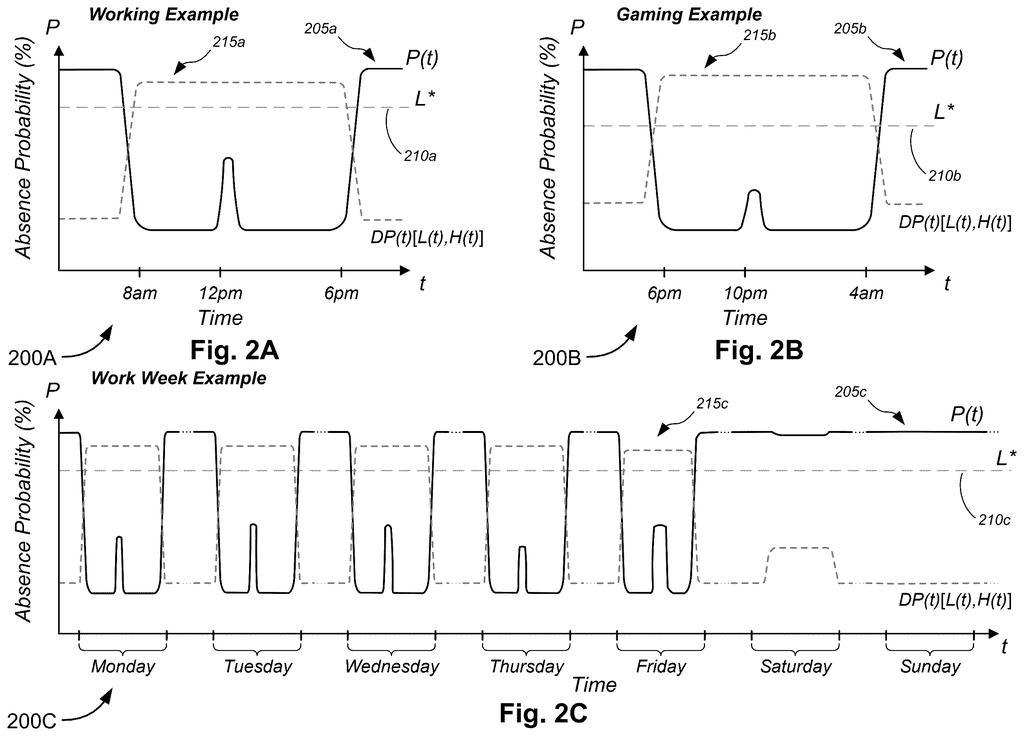
How Microsoft's adaptive sleep timer figures out your habits
Imagine your laptop's sleep timer has two settings: one that's too aggressive (it sleeps while you're still reading something) and one that's too cautious (it stays awake long after you've left for the day). Neither is great for battery life or your workflow.
Microsoft's patent describes a system that watches when you specifically tend to walk away from your device and builds a personal model around those patterns. Instead of a fixed "sleep after 10 minutes of no activity" rule, it sets a moving target based on both how your device type is typically used and how you use it day to day.
When your behavior changes, the threshold adjusts. If you suddenly start taking long lunch breaks away from your desk every weekday at noon, the system picks that up and starts putting the machine to sleep sooner during that window. Come back unexpectedly, and it recalibrates the other way.
The dynamic probability threshold is a function (e.g., a sum) of a base probability threshold corresponding to device-specific time-usage characteristics and a heuristic probability threshold corresponding to user-specific time-usage characteristics.
Translation: The system combines general device use with your personal habits to decide when to sleep.
How the dynamic threshold blends device and user patterns
The patent describes a power management controller that tracks user presence and absence over time, tagging each observation with a timestamp. It then checks whether your current behavior matches a power management model built from historical patterns.
The key mechanism is a dynamic probability threshold, which is calculated as the sum of two components:
- Base probability threshold: a baseline derived from how that class of device is typically used (think: how most Surface users behave during business hours).
- Heuristic probability threshold: a personalized layer built from your own historical usage patterns, adjusted over time.
When your actual behavior doesn't match what the model predicted, the controller updates the threshold. If you were expected to be away but you're still at your desk, the system raises the bar before it'll put the device to sleep. If you're away when the model expected you to be present, it lowers that bar.
The result is a sleep and wake trigger that's specific to your schedule rather than a generic inactivity timer, without requiring you to manually configure anything.
What this means for laptop battery life and wake delays
Battery life on laptops is a constant tug-of-war between convenience and efficiency. A device that sleeps too eagerly is annoying; one that never sleeps wastes hours of battery every week. Adaptive thresholds like this one could meaningfully extend real-world battery life for people with predictable routines, such as office workers, students, or anyone with a consistent daily schedule, without the usual trade-off of a sluggish or unresponsive machine.
There's also a privacy angle worth noting. A system that tracks when you personally are at your computer is, by definition, building a behavioral profile of your daily life. Microsoft would need to be transparent about where that data lives and whether it ever leaves the device. The patent focuses on local on-device modeling, which is the right instinct, but the details matter.
This is quiet, unglamorous power-management work, but it's the kind of thing that actually improves daily laptop use in ways people notice without knowing why. The personalized threshold idea is genuinely useful, and if it ships in Windows without requiring any user setup, that's a real quality-of-life win for battery-conscious users.
There are more where this came from
We read every patent application Big Tech publishes and send you the ones worth knowing. Plain English, free, every week.
The drawings
7 drawing sheets from US 2026/0227842 A1 · click any drawing to enlarge


Want this weekly breakdown for a company we don't cover? Patentlyze Pro →
Be the first to weigh in