
Qualcomm Patents a Way for Phones to Request Better Radar Scanning Directions
Future 5G phones may do more than send texts and stream video. They could also act as radar sensors, and this Qualcomm patent is about making sure each phone gets the right radar directions to scan.
What Qualcomm's joint sensing resource request actually does
Imagine a crowd of people each holding a flashlight, and a coordinator telling everyone which direction to shine. If someone's area changes, they can ask for a new direction instead of wasting energy pointing at empty space. That's roughly what this patent describes for 5G phones.
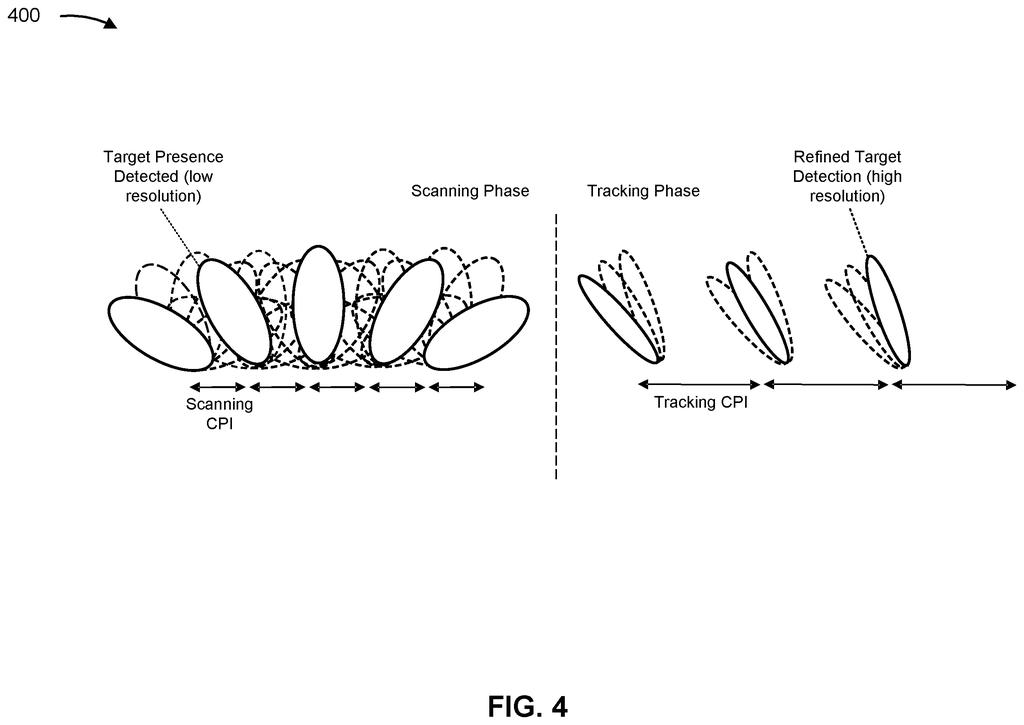
Qualcomm's system lets a phone (called a UE, or user equipment, in wireless standards language) negotiate with a cell tower about which directions it should scan for radar-like sensing. The tower starts by giving the phone a set of directions to sweep and a set to closely track. If the phone needs to change what it's tracking, it can send a modification request and get a new, more focused set of tracking directions.
This is part of a broader push to use 5G networks not just for data but for sensing the physical environment, things like detecting motion, locating objects, or supporting future applications in smart cities and connected vehicles.
receive, via the transceiver, a first grant of resources allocating a plurality of scanning directions and a first plurality of tracking directions; transmit, via the transceiver, a resource modification request; and receive, via the transceiver, a second grant of resources allocating a second plurality of tracking directions …
Translation: The phone asks the network to change which radar directions it is monitoring to better track a specific signal.
How the UE negotiates its scanning directions with the network
The patent covers a negotiation protocol between a phone and a base station for joint communication and sensing (JCAS), a 5G feature that lets the same radio signal carry both data and radar-like environmental information.
The process works in three steps:
- The base station sends a first grant allocating two types of directions: "scanning" directions (a broad sweep of the environment) and "tracking" directions (focused follow-up on specific areas of interest).
- The phone transmits a resource modification request, signaling that its tracking needs have changed, perhaps because a target moved or the initial directions weren't useful.
- The base station responds with a second grant that assigns a new set of tracking directions, drawn from the original scanning set but different from the first tracking assignment.
The key technical detail is that the second tracking set is a subset of the scanning directions already allocated. This means the phone isn't asking for entirely new radio resources; it's refining how it uses what it already has. That keeps the protocol efficient and avoids overloading the scheduler at the base station.
… the second plurality of tracking directions is a subset of the plurality of scanning directions different from the first plurality of tracking directions.
Translation: The phone narrows its focus to a specific set of radar beams that are different from the ones it was using before.
What this means for 5G radar in phones and base stations
5G standards bodies are actively building out JCAS capabilities, and how devices request and adjust sensing resources is a core open problem. A phone that can tell the network "I need to look in a different direction" is more useful than one locked into a static allocation, especially in dynamic environments like moving vehicles or busy public spaces.
For Qualcomm, which supplies modem chips to most major phone makers, patenting the resource negotiation protocol puts it in a strong position to influence how JCAS gets standardized in releases beyond 5G-Advanced. If this approach makes it into a standard, it would likely show up in Qualcomm Snapdragon modems before appearing anywhere else.
This is a standards-positioning patent, not a consumer feature announcement. Qualcomm files these to shape how next-generation 5G sensing gets defined at bodies like 3GPP. It matters if you care about where wireless technology is heading, but it won't change your phone bill or phone experience anytime soon.
There are more where this came from
We read every patent application Big Tech publishes and send you the ones worth knowing. Plain English, free, every week.
The drawings
10 drawing sheets from US 2026/0231197 A1 · click any drawing to enlarge


Want this weekly breakdown for a company we don't cover? Patentlyze Pro →
Be the first to weigh in