
Qualcomm Patents a System That Redirects 5G Signals to Keep Radiation Within Legal Limits
Every wireless device sold in the US must stay below a federally mandated radiation exposure limit — and as 5G phones juggle more and more simultaneous signal channels, hitting that ceiling is getting easier. Qualcomm's new patent describes a way to automatically steer a phone's signal in a safer direction before the limit is breached.
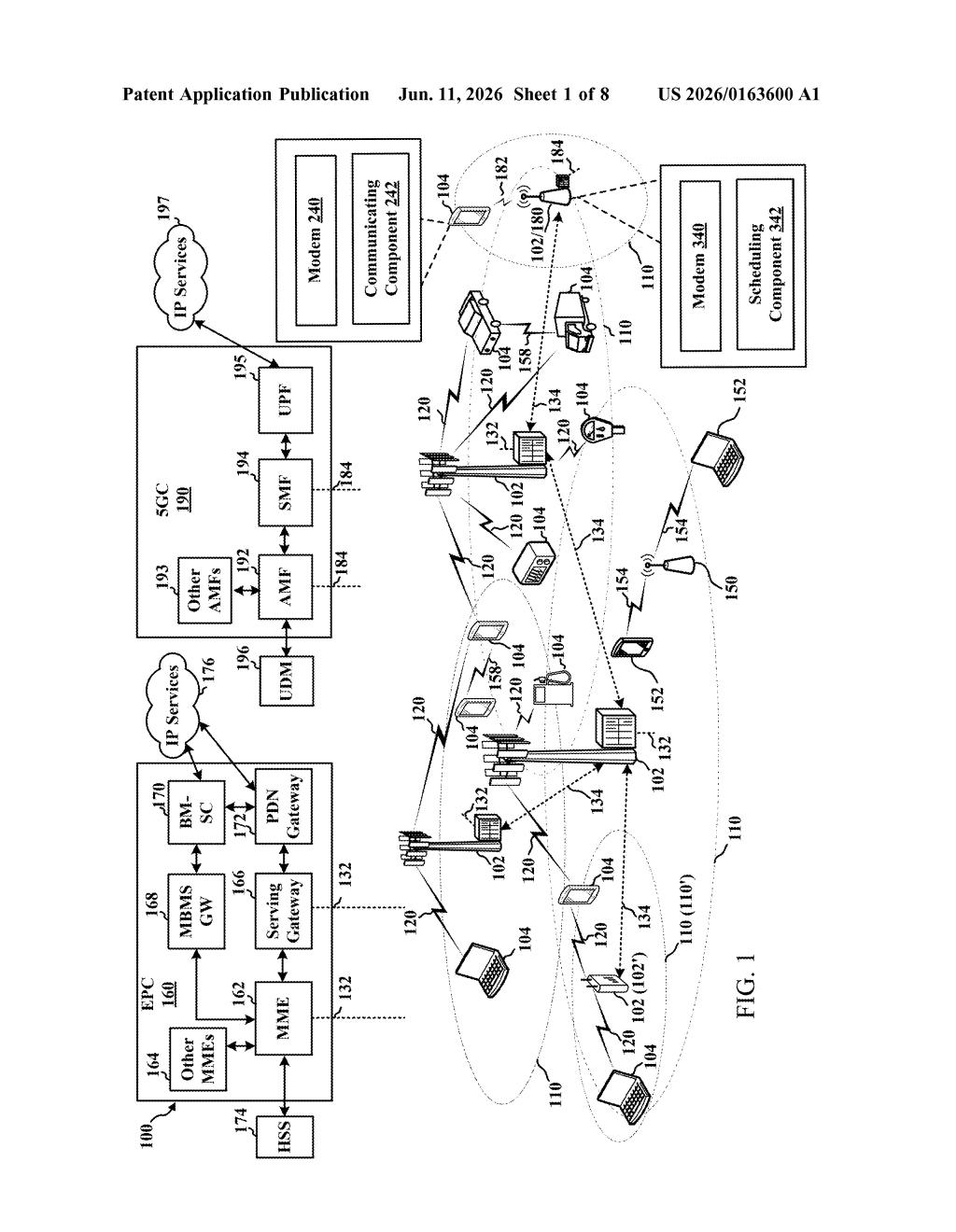
What Qualcomm's automatic radiation-limit system actually does
Imagine your phone is uploading data using several different radio channels at once — a feature modern 5G phones use to send and receive data faster. The more channels running simultaneously, the more radio energy your body can absorb. Regulators set a hard cap on how much of that energy is allowed, called the Maximum Permissible Exposure limit, or MPE.
When a phone or its network tower detects that one of those channels is about to push exposure past the legal limit, something has to give. Today, phones often just reduce their power — which can hurt your signal quality. Qualcomm's patent describes a smarter trade-off: instead of cutting power, the network tells the phone to switch to a different signal beam, one pointed in a direction that keeps energy levels in check without sacrificing connection speed.
The system also lets different network towers coordinate with each other — so if one tower spots an exposure problem on your phone, it can flag a neighboring tower to help reroute your connection. You wouldn't notice any of this happening; your call or download would just keep going.
How beam switching cuts exposure across multiple 5G channels
The patent addresses a specific problem in carrier aggregation (CA) — the technique where a 5G phone maintains simultaneous connections across multiple radio frequency bands to boost total throughput. When several of these component carriers (CCs) are active at the same time, their combined radio energy can push a device toward the MPE threshold set by the FCC and equivalent global regulators.
Qualcomm's system works in three coordinated layers:
- Detection: Either the device or the serving cell (the tower it's connected to) monitors exposure levels across each active carrier and flags an MPE event when a threshold is at risk of being crossed.
- Beam switching command: Rather than simply cutting transmit power, the network issues a beam switching command — instructing the phone to redirect its uplink (phone-to-tower) transmission to a new beam angle that reduces energy absorption by the user's body.
- Cross-cell coordination: In inter-band CA scenarios, where carriers are managed by different cells operating on different frequency bands, one cell can notify a neighboring cell to also perform beam switching for the same device — keeping the whole multi-channel session compliant.
The patent also covers the device side: the phone can send an MPE report or beam switching request back to the network proactively, rather than waiting for the tower to issue a command. This two-way signaling loop is designed to make compliance faster and more reliable than today's power-reduction approach.
What this means for 5G phones and radiation compliance
Regulators worldwide are scrutinizing how 5G devices manage radiation exposure, particularly as carrier aggregation becomes standard and phones routinely run five or more simultaneous channels. A system that resolves MPE violations through beam steering rather than power cuts is commercially valuable: it lets devices maintain fast uplink speeds while remaining compliant, which matters both for consumer experience and for regulatory approval processes in new markets.
For Qualcomm, which supplies modem chipsets to most major Android phone makers and licenses technology broadly, embedding this kind of intelligent MPE management into its baseband silicon could become a quiet but meaningful differentiator — especially as millimeter-wave 5G, which uses tightly focused beams, expands into more devices.
This is unglamorous but genuinely useful engineering. Radiation compliance has historically been handled by blunt power reductions that hurt network performance; steering the beam instead is a cleaner solution. Whether it ships in a near-term Snapdragon modem or stays on the shelf for a few generations, this is the kind of foundational patent that quietly shapes how 5G devices actually behave in the real world.
There are more where this came from
We read every patent application Big Tech publishes and send you the ones worth knowing. Plain English, free, every week.
Want this weekly breakdown for a company we don't cover? Patentlyze Pro →