
New Patent Aims to Give Laptop Batteries a Precise Schedule
What if you could tell your laptop 'I need this to last until 6 PM' and it would actually hold to that promise? Microsoft's new patent describes a system that does exactly that, throttling and boosting power in real time to hit a deadline you set.
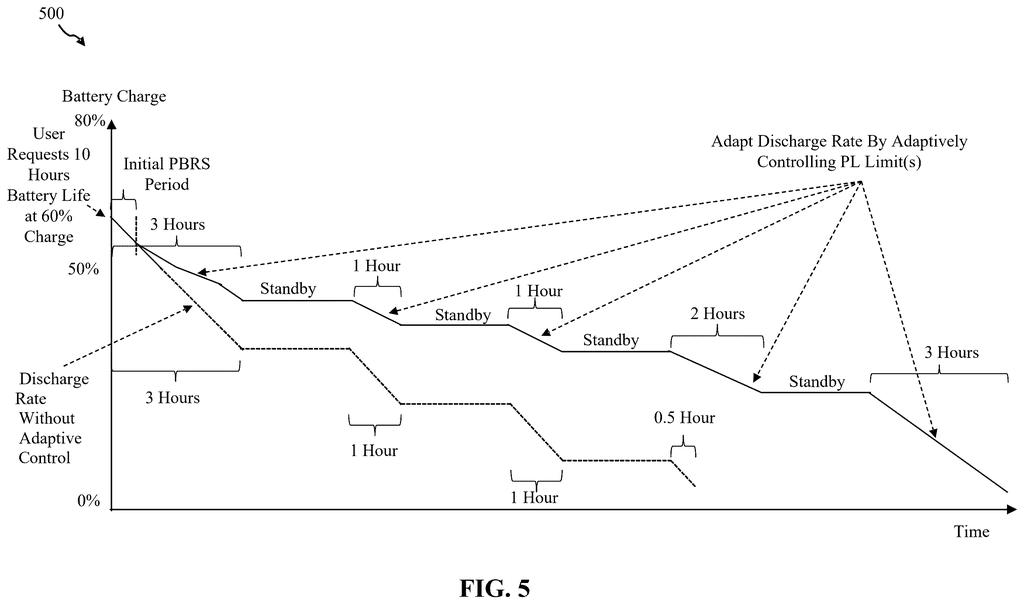
What Microsoft's battery-target system actually does
Imagine you're heading into a four-hour meeting with 60% battery. You don't want your laptop to die before the last session, but you also don't want it crawling when you're doing something intensive. Right now, Windows has no real way to promise a specific end time.
Microsoft's patent describes a system where you pick a battery target (say, 'last four more hours') and the laptop continuously adjusts how much power it's allowed to draw to stay on pace. Think of it like cruise control for your battery.
The clever part: if your battery is running ahead of schedule, the system temporarily lets the processor run hotter and faster to handle demanding tasks. Once the buffer is used up, it eases back. A machine-learning model can help decide how aggressively to throttle, depending on what you're doing.
… dynamically control the discharge rate of the battery by dynamically adapting at least one power level (PL) limit of the power provided to the computing device to align the remaining battery life with a target battery life …
Translation: The laptop continuously adjusts its power limits to make sure the battery lasts as long as expected.
How the power-limit engine tracks and hits your target
The patent describes an 'on-demand battery life and adaptive performance manager' built into a Windows computing device. At its core, the system works by controlling power level (PL) limits, which are caps on how much sustained and peak power the processor is allowed to consume at any moment.
The manager continuously estimates remaining battery life based on the current discharge rate, then compares that estimate to your target. If the battery is draining too fast, it tightens the PL limits. If it's running ahead of the target, it relaxes them.
The performance boost mechanic is the interesting wrinkle. If your estimated remaining life is within an acceptable margin of your target:
- The system detects a demanding usage scenario (video export, compilation, a burst of browser tabs)
- It temporarily raises the power cap, letting the CPU or GPU run at higher performance
- Once the task settles, it pulls the limits back down to stay on track
The PL limits can be set through either a hardcoded mapping (fixed performance tiers tied to specific battery targets) or a machine learning model (which learns patterns from your usage to choose limits more precisely).
Computing device performance is adaptively enhanced on demand for usage scenarios by temporary adjustment of PL limits when estimated battery life is within a margin of target battery life.
Translation: If the battery is safely on track to meet its time goal, the laptop temporarily speeds up when you need extra power.
What this means for Windows laptop battery life
Battery percentage is a rough estimate, not a promise. Every laptop user has experienced the gap between '40% remaining' and actually running out 45 minutes later during a presentation. Microsoft's approach tries to turn battery management from a vague forecast into something closer to a guarantee, which would be genuinely useful for people who plan their day around their device.
For Windows laptops, this could also close some of the gap with Apple's battery-life reputation. Apple manages power aggressively across its silicon, and Windows OEMs have struggled to match that consistency. A smarter, target-aware power controller built into Windows itself, rather than left to each manufacturer, would be a meaningful platform-level improvement.
This is one of those patents that sounds mundane until you think about how often laptop battery estimates are just wrong. A system that actively hunts a specific end-time, rather than passively reporting a shrinking number, is genuinely useful. The temporary performance boost when you're ahead of schedule is the clever bit, because it means you're not trading all your performance for predictability.
There are more where this came from
We read every patent application Big Tech publishes and send you the ones worth knowing. Plain English, free, every week.
The drawings
9 drawing sheets from US 2026/0227840 A1 · click any drawing to enlarge


Want this weekly breakdown for a company we don't cover? Patentlyze Pro →
Be the first to weigh in