
Nvidia Patent Covers AI That Builds Its Own Tools to Answer Complex Questions
Most AI chatbots either answer your question or admit they can't. Nvidia is patenting a system that does a third thing: it builds a custom tool on the spot to go find the answer itself.
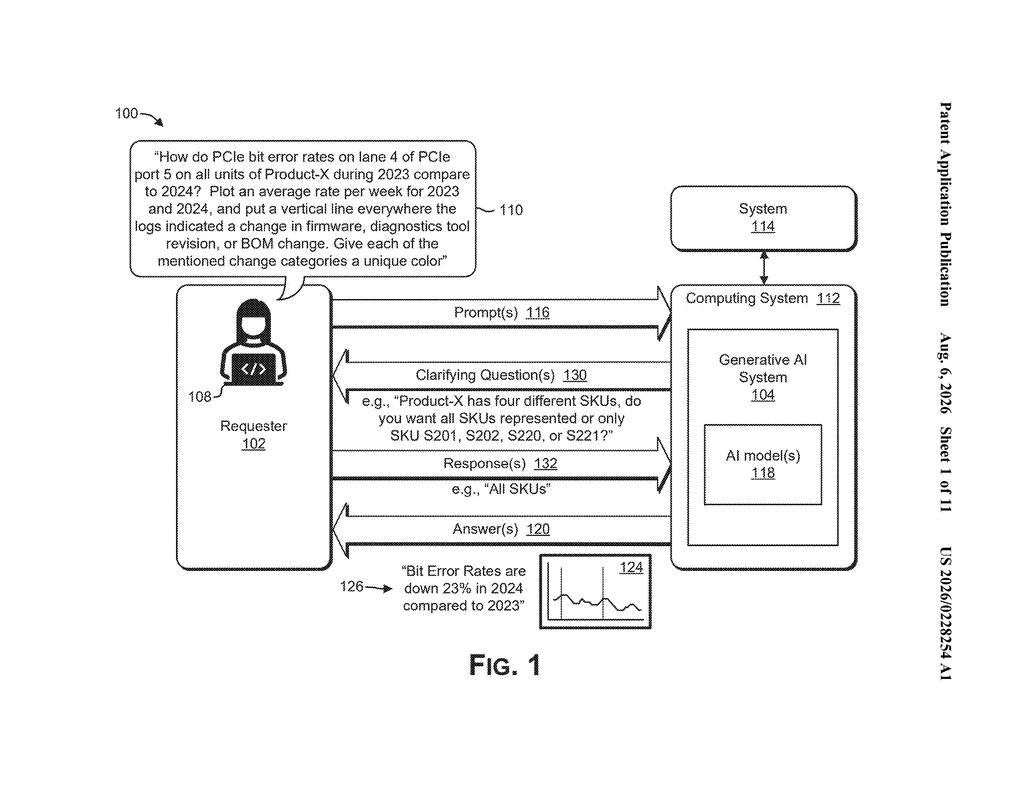
How Nvidia's self-tooling AI handles questions it can't answer
Imagine asking a factory's AI assistant, "Why did production slow down on Line 4 last Tuesday?" A typical AI might guess, hallucinate a number, or just say it doesn't know. Nvidia's patented system is different: if it can't answer, it first tries asking follow-up questions to gather more context, and if that's still not enough, it actually writes a small software tool to pull the exact data it needs, then uses that tool to deliver a real answer.
The whole process loops automatically. The AI keeps checking whether its answer actually addresses what you asked. If it doesn't, it tries again, either by asking more questions or building another tool, until it lands on something responsive.
The patent specifically mentions manufacturing facilities as a use case, so think factory floors, supply chains, and industrial monitoring rather than a general-purpose chatbot. But the underlying idea, an AI that builds its own instruments rather than shrugging at hard questions, is what makes this filing worth paying attention to.
… when the first output is the request to generate the tool, the potential answer is generated using the one or more second neural networks that generate the tool based at least on the request to generate the tool, the potential answer to comprise results obtained by using the tool if the tool is generated and used to obtain the results …
Translation: When the system realizes it lacks a tool, it builds one to find the answer.
How the neural networks loop, build tools, and verify answers
The core of the system is an iterative reasoning loop driven by one or more neural networks. When a user submits a prompt, the AI produces one of three possible outputs:
- A direct answer, which gets immediately checked for responsiveness to the original question
- A request for more information, which triggers additional prompts that feed back into the same loop
- A request to generate a tool, which hands off to a second set of neural networks that actually write and execute that tool
The "tool" here is a piece of code or a software routine the AI creates on demand to query data sources, run calculations, or interact with external systems. Think of it as the AI spinning up a custom script to fetch a specific sensor reading or database record it doesn't already have access to.
A potential answer is formed from whatever the current iteration produces, either a direct reply or the results the generated tool returns. That potential answer then goes through a responsiveness check: does it actually address the original prompt? If not, the loop starts again. The patent describes this continuing until the system confirms the answer is genuinely relevant, not just plausible-sounding.
In various examples, system, methods, and techniques for implementing a generative artificial intelligence (AI) to generate information related to a system (e.g., a manufacturing facility).
Translation: The patent describes an AI system designed to answer complex operational questions.
What this means for AI assistants in factories and complex operations
For industrial settings, this matters because factory and logistics data is fragmented. Sensor readings, maintenance logs, and production schedules often live in separate systems with no single query that can pull them all together. An AI that can write and run its own data-fetching tools on the fly could, in theory, answer complex operational questions that would otherwise require a data engineer to write custom code.
More broadly, this filing fits into a wider industry push toward "agentic" AI, systems that don't just respond but take action steps to complete a task. Nvidia positioning this specifically around complex physical systems (rather than general chat) suggests the company sees its biggest near-term opportunity in industrial and enterprise deployments, where getting the answer right matters more than getting it fast.
This is a real and interesting engineering bet, not a vague AI buzzword filing. The specific mechanic of an AI that generates tools to answer questions it can't directly answer is the kind of thing that could meaningfully change how industrial operators interact with complex data. Whether Nvidia ships it as a product feature or keeps it as foundational IP is the open question.
There are more where this came from
We read every patent application Big Tech publishes and send you the ones worth knowing. Plain English, free, every week.
The drawings
11 drawing sheets from US 2026/0228254 A1 · click any drawing to enlarge


Want this weekly breakdown for a company we don't cover? Patentlyze Pro →
Be the first to weigh in