
Qualcomm Patent Enables AR Glasses to Identify and Look Up Nearby Objects
Point your AR glasses at something and get instant information about it. That's the core idea behind a new Qualcomm patent that splits the heavy lifting between a cloud server and a nearby local device.
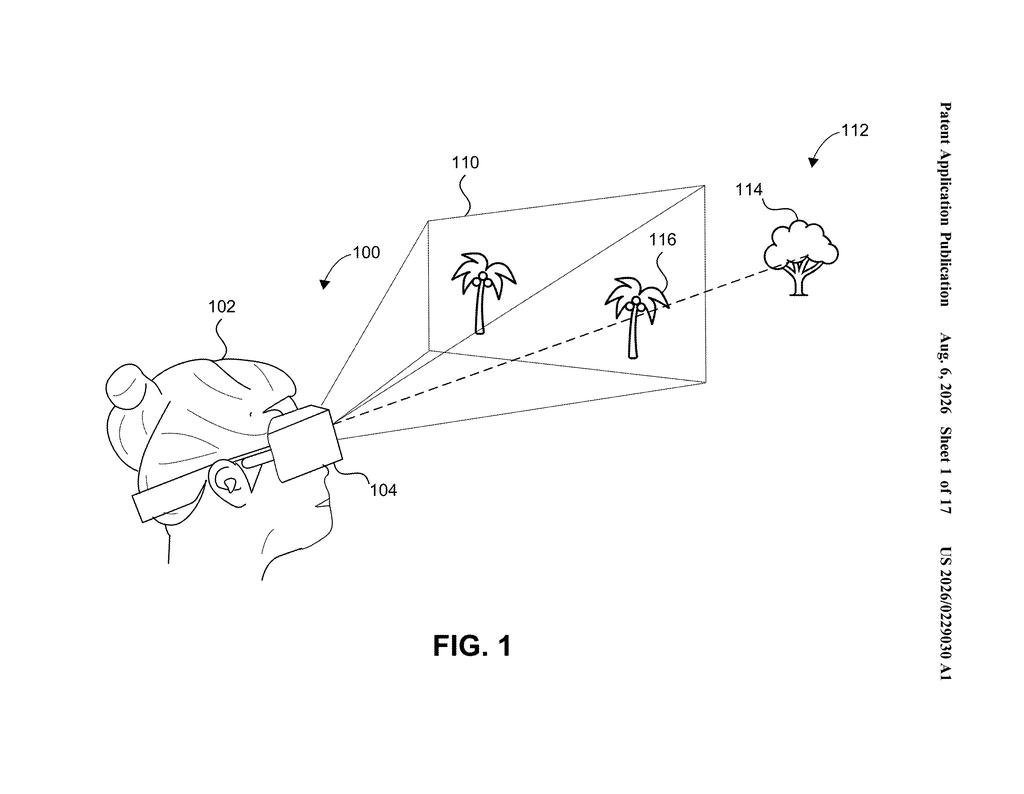
What Qualcomm's AR object-lookup system actually does
Imagine walking through a hardware store wearing a pair of AR glasses and spotting a piece of equipment you don't recognize. Instead of fumbling for your phone, you just look at it, and a label appears in your field of view telling you exactly what it is and where to find it in the store.
That's essentially what Qualcomm is describing here. The glasses take a photo of what you're looking at, send it to a remote server (think cloud computing), and the server figures out what the object is. Then a separate, nearby device (like a store's local system or a connected hub) fills in the specific details about that object and sends them back to your glasses.
The two-step approach is important: the cloud does the object recognition (which requires serious computing power), while a local device handles the context-specific information (which might be too sensitive or too detailed to store in the cloud). Your glasses display the result without you lifting a finger.
capture an image of a physical environment using a camera of an extended-reality (XR) device in the physical environment; transmit the image to a remote computing device; receive, from the remote computing device, an indication of an object in the physical environment; …
Translation: The glasses take a picture of your surroundings, send it off to a server, and get back an identification of what you are looking at.
How the cloud ID and local data handoff works
The patent describes an extended reality (XR) device (AR glasses or a headset with a camera) that handles object identification through a split architecture involving two separate external systems.
Here's how the pipeline flows:
- The XR device captures an image of the physical environment using its onboard camera.
- That image is sent to a remote computing device (a cloud server), which analyzes it and identifies objects in the scene.
- The identification result is sent back to the XR device, which then contacts a local device (something physically nearby, like an in-store server or a connected kiosk) to request specific information about the identified object.
- The local device responds with that information, and the XR device displays it as an overlay on the user's view.
The split between remote identification and local information retrieval is the architectural core of the patent. Remote servers are good at running large recognition models (the kind that can identify thousands of object types), while local devices hold context-specific data that may be location-dependent, frequently updated, or not suitable for cloud storage. The XR device itself acts as an orchestrator rather than doing the heavy processing.
… receiving, from a local device, information regarding the object; and displaying the information regarding the object at a display of the XR device.
Translation: They pull up details about the item from a nearby device and show them right on your lenses.
What this means for AR headsets and smart glasses
AR headsets have struggled with a basic problem: the hardware needed to recognize objects in real time is expensive and power-hungry, which makes it hard to build a lightweight, wearable device. Qualcomm's approach offloads that recognition work to the cloud, which is a practical way to keep the glasses small without sacrificing capability. Qualcomm is the company that makes the chips inside most Android phones and a growing number of XR headsets, so this kind of architecture patent is directly relevant to where their hardware business is heading.
For you as a user, the implications are concrete: retail, warehouses, museums, hospitals, and anywhere with lots of objects to track could use a system like this. It also points toward AR glasses that work alongside existing local infrastructure rather than requiring everything to live in the cloud, which could matter a lot for businesses with sensitive inventory or patient data.
This is a sensible, practical patent rather than a flashy one. The cloud-plus-local architecture is a real engineering tradeoff worth protecting, and it fits neatly with Qualcomm's position as the chip and platform supplier for the AR ecosystem. It's not a consumer product announcement, but it's the kind of foundational filing that shows up inside enterprise AR deployments.
There are more where this came from
We read every patent application Big Tech publishes and send you the ones worth knowing. Plain English, free, every week.
The drawings
17 drawing sheets from US 2026/0229030 A1 · click any drawing to enlarge


Want this weekly breakdown for a company we don't cover? Patentlyze Pro →
Be the first to weigh in