
Qualcomm Patents a Way to Split AI Models Across Multiple Processors
Running a large AI model on a single chip can be slow or impossible if the model is too big. Qualcomm's new patent describes a system that automatically chops an AI model into pieces and hands each piece to a different processor.
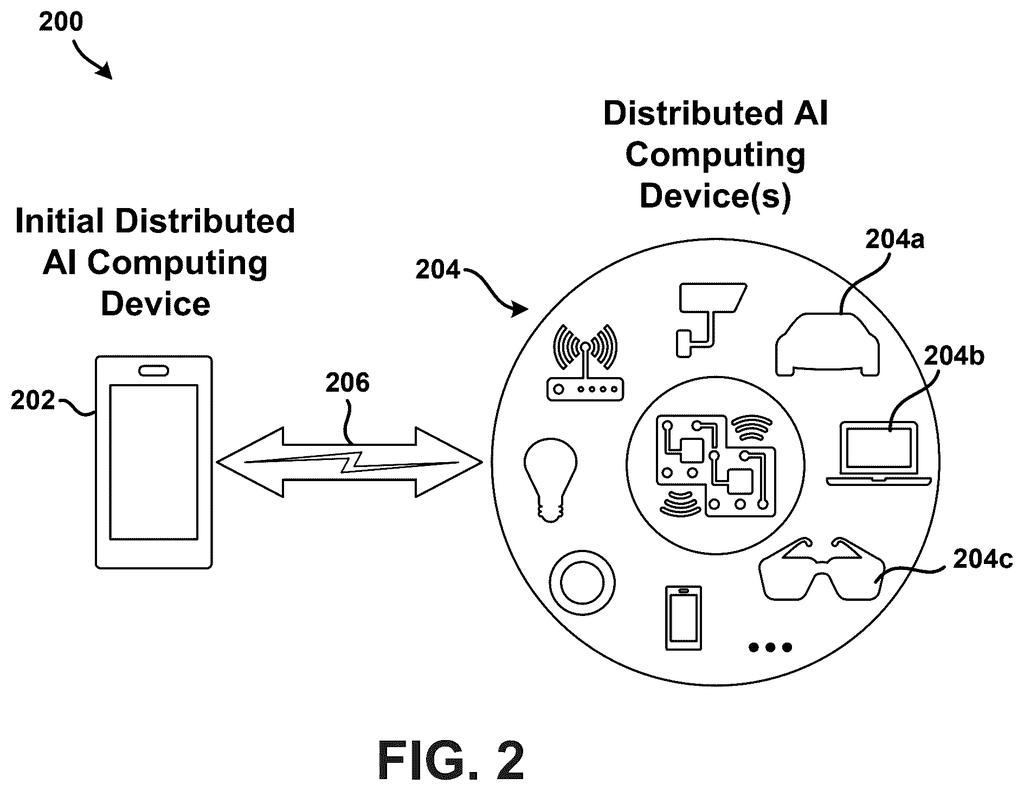
How Qualcomm's AI model-splitting actually works
Imagine trying to move an entire house of furniture by yourself versus splitting the job with three friends, each carrying different rooms at once. That's roughly the idea here.
When you run an AI feature on your phone or laptop, the underlying model has to be processed by a chip. If that model is large or the task is demanding, one chip can become a bottleneck. Qualcomm's patent describes a system that looks at how many processors are available on a device, then automatically divides the AI model into matching sections, and sends each section to a different processor to run in parallel.
The result is that the device uses all of its available computing muscle instead of leaving most of it idle. For you, that could mean faster AI responses or the ability to run more capable models on the same hardware.
… divide a machine-learning model into a number of portions based on the number of processing devices, wherein each portion of the number of portions comprises at least one layer of the machine-learning model …
Translation: It breaks an AI model into pieces based on how many chips are available to help.
How the system divides and assigns model layers
The patent covers a method for model splitting, which is the practice of dividing a neural network into segments and distributing those segments across multiple physical processors.
A neural network (the math structure behind most AI features) is organized as a series of layers, each performing a step in the overall computation. Qualcomm's system counts how many processing units are available on the device, then slices the model so that each processor gets one or more complete layers to handle. Critically, the split is based on the number of available devices, not a fixed recipe baked in at design time.
The key steps are:
- Survey the available computing devices (CPU cores, GPU, dedicated AI accelerators, etc.)
- Divide the model's layers into that many portions
- Allocate each portion to a specific processor for execution
This is sometimes called pipeline parallelism in the research world, meaning each processor handles a stage of the overall pipeline, passing results to the next one in sequence. Qualcomm's framing emphasizes that the allocation is dynamic, adapting to whatever hardware is present rather than being hard-coded.
… determining a number of processing devices from among a number of available computing devices; dividing a machine-learning model into a number of portions based on the number of processing devices …
Translation: The system figures out what hardware is around and chops the AI up accordingly.
What this means for AI running on Qualcomm devices
Qualcomm's chips power a huge range of devices including Android phones, Windows laptops, and automotive systems. Those devices often contain several distinct processors (a main CPU, a GPU, and a dedicated AI engine called an NPU). Most AI software today is written to target just one of those, leaving the others underused.
A system that automatically distributes model execution across all available processors could let device makers run larger, more capable AI models without upgrading the hardware itself. For consumers, that potentially means better on-device AI features (faster image processing, more capable voice assistants, real-time translation) without waiting for next-generation silicon.
This is a straightforward but genuinely useful infrastructure patent. The concept of model parallelism is well-established in data center AI, but applying it dynamically to edge devices with heterogeneous chips (CPU plus GPU plus NPU) is a real engineering challenge. Qualcomm filing this suggests it is working to make that automatic rather than requiring developers to hand-tune the split for every device configuration.
There are more where this came from
We read every patent application Big Tech publishes and send you the ones worth knowing. Plain English, free, every week.
The drawings
24 drawing sheets from US 2026/0228605 A1 · click any drawing to enlarge


Want this weekly breakdown for a company we don't cover? Patentlyze Pro →
Be the first to weigh in