
Microsoft Patents a Built-In Circuit That Tests Every Individual Light Source in a Display
Testing whether every tiny pixel in a micro-LED display works correctly is a genuine headache for manufacturers. Microsoft's latest patent describes a way to do that check from inside the display itself, without unplugging anything.
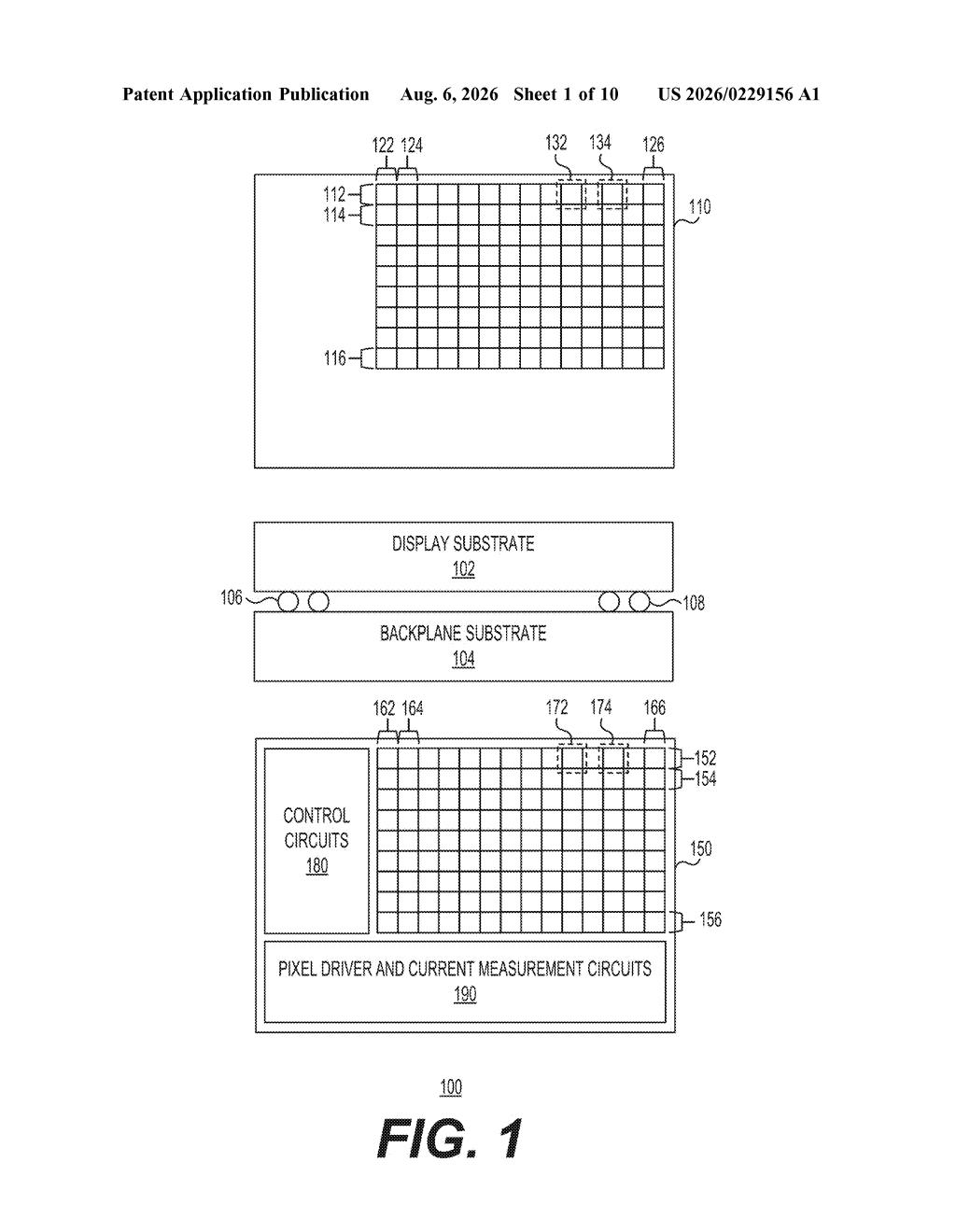
What Microsoft's per-pixel current check actually does
Imagine a wall of thousands of tiny light bulbs, each one smaller than a grain of sand. That's roughly what a micro-LED display is. When one of those bulbs stops drawing the right amount of power, the picture looks wrong, but figuring out which bulb is the culprit normally requires specialized external test equipment.
Microsoft's patent describes a circuit built directly into the display's control layer (the "backplane") that can pull current away from any individual pixel on demand and measure it on the spot. Think of it like a tiny electrical inspector that can tap into any pixel's power line, one at a time, without interrupting the others.
The result is that a display could check itself during manufacturing, or potentially even during normal operation, without needing to be disconnected and wired up to external test gear. That could catch defective pixels faster and more cheaply than current methods allow.
… a current measurement circuit, formed in the backplane substrate, comprising an operational amplifier configured to drive a source-follower transistor …
Translation: A built-in hardware circuit uses specialized amplifiers to monitor electrical flow directly on the chip.
How the backplane redirects and measures pixel current
The patent describes a micro-LED system with two bonded layers: a display substrate (where the actual light-emitting diodes live) and a backplane substrate (the control electronics underneath).
Normally, each pixel driver circuit in the backplane sends current to its paired micro-LED to make it light up. Microsoft's design adds two things to that backplane:
- A current measurement circuit built around an operational amplifier (a standard analog chip that precisely controls voltages) driving a source-follower transistor (a configuration that passes a signal with very low distortion, useful for accurate measurement).
- A set of pass transistors, one per pixel driver, that act like tiny switches. In a second "test mode," any of these switches can reroute a pixel's current away from its LED and into the measurement circuit instead.
Because everything sits in the same backplane substrate, the measurement happens in situ, meaning right there, in place, without external probes. The circuit can check pixel drivers one at a time, sequentially, giving a precise current reading for each.
… selectively redirect current from one or more of the set of pixel driver circuits to the current measurement circuit allowing for in situ measurement of the redirected current within the backplane substrate …
Translation: The system can divert power from individual subpixels on the fly to test their performance right inside the display.
What this means for micro-LED display manufacturing
Micro-LED is widely seen as the next step beyond OLED for high-end displays, but manufacturing yields are still a major challenge. Tiny defects at the pixel level are expensive to find, and traditional testing requires external equipment applied to finished (or partially finished) panels. A built-in test circuit could let manufacturers catch bad pixels earlier in the production line, reducing waste and cost.
For Microsoft specifically, this fits into broader work on display technology for devices like mixed-reality headsets, where micro-LED's brightness and efficiency advantages are most valuable. A display that can verify its own pixel health is also potentially useful for field diagnostics long after a device ships.
This is unglamorous manufacturing-process work, but it's the kind of patent that actually moves the needle on production costs. Micro-LED's biggest bottleneck right now is yield, and anything that makes per-pixel testing faster or cheaper is worth filing. It's not a headline product feature, but it's real engineering.
There are more where this came from
We read every patent application Big Tech publishes and send you the ones worth knowing. Plain English, free, every week.
The drawings
10 drawing sheets from US 2026/0229156 A1 · click any drawing to enlarge


Want this weekly breakdown for a company we don't cover? Patentlyze Pro →
Be the first to weigh in