
Qualcomm Patents a Backup Channel That Keeps Chiplets Running After a Link Failure
When one of the internal control channels inside a modern chip package breaks down, the whole data connection typically has to stop and restart from scratch. Qualcomm's new patent wants to make that problem disappear entirely.
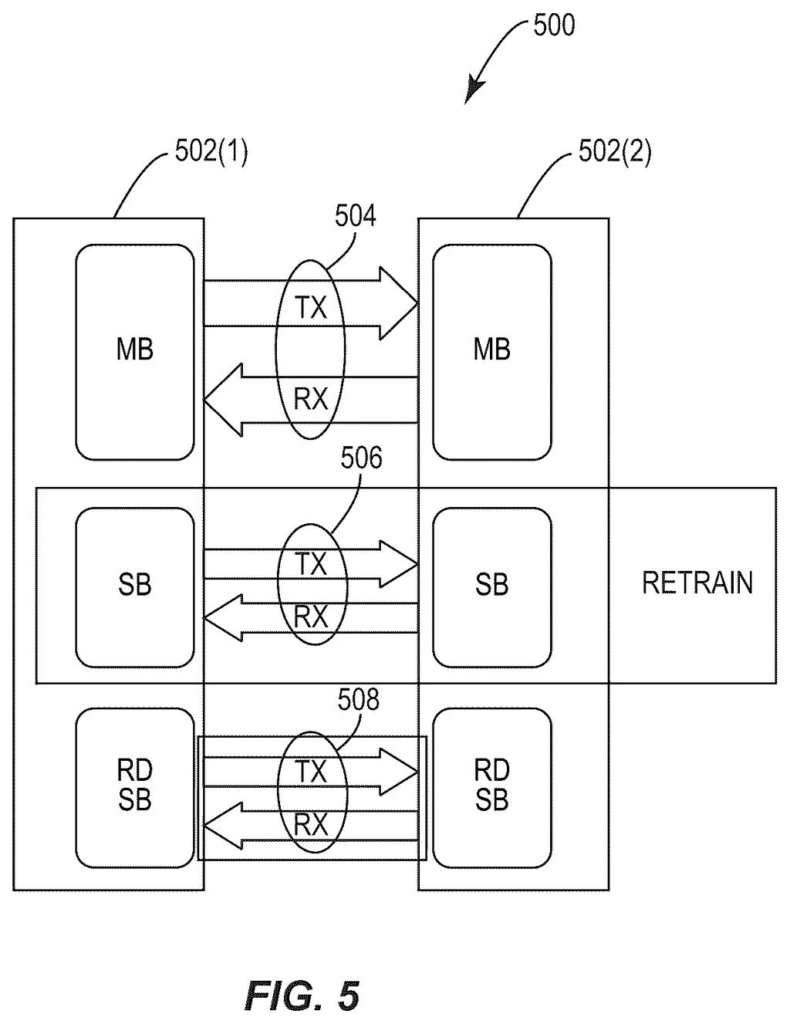
What Qualcomm's backup sideband actually does for chips
Imagine a busy office building where the intercom system breaks down. Right now, the rule says everyone has to stop working, reset all the phones, and reconnect before they can talk again. That dead time adds up fast.
Qualcomm is filing a patent for something like a spare intercom line that kicks in automatically the moment the main one fails. The chips inside a device keep talking to each other without ever pausing to restart. The broken channel gets repaired in the background, and nobody notices the hiccup.
This matters because modern processors are increasingly built from multiple chiplets, small specialized chips that work together like puzzle pieces. Every time they lose their connection and have to re-establish it, your device gets slower. Qualcomm's approach cuts that delay out almost entirely.
… instruct the multiplexer to send signals to the redundant sideband; and while sending the signals to the redundant sideband, maintain operation of a main band of the communication bus.
Translation: It switches to a backup path instantly so the main data highway stays open and running.
How the multiplexer reroutes traffic around a failed sideband
Modern chips, especially in phones, laptops, and data centers, are increasingly built from multiple chiplets connected by a high-speed internal bus called UCIe (Universal Chiplet Interconnect Express). UCIe has two types of channels: a main band (which carries the bulk of the data) and a sideband (a smaller control channel that manages and coordinates the connection).
The problem is that if the sideband fails, the current standard forces the entire main band to go through a retraining sequence, a process where both sides negotiate and re-synchronize their connection from scratch. That takes time and interrupts data flow.
Qualcomm's patent adds a redundant sideband to the mix. A small hardware component called a multiplexer (think of it as an automatic traffic switch) normally sends control signals through the default sideband. The moment it detects a fault on that channel, it instantly redirects signals to the backup sideband instead.
The key detail is that all of this happens without touching the main band. The high-volume data channel keeps running uninterrupted while the faulty default sideband is diagnosed and repaired in the background. Once the repair is done, traffic can switch back.
… using a redundant sideband to keep the bus active and avoid retraining the main band while the failed sideband is recovered.
Translation: A spare control line keeps traffic flowing smoothly while the broken line gets fixed in the background.
Why skipping retraining matters for chip-to-chip performance
For consumers, this is about the kind of tiny, invisible slowdowns that accumulate in devices with chiplet-based processors. As chip designs move away from single monolithic dies toward modular chiplet architectures, the connections between those pieces become a real reliability concern. A single sideband fault today can cause a measurable pause in operations.
For Qualcomm specifically, this fits into a broader push to make chiplet-based designs viable in phones and always-on devices where any interruption in chip-to-chip communication is noticeable. It also signals that Qualcomm is investing in the UCIe standard as a long-term foundation for its chip architecture, not just as a data-center technology.
This is classic infrastructure-level engineering: unglamorous, but exactly the kind of problem that blocks chiplet designs from being reliable enough for consumer devices. The fact that Qualcomm is patenting a specific UCIe fault-tolerance mechanism suggests the company is serious about using chiplet designs in products where uptime really matters, like smartphones and wearables, not just servers.
There are more where this came from
We read every patent application Big Tech publishes and send you the ones worth knowing. Plain English, free, every week.
The drawings
11 drawing sheets from US 2026/0228094 A1 · click any drawing to enlarge


Want this weekly breakdown for a company we don't cover? Patentlyze Pro →
Be the first to weigh in