
Google Patents a Way to Keep Both Earbuds in Sync on a Single Audio Stream
Google's latest patent describes a counterintuitive fix for wireless earbuds: deliberately lying to your phone about whether audio arrived, so both earbuds get a reliable copy of the sound.
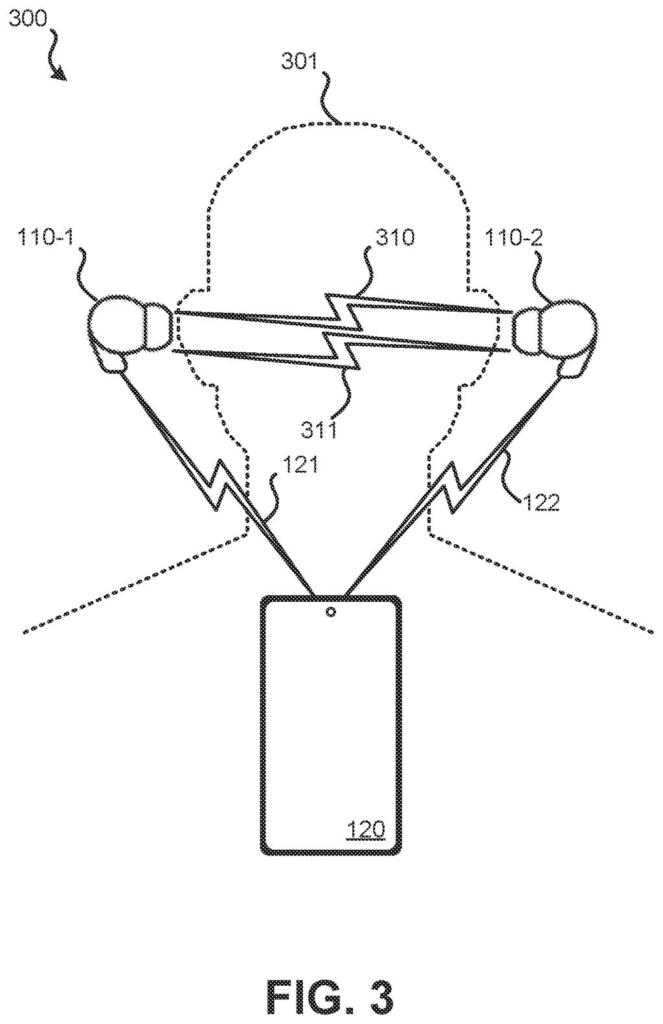
How Google's earbud sync trick actually works
You're listening to music on your wireless earbuds and one earbud drops out for a split second, leaving you with sound only in one ear. That gap is a known weak spot in how Bluetooth earbuds handle audio, and it gets worse when both earbuds are sharing a single connection instead of each having their own.
Google's patent tackles this by doing something that sounds backwards. When your primary earbud successfully receives an audio chunk, it can still send a "nope, didn't get it" signal back to your phone if it hasn't forwarded that chunk to the secondary earbud enough times yet. Your phone then resends the audio, giving the secondary earbud another shot at catching it.
The result is that both earbuds end up with a solid, matched copy of the audio stream, even over a single shared wireless channel, without needing two separate connections running at once.
… despite determining that the audio packet was successfully received by the primary earbud, transmitting a negative acknowledgement to the audio source device in response to determining that data of the audio packet has not yet been transmitted a predefined number of times.
Translation: The earbud tells the phone it missed the data on purpose to force the phone to send the audio again.
Inside Google's deliberate negative-acknowledgement loop
The patent describes a specific Bluetooth Low Energy technique built around a Connected Isochronous Stream (CIS), which is a type of time-synced audio channel defined in the Bluetooth 5.2 standard. Normally, earbuds either use two separate CIS connections (one per ear) or rely on the primary earbud to relay audio to the secondary. This patent takes a third path: one shared CIS carrying a single monophonic (mono) audio stream addressed only to the primary earbud.
The clever part is in the acknowledgement logic. Standard wireless protocol says a receiver should send a positive acknowledgement (ACK) when a packet arrives intact, telling the sender it can move on. This patent allows the primary earbud to send a negative acknowledgement (NACK) instead, even after a successful receive, if the audio data hasn't been forwarded to the secondary earbud a set number of times yet.
That NACK triggers the audio source (your phone or tablet) to retransmit the same packet. The secondary earbud, which is listening to the same channel via the primary, gets another opportunity to pick up the data it may have missed the first time.
- A single CIS is established for the whole earbud pair
- The primary earbud tracks how many times each audio packet has been relayed
- A NACK is sent if that count hasn't hit a predefined threshold, regardless of whether the packet arrived correctly
- The source retransmits, giving the secondary earbud a second (or third) chance
A session configuration can be performed between a pair of true wireless earbuds and an audio source device in which a single connected isochronous stream (CIS) is established to transmit a monophonic audio stream.
Translation: The earbuds and phone set up a single data connection to send the same audio signal to both ears at once.
What this means for Pixel Buds and wireless audio reliability
Dropped audio in one ear is one of those small annoyances that makes people distrust wireless earbuds entirely, especially during workouts or commutes where signal conditions fluctuate. The problem is real and common, and current solutions often involve running two separate Bluetooth streams simultaneously, which burns more battery and adds connection complexity. A single-stream approach that still ensures both earbuds stay in sync would be a meaningful practical improvement.
Google's Pixel Buds line is the obvious candidate to benefit from this, and the patent fits into a broader push by audio hardware makers to squeeze better reliability out of tighter, lower-power Bluetooth connections. It's the kind of protocol-level work that rarely gets a marketing slide but shows up clearly in the interesting tech patents covering wireless audio engineering, where small acknowledgement-logic changes can mean the difference between earbuds people trust and ones they send back.
Millions of earbud users know the irritation this patent targets, and the size of the fix matches it well. Losing audio in one ear because a single wireless packet missed the secondary bud is a failure that feels disproportionate to its cause, and a NACK-based retransmission loop is a tidy, low-overhead answer that adds no perceptible latency and no extra connections. Disciplined engineering is exactly what a reliability fix should be.
There are more where this came from
We read every patent application Big Tech publishes and send you the ones worth knowing. Plain English, free, every week.
The drawings
13 drawing sheets from US 2026/0238974 A1 · click any drawing to enlarge


Want this weekly breakdown for a company we don't cover? Patentlyze Pro →
Be the first to weigh in