
Apple Patents a Ceramic Cover Layer for Foldable Phone Screens
Ceramic is famously hard and brittle, the opposite of what you want in a phone that folds in half. Apple is working on a way to use it anyway.
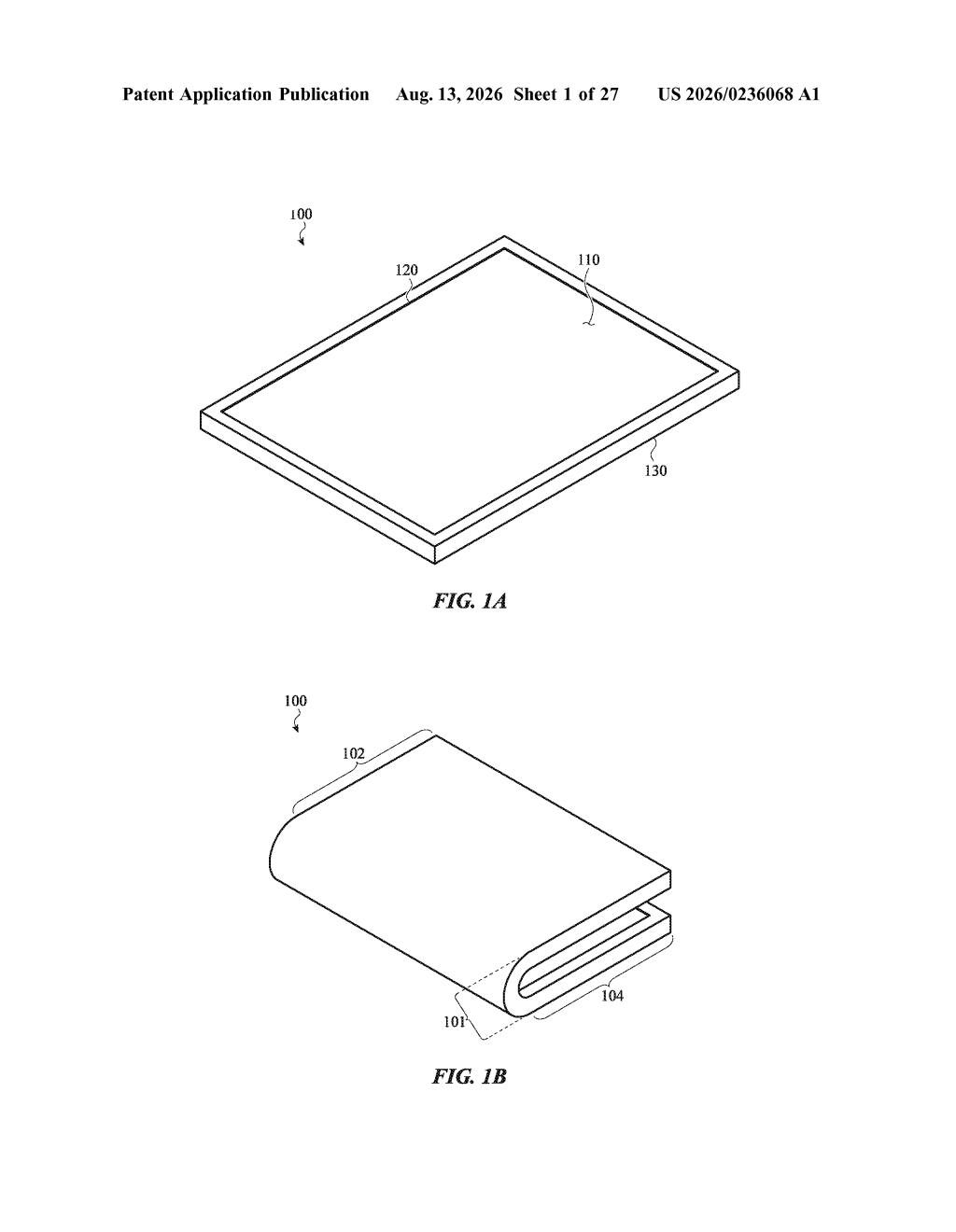
What Apple's bendable ceramic cover actually does
Every time you fold a foldable phone shut, the outer surface takes the stress of that bend, potentially picking up creases, cracks, or micro-fractures over years of use. Most foldables today use plastic or ultra-thin glass on the outside, both of which carry tradeoffs around scratch resistance and feel.
Apple's patent describes a cover layer made with ceramic material that forms the exterior surface of the device, and that can still bend along a defined fold zone without shattering. The display sits underneath, protected by this outer layer, and the whole assembly flexes between a flat, open state and a folded, closed one.
In plain terms, Apple is researching whether ceramics, the same family of materials used in some Apple Watch models for their scratch-resistant backs, can be engineered to survive the repeated bending a foldable phone demands. That would be a meaningful step up in durability from what's on the market today.
… a cover layer coupled to the display layer and defining a foldable region that includes a ceramic material forming an exterior surface of the electronic device …
Translation: The screen is protected by a ceramic outer layer that is designed to bend without breaking.
How ceramic forms a foldable exterior surface
The patent covers an electronic device built around two main layers: a display layer (the actual screen) and a cover layer bonded to it. The cover layer includes a defined foldable region, a specific zone engineered to allow controlled bending, and that region is made from or incorporates a ceramic material that forms the visible exterior surface.
The whole assembly is designed to move between two states:
- Folded configuration, the device is closed, with the screen protected inside
- Unfolded configuration, the device is open and the full display is accessible
The engineering challenge here is significant. Ceramics are valued precisely because they are hard and rigid, which makes them resist scratches. But rigidity is the enemy of folding. The patent also covers methods of manufacturing such a cover layer, suggesting Apple has been working on specific processes to treat or structure the ceramic so it can flex at the fold zone without fracturing.
The claim is deliberately broad: it doesn't specify the exact ceramic compound, the thickness, or how the fold zone is structured mechanically. That breadth is typical of early-stage materials patents filed to stake out territory before the engineering details are fully locked in.
The display layer and the cover layer are configured to be moved between a folded configuration and an unfolded configuration by bending the cover layer along the foldable region.
Translation: The device uses a flexible screen and cover that can physically fold and unfold.
What this means for foldable iPhone durability
Durability is the central complaint about every foldable phone currently on the market. The crease that develops along the fold, the vulnerability of soft outer coatings to scratches, and the long-term reliability of the hinge area are what keep most consumers from switching. A ceramic exterior that could genuinely bend would address all three at once, because ceramic is both harder and more scratch-resistant than the polymer films competitors rely on today.
Apple already uses ceramic in its product lineup, the Apple Watch Ceramic Edition used zirconia for its case, so this is not a completely untested direction for the company. Whether Apple can get a ceramic layer thin and structured enough to fold reliably at scale is the open question. Big Tech patent news covering foldable display materials has tracked a steady buildup of Apple filings in this space, and this one adds a ceramics-specific angle that none of the earlier screen-protection filings addressed directly.
The problem this patent targets is real and commercially consequential. Foldable phones have existed for several years and still carry a reputation for fragility that has kept them from breaking into the mainstream. If ceramic can be made to fold, that reputation changes. The approach Apple is patenting matches the scale of the problem: swapping out the fundamental material of the exterior surface is not an incremental fix, it is an attempt to solve scratch resistance and fold durability with a single material choice. The risk, of course, is that ceramics have resisted being made bendable for good physical reasons, and a patent filing is a long way from a shipping product.
There are more where this came from
We read every patent application Big Tech publishes and send you the ones worth knowing. Plain English, free, every week.
The drawings
27 drawing sheets from US 2026/0236068 A1 · click any drawing to enlarge


Want this weekly breakdown for a company we don't cover? Patentlyze Pro →
Be the first to weigh in