
Qualcomm Patents a Way to Render Different Parts of a Photo at Different Resolutions
Most phone cameras treat every pixel in a frame the same way. Qualcomm's new patent describes a chip-level trick that lets different areas of the same photo be processed at different resolutions before everything gets stitched together into a single output.
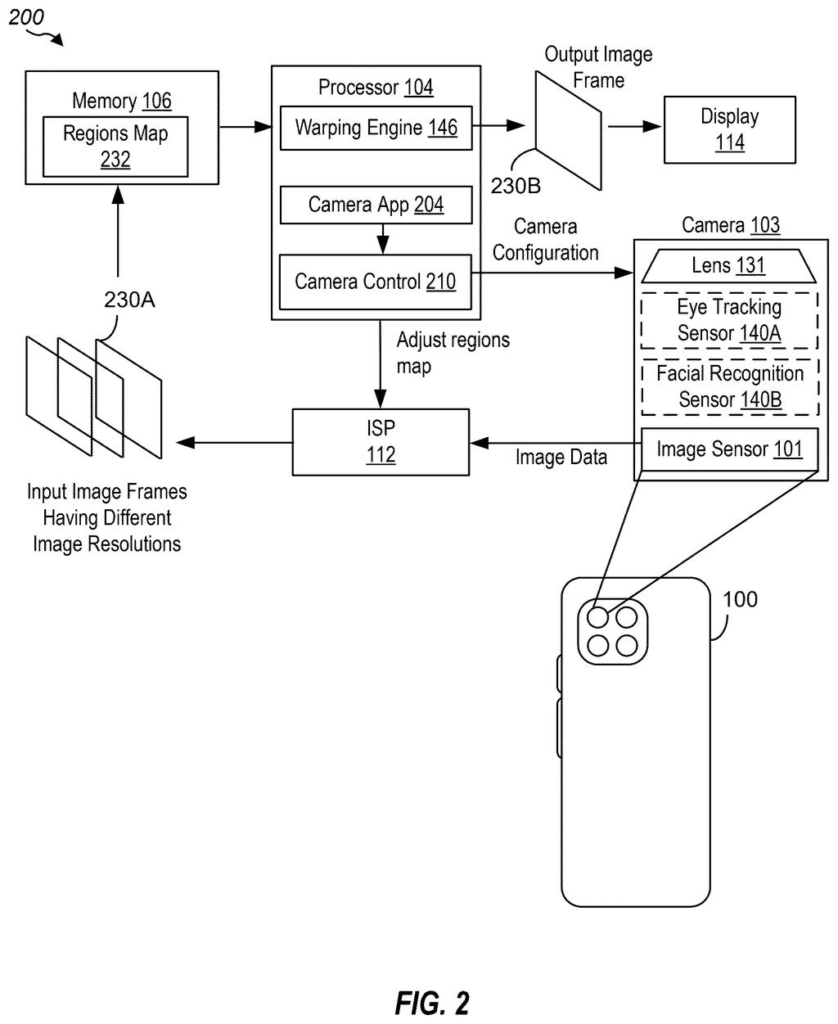
How Qualcomm's region-based photo rendering works
When your phone takes a photo, its image chip processes the whole frame at a single resolution setting. That's efficient, but it means a blurry background and a crisp face are both being handled the same way, even though they need different amounts of detail.
Qualcomm's patent wants to change that. The idea is to divide the image into labeled zones, assign each zone its own detail level, then pull in only the pixels needed for each zone before assembling the final photo. Your phone's chip handles a map of the scene, not a one-size-fits-all grid.
The practical goal is a cleaner output image that uses processing power where it actually counts, rather than burning resources equally on the parts of a frame you'll never zoom into.
… assigning, by the processor and based on the regions map, each coordinate of a subset of coordinates for an output image frame to one of the one or more regions …
Translation: The system maps specific pixels in the final image to different quality zones defined by a map.
How the processor maps regions to resolution parameters
The system works in a few coordinated steps:
- Input frames arrive at the processor along with a separate "regions map" that divides the image into zones. Each zone is tagged with an image parameter, essentially an instruction about what resolution or processing level to apply there.
- Coordinates are assigned: every pixel location in the output frame gets matched to whichever region it falls inside, so the processor knows which set of rules to follow for that spot.
- Input pixels are pulled from the matching location in the source frame, but only the pixels that match the resolution level required by that coordinate's region.
- Warping aligns everything: the selected input pixels are geometrically adjusted (shifted and blended) to line up with the output coordinates, producing a single coherent frame.
The warping step (think of it as digitally stretching or nudging pixel patches so they sit flush with their target positions) is what makes mixing resolution levels work without visible seams. The claim covers a general-purpose processor path, meaning this could run on Qualcomm's existing image signal processor silicon rather than requiring entirely new hardware.
This disclosure provides systems, methods, and devices for image signal processing that support a multi-resolution region-based rendering of image data.
Translation: Qualcomm has invented a way to process images by rendering different parts of a photo at different levels of detail.
What this means for mobile camera chips
Mobile camera chips are in an arms race over image quality per milliwatt. A system that concentrates processing detail on the parts of a frame that matter, like a subject's face rather than an out-of-focus wall, could mean better photos without draining the battery faster. For Qualcomm, whose Snapdragon chips power most high-end Android phones, image signal processing patents like this one translate directly into spec-sheet advantages that phone makers use to differentiate their cameras.
The technique also has relevance beyond standard photography: computational video, AR overlays, and multi-camera fusion all involve combining image data from different sources at different quality levels. Qualcomm is active across all those areas, and this filing sits in that broader image-processing trend covered by new Big Tech patents from chip companies pushing camera intelligence closer to the sensor.
The shortest path to a product here is probably an update to Qualcomm's image signal processor firmware rather than new silicon, which keeps the timeline realistic. The regions-map approach is essentially a scheduling layer on top of the warp engines Snapdragon chips already contain, so the main engineering work is writing the region-assignment logic and validating it against real scene data. The hardware is a solved problem; what decides whether this ships is whether phone makers find the per-region quality trade-offs compelling enough to tune for their cameras.
There are more where this came from
We read every patent application Big Tech publishes and send you the ones worth knowing. Plain English, free, every week.
The drawings
5 drawing sheets from US 2026/0237018 A1 · click any drawing to enlarge


Want this weekly breakdown for a company we don't cover? Patentlyze Pro →
Be the first to weigh in