
OpenAI Patents a File Search Tool Built Directly Into Its AI Assistant
OpenAI is patenting a system that lets its AI assistant search through a collection of your own files to answer questions, rather than relying solely on what it already knows.
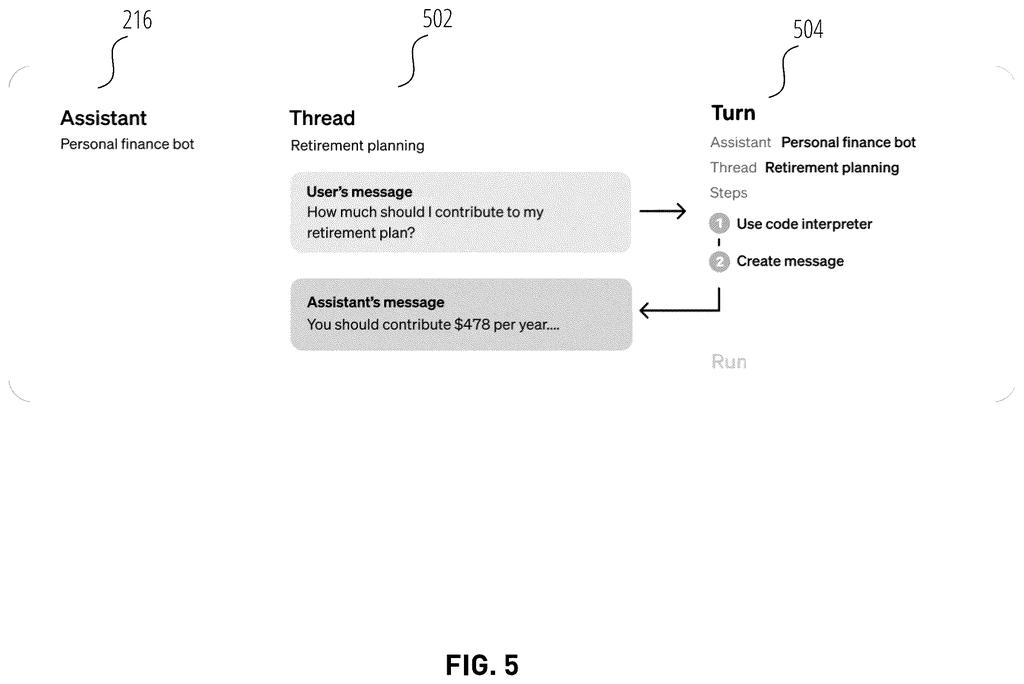
What OpenAI's file-searching AI assistant actually does
Imagine you drop hundreds of company reports, research papers, or internal documents into a folder and ask an AI assistant: "What did our Q3 sales team recommend?" Normally, an AI has no idea what's in your private files. This patent describes a system that changes that.
OpenAI's filing covers a method where the AI assistant can call on a dedicated file search tool when it gets a question that requires digging through a specific collection of documents. The assistant figures out that a file search is needed, sends the right query to the tool, gets back the relevant passages, and then uses those to write its answer.
For you, this means the AI stops being a general-knowledge engine and starts acting more like a research assistant that actually knows your material. Think of it as giving the AI a library card for your own files.
… determining, by the generative response engine, to utilize a file search tool to search the collection of files for information relevant to generating the response …
Translation: The AI decides on its own when it needs to look through your uploaded documents to answer your question.
How the assistant queries and pulls from your file index
The patent describes a pipeline with three moving parts: a generative response engine (the AI that writes answers), a file search tool (a separate index that knows what's in a collection of documents), and the documents themselves stored in that index.
When you ask the AI a question, it first decides whether a file search is warranted. If it determines the answer lives in your document collection rather than its general training, it fires a query at the file search tool. That tool scans the indexed files and returns the most relevant passages (not the whole documents, just the useful chunks). The AI then uses those passages to compose its final response.
The key technical detail is that the file search tool operates as a callable function the AI can invoke mid-conversation. This is sometimes called a "tool use" or "function-calling" pattern, where the AI knows it has access to external capabilities and decides on its own when to use them. The index is built separately, which means large file collections can be searched quickly without the AI having to read every document from scratch each time.
The claim is broad: any prompt, any collection of files, the AI decides when to search and what to query. That decision logic sitting inside the AI itself is the core of what the patent protects.
… the present technology pertains to a service that can create a database and index of files and make them searchable by the generative response engine, which can provide responses based on the documents in the index.
Translation: The system organizes your files into a searchable library so the AI can read them and use that data for its answers.
What this means for people who work with large document sets
For anyone who has tried to get an AI to answer questions about a specific set of documents, this describes the architecture that makes that actually work well. The AI doesn't hallucinate answers from general knowledge when the real answer is in your files, and it doesn't require you to paste in documents manually. The file search happens automatically, mid-conversation, when the AI judges it necessary. That judgment layer is what separates this from a simple keyword search bolted onto a chatbot.
OpenAI already offers something called "file search" inside its Assistants API, so this patent likely covers the underlying method powering a live product feature. The broader AI industry is racing to build reliable retrieval systems that let language models work with private, up-to-date documents without retraining, and this filing sits squarely in that race, alongside the latest Big Tech patents in AI document retrieval and enterprise knowledge tools.
If you have ever uploaded a PDF to ChatGPT and gotten a confident wrong answer, the failure this patent addresses is exactly that one. The explicit decision layer where the AI chooses to search instead of guessing is the part that matters most to the person on the other end of the conversation. Whether OpenAI's implementation delivers consistent accuracy will be settled by the product; the architecture described here is at least built around the right problem.
There are more where this came from
We read every patent application Big Tech publishes and send you the ones worth knowing. Plain English, free, every week.
The drawings
11 drawing sheets from US 2026/0236435 A1 · click any drawing to enlarge


Want this weekly breakdown for a company we don't cover? Patentlyze Pro →
Be the first to weigh in