
Salesforce Patents an AI That Writes Customer Service Resolution Plans on Its Own
Every time a support agent opens a new case, they spend time reading the history, looking up policy, and figuring out what to do next. Salesforce wants an AI to do all of that before the agent even clicks.
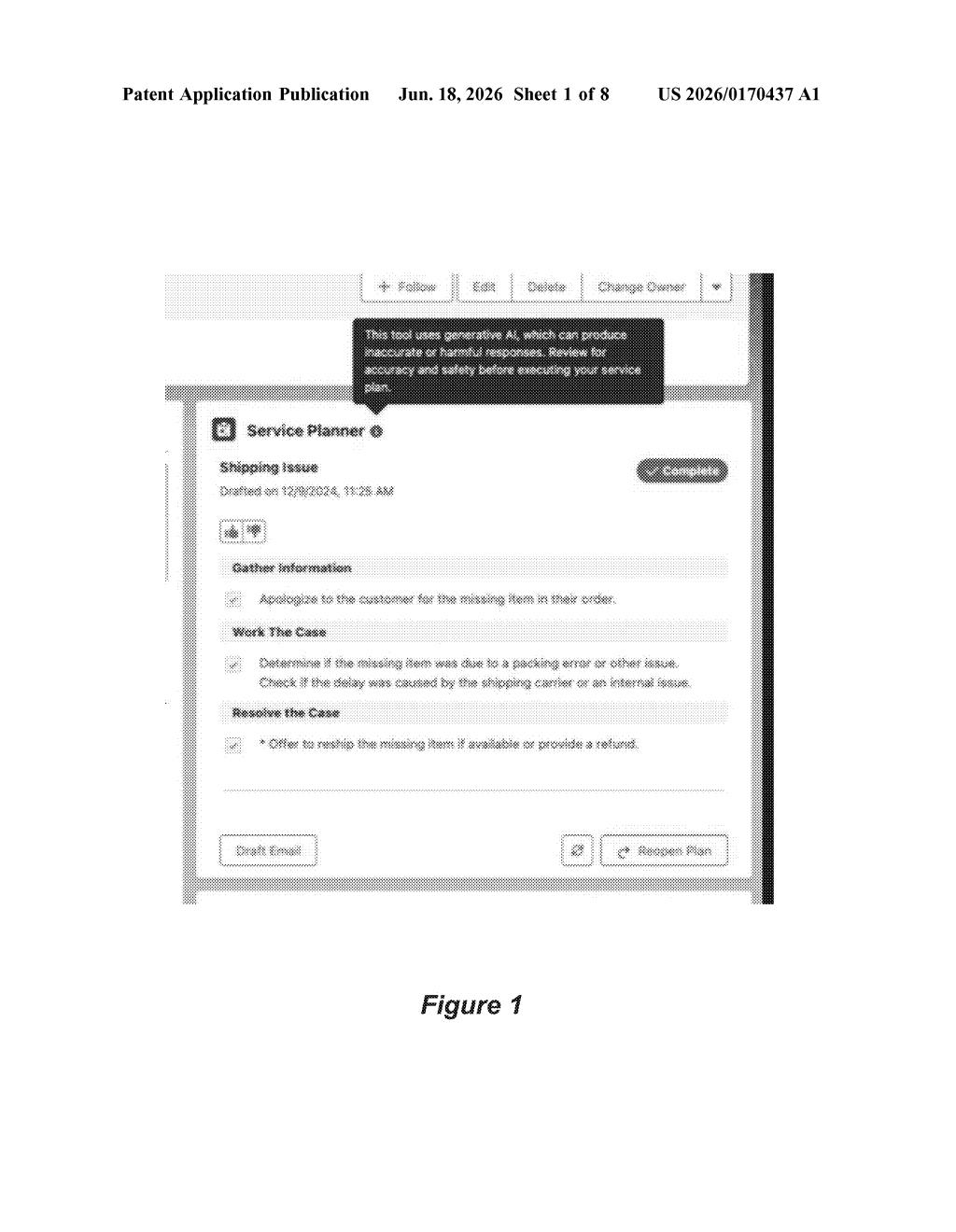
What Salesforce's auto-generated service plans actually do
Imagine you work a customer service desk. A new complaint lands in your queue — maybe someone was billed twice, or their account is locked. Before you can help, you have to read through the whole case history, look up the relevant company policy, and figure out the right steps to fix it. That takes time, and it's work you do before you've actually helped anyone.
Salesforce's patent describes a system where an AI reads the case for you, figures out what kind of problem it is, pulls the right policies, and then writes out a numbered action plan — complete with which software tools to use and in what order. You'd get a ready-made to-do list instead of starting from scratch.
The key detail is that the AI does all of this in a single pass, using one structured prompt that bundles the case summary, company policies, and available tools together. That's a practical engineering choice: fewer back-and-forth AI calls means faster results. Whether it's good enough to trust in live customer interactions is a separate question.
How the LLM turns a support case into an ordered action plan
The system works in four stages, all automated:
- Case ingestion: It pulls in all the raw data about a support ticket — customer history, issue description, prior interactions.
- Summarization: A large language model (LLM — think the same kind of AI that powers ChatGPT) condenses that data into a concise case summary.
- Topic classification: The LLM then decides what category the problem falls into (billing dispute, account access, service outage, etc.).
- Plan generation: Using the topic, the system retrieves relevant company policies, then feeds everything — the summary, the policies, and a list of available software tools — into a single prompt. The LLM outputs an ordered list of steps to resolve the case.
The single-prompt design is intentional. Rather than chaining multiple AI calls together (which adds latency and potential for errors), the entire reasoning task is handed to the model at once with explicit instructions to weigh all the inputs together.
The output is a structured plan: not a vague suggestion, but a sequenced list of actions tied to specific tools the support agent or automated workflow can execute.
What this means for customer service software and agents
Salesforce's core business is customer relationship management (CRM) software — the systems companies use to manage support tickets, sales leads, and customer data. A tool that auto-generates resolution plans slots directly into that stack, potentially reducing the time agents spend on triage before they've done any actual work. For large contact centers handling thousands of cases a day, even small per-case time savings add up fast.
This also fits Salesforce's broader push into what it calls "agentic AI" — AI systems that don't just answer questions but take action steps on behalf of users. You might not notice this directly, but if your next customer service interaction feels faster or more consistent, a system like this could be part of the reason why.
This is a workaday automation patent, not a conceptual leap — the underlying idea (use an LLM to generate a plan from case data and policy) is straightforward. What's worth noting is the single-prompt architecture and the explicit inclusion of available software tools in that prompt, which suggests Salesforce is thinking seriously about deployable, action-ready outputs rather than just AI-generated suggestions that still require human interpretation. Practical, not flashy.
There are more where this came from
We read every patent application Big Tech publishes and send you the ones worth knowing. Plain English, free, every week.
Want this weekly breakdown for a company we don't cover? Patentlyze Pro →