AMD
AMD · Security · Filed Feb 7, 2025 · USPTO published Aug 13, 2026 · Aug 13 release
AMD Patent Would Stop AI Chatbots From Producing Harmful Outputs Before They Escape
AMD is patenting a system where one AI sits inside a chip and watches another AI's internal thought process in real time, ready to pull the alarm the moment something looks dangerous.
- Publication number
- US 2026/0236580 A1(US20260236580A1)
- Applicant
- XILINX, INC.
- Filed · Published
- Feb 7, 2025 · Aug 13, 2026
- Inventors
- Sarunas Kalade, Shane Fleming, Graham Schelle
- Status when we published
- Waiting for an examiner
- Document
- 20 claims
- US classification
- 706/46
How AMD's AI-watching-AI safety system actually works
You're running a powerful AI assistant on your company's server, and somewhere inside that model, a manipulated prompt is steering it toward generating something harmful. By the time the output lands in front of a user, it's too late.
AMD's patent describes a way to catch that problem earlier, by having a second, smaller AI watch the first one's internal signals while it's still "thinking." Those internal signals, called activation values, are the intermediate calculations a neural network makes as it processes a request. The watchdog AI checks those signals against patterns it's been trained to recognize as dangerous, and if something trips its alarm, it triggers an exception, essentially stopping the first AI in its tracks before a harmful response is ever produced.
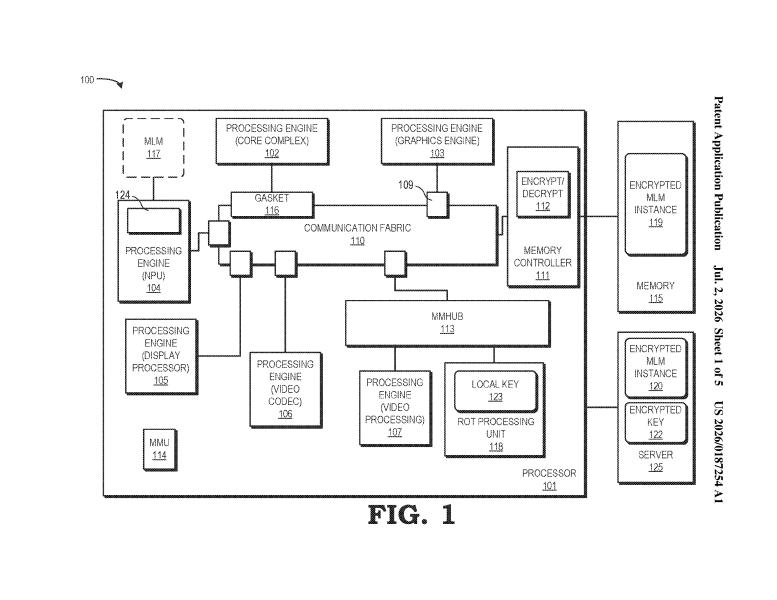
The key detail is that all of this happens on the chip itself, not after the fact in software. AMD designs the chip hardware (specifically the accelerators and shared memory) to make this real-time interception possible.
… intercepting, at the one or more trained machine learning models, a subset of activation values of one or more intermediary layers of the genAI inference model from a memory shared by the one or more parallel processors and the one or more accelerators …
Translation: The system monitors the internal data of an AI model while it is running to see what it is thinking.
How the interceptor reads activation values mid-inference
The system involves two AI models running simultaneously on the same processing hardware. The first is a generative AI inference model (think a large language model or image generator) running on parallel processors. The second is a smaller trained machine learning classifier running on dedicated accelerators, separate processing units optimized for specific tasks.
The trick is shared memory. Because both models have access to the same memory pool, the watchdog model can intercept activation values from the generative model's intermediary layers. Activation values are the numerical outputs of each internal layer of a neural network as it processes data, essentially the model's working notes as it builds a response. By reading those notes mid-process, the classifier can evaluate whether the generative model is heading somewhere dangerous.
The classifier has been pre-trained to recognize patterns in activation values that correspond to malicious behavior, such as outputs driven by adversarial prompt injections or jailbreak attempts. If the intercepted values meet one or more flagged criteria, the classifier fires off an exception, a low-level hardware interrupt that halts or redirects the inference process before a harmful output is ever assembled.
- Generative AI runs on parallel processors (GPUs or similar)
- Watchdog AI runs on dedicated accelerators in the same chip
- Both share a memory space so the watchdog can read internal signals
- A flagged result triggers an exception that stops the bad output
A trained machine learning model intercepts a subset of activation values of a generative artificial intelligence inference model executing at a processing system and classifies the subset of activation values as malicious based on the subset of activation values meeting one or more criteria.
Translation: A secondary AI watches the main AI to identify and flag dangerous or harmful patterns in its internal data.
What this means for AI safety inside chips
Most current AI safety measures work at the input or output layer, either screening what users type in or filtering what the model produces. AMD's approach targets the layer in between, the model's own internal processing, which is harder to game because it doesn't depend on recognizing specific words or phrases. A cleverly worded jailbreak prompt might fool a text filter, but the underlying pattern of activations it produces inside the model may still look anomalous to a well-trained classifier.
The tradeoff is real and worth naming: running a second AI model on every inference adds computational overhead, and false positives (the watchdog flagging legitimate outputs as malicious) could make the system frustrating or unreliable in production. Whether that cost is worth it depends entirely on how accurate the classifier can be at scale, which the patent doesn't fully answer. AMD's chip-level approach to AI safety is one of the more concrete examples among new Big Tech patents targeting AI security at the hardware layer rather than the application layer.
Source: US 2026/0236580 A1 at the USPTO (PDF). Full patent text and figures are in the official publication.
Get our take in your Top Stories
Liked this breakdown? Add Patentlyze as a preferred source on Google, and our plain-English take shows up more often in your Top Stories the next time AMD patent news breaks.
Add Patentlyze on Google
One click.
There are more where this came from
We read every patent application Big Tech publishes and send you the ones worth knowing. Plain English, free, every week.
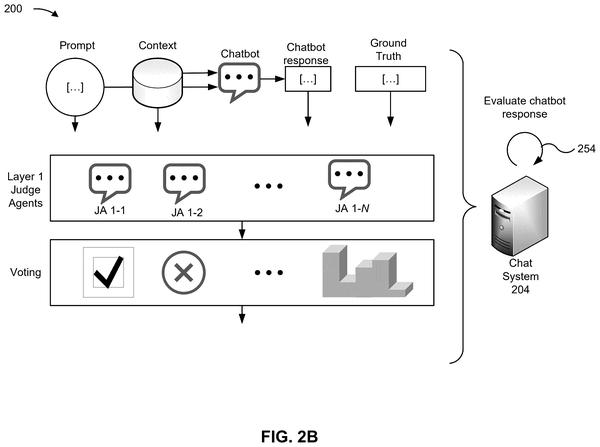
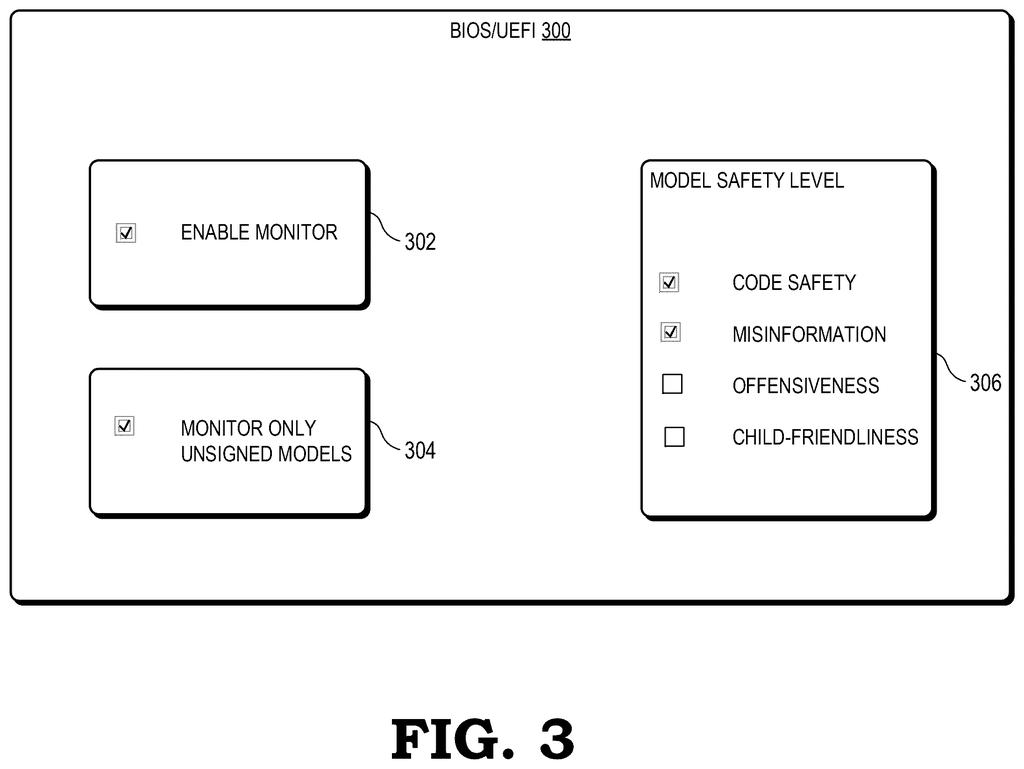
The drawings · 4 sheets
4 drawing sheets from US 2026/0236580 A1 · click any drawing to enlarge


More from AMD
All 119 AMD patents →


More in Security
All 341 Security patents →
Samsung
Samsung Patents Technology to Teach Security Systems to Spot Fake Fingerprints and Face Scans
IBM
IBM Patents an AI System That Watches Digital Assets for Misuse in Real Time
IBM
Red Hat Patents a System That Strips Harmful AI Commands Before They Run
IBM