
Qualcomm Patents a System That Picks the Right AI Model for Your Phone's Conditions
Your phone might soon carry dozens of specialized AI models, and a tiny 'referee' network would decide, on the fly, which one fits the current situation best.
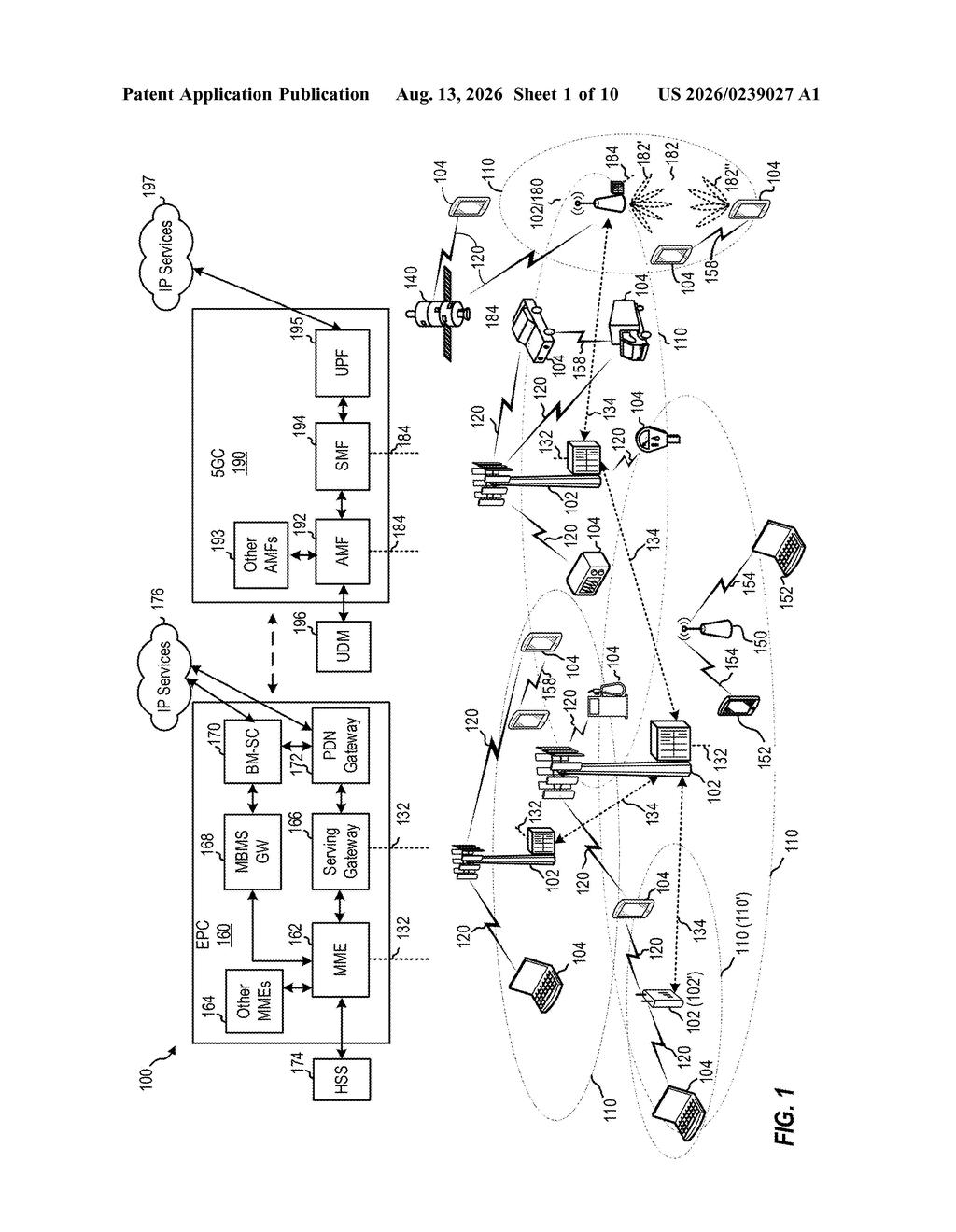
How Qualcomm's model-picker reads your phone's situation
You're streaming video on your phone while moving through a crowded area, and the signal keeps changing. Behind the scenes, the chip running your wireless connection has to make fast decisions, and different AI models handle different conditions better.
Qualcomm's patent describes a system where a small, dedicated AI acts like a matchmaker. It looks at a fingerprint of the current conditions, then compares that fingerprint against stored fingerprints from each available AI model's training data. Whichever stored fingerprint looks most similar wins, and that model takes over.
The idea is that your device stops using a one-size-fits-all AI and instead picks the most appropriate model for the moment, without needing a human engineer to write rules for every possible scenario. The selection happens automatically, using the training history of each model as its calling card.
… determine, using the comparison NN, a plurality of similarity scores based at least in part on the input feature vector and the plurality of training feature vectors, wherein each similarity score of the plurality of similarity scores indicates a similarity between the input feature vector and a respective training feature vector …
Translation: The system calculates how closely your current data matches the data used to train different AI models.
How the comparison network scores and selects AI models
The patent describes a three-step process running on a device's processing system:
- Collect training feature vectors: Each AI model in the library was trained on a particular dataset. The system compresses that dataset into a compact numerical summary called a feature vector (think of it as a fingerprint that captures the shape of the data the model learned from).
- Fingerprint the current input: When the device encounters a new situation, a second feature vector is computed from the live incoming data, using the same compression method.
- Score and select: A comparison neural network (a small AI whose only job is comparison) measures how closely the live fingerprint matches each stored training fingerprint, producing a similarity score for every candidate model. The model with the highest match score is selected.
The comparison network itself is a learned system, meaning it has been trained to judge similarity in a way that actually predicts which model will perform best, rather than just doing a simple distance calculation.
This approach belongs to a family of techniques called meta-learning (learning how to choose between learners), and it avoids the need to run all candidate models in parallel or rely on manually tuned selection rules.
The wireless communication device may select an NN model of the plurality of NN models based at least in part on the plurality of similarity scores.
Translation: Your phone automatically chooses the best AI model to run by comparing your current task to its library of training data.
What this means for AI on future 5G chips
On-device AI is only useful if the right model is running at the right time. Qualcomm's chips power a huge share of Android handsets and 5G modems worldwide, so a robust model-selection layer could affect how well wireless connections perform in tricky real-world conditions, from stadium crowds to fast-moving vehicles.
For Qualcomm specifically, this filing fits into a broader push to make AI inference more efficient at the chip level, handling more decisions locally rather than offloading them to a server. The wireless AI space is attracting sustained attention from chipmakers, and new Big Tech patents in this area show a clear race to own the selection and orchestration layer that sits above individual models.
Claim 1 is written broadly enough to cover essentially any wireless device that uses a comparison neural network to pick among AI models based on feature-vector similarity. That scope is ambitious: it does not restrict the claim to a particular type of wireless standard, a particular similarity metric, or even a particular number of models. If granted in this form, it could give Qualcomm leverage over a wide range of on-device AI routing architectures. The practical question is whether prior art in meta-learning or nearest-neighbor model selection narrows what the USPTO will allow, because the core idea of matching input distributions to training distributions has deep academic roots. The claim's strength lies in its tight coupling to a wireless device context, which is Qualcomm's home turf and where they're most likely to defend it.
There are more where this came from
We read every patent application Big Tech publishes and send you the ones worth knowing. Plain English, free, every week.
The drawings
10 drawing sheets from US 2026/0239027 A1 · click any drawing to enlarge


Want this weekly breakdown for a company we don't cover? Patentlyze Pro →
Be the first to weigh in