
Intel Patents a Plug-In Device That Gives Any Laptop Mobile Broadband
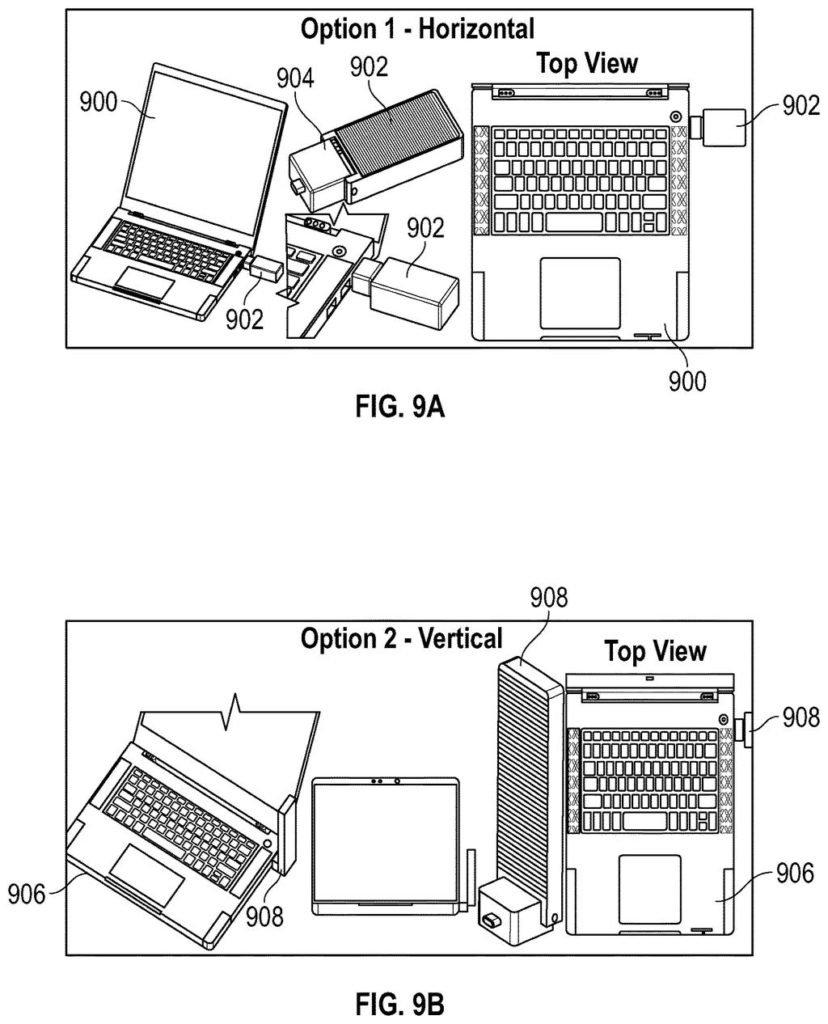
Intel has patented a small dongle that plugs into any USB-C port and instantly gives a laptop cellular internet access, no built-in modem required. The clever part is how the dongle squeezes a full wireless modem onto a single connector.
What Intel's plug-in cellular dongle actually does
Every time you open your laptop at a coffee shop and reach for the Wi-Fi password, you're reminded that most laptops have no cellular radio inside. Getting always-on internet like your phone has means buying a specialized device or a laptop with an expensive built-in modem.
Intel's patent describes a small dongle that plugs into a USB-C port and handles all the heavy lifting itself. It pulls power from the port, boots its own cellular modem, and tunnels your internet traffic through the same connector. Your laptop sees it as a standard network device and doesn't need any special hardware inside.
The dongle is self-contained enough that it can even configure its own internal components after startup, repurposing connector pins that aren't needed for data into a private communication channel between its own chips. You just plug it in and get cellular internet.
initiate wireless wide area network (WWAN) communication, the WWAN communication including messages carried over the USB SuperSpeed data lanes of the USB-C connection circuitry, wherein the USB 2.0 data lines are used for device enumeration …
Translation: The device uses standard USB data lanes to send cellular internet traffic while using other lines to identify itself.
How the USB-C pins carry both data and modem signals
The patent describes an apparatus built around three main components working together over a single USB-C connector.
USB-C connection circuitry forms the physical bridge to the host laptop. The claim specifically calls out three distinct electrical paths inside that one cable connector:
- USB SuperSpeed data lanes, the high-speed channels that carry actual cellular traffic (your browsing, video calls, downloads) back and forth.
- USB 2.0 data lines, the slower legacy channel, used here only for device enumeration (the handshake where the laptop recognizes a new device is plugged in).
- SBU pins, two sideband pins normally used for alternate functions like DisplayPort audio; after the modem boots, the dongle repurposes these pins to run I2C (Inter-Integrated Circuit, a short-range chip-to-chip messaging protocol) so the modem can configure the dongle's I/O hardware to support M.2-style features (M.2 is the compact slot format used for built-in cellular modems in premium laptops).
I/O circuitry receives power from the USB-C connection and wakes the baseband circuitry (the cellular modem core) when needed. Once awake, the baseband handles all WWAN (Wireless Wide Area Network, meaning cellular 4G/5G) communication. The split between fast lanes for data, slow lines for enumeration, and repurposed pins for internal configuration is the core engineering trick that makes this work on a standard port.
… baseband circuitry to initiate wireless wide area network (WWAN) communication responsive to receiving a wake signal from the I/O circuitry. The WWAN communication can include messages received from the USB-C connection circuitry.
Translation: The hardware wakes up and starts a cellular data connection as soon as it receives a signal through the USB port.
What this means for laptops without built-in cellular
For the average laptop buyer, this matters because it would make cellular internet an afterthought rather than a purchase decision. Today, if you want always-on LTE or 5G on a laptop, you either pay a premium for a model with a built-in modem or carry a separate hotspot device with its own battery and subscription. A USB-C dongle approach means any laptop, even a budget one, could gain that capability for the cost of the dongle and a data SIM.
For Intel, the patent positions the company in the modem-module space at a moment when PC makers are under pressure to make every laptop feel more like a connected device. The claim structure is tight enough to cover the specific combination of SuperSpeed lanes for data, USB 2.0 for enumeration, and repurposed SBU pins for post-boot configuration, which means it targets a real engineering implementation rather than an abstract idea. Coverage of similar connectivity filings sits alongside this one in the stream of Big Tech patent news that tracks where chipmakers are placing their bets on PC hardware.
Claim 1 is narrower than the abstract suggests, which cuts both ways. The specific combination of SuperSpeed lanes for payload, USB 2.0 lines for enumeration only, and SBU-pins-repurposed-as-I2C-for-M.2-config is a tightly drawn engineering recipe, so a competitor could sidestep it by using a different pin assignment or enumeration strategy. That narrowness limits how much the claim would block in practice. What it does cover, though, is a sensible and complete implementation: Intel has clearly built or prototyped this, and the claim reads like documentation of a real design rather than a speculative land-grab. If the dongle ships, this filing gives Intel a defensible perimeter around that exact product architecture.
There are more where this came from
We read every patent application Big Tech publishes and send you the ones worth knowing. Plain English, free, every week.
The drawings
11 drawing sheets from US 2026/0236081 A1 · click any drawing to enlarge


Want this weekly breakdown for a company we don't cover? Patentlyze Pro →
Be the first to weigh in