
Samsung
Samsung · Antenna & radio · Filed Feb 13, 2026 · USPTO published Jun 25, 2026 · Jun 25 release
Samsung Patents an Antenna That Redirects Its Own Signal on the Fly
Most antennas point one way and stay there. Samsung is patenting a design that can flip its signal direction just by toggling a single element, no moving parts required.
- Publication number
- US 2026/0180165 A1(US20260180165A1)
- Applicant
- Samsung Electronics Co., Ltd.
- Filed · Published
- Feb 13, 2026 · Jun 25, 2026
- Inventors
- Sangbong SUNG, Jinu KIM, Yongsun SHIN, Houn BAEK
- Status when we published
- Waiting for an examiner
- Document
- 20 claims
- US classification
- 455/73
- Parent application
- Continuation of PCT/KR2024/007649 (filed Jun 4, 2024)(PCTKR2024007649)
What Samsung's direction-switching antenna actually does
Picture a flashlight that can instantly switch from shining forward to shining sideways, without you physically turning it. That's roughly what Samsung is trying to do with radio signals inside a device.
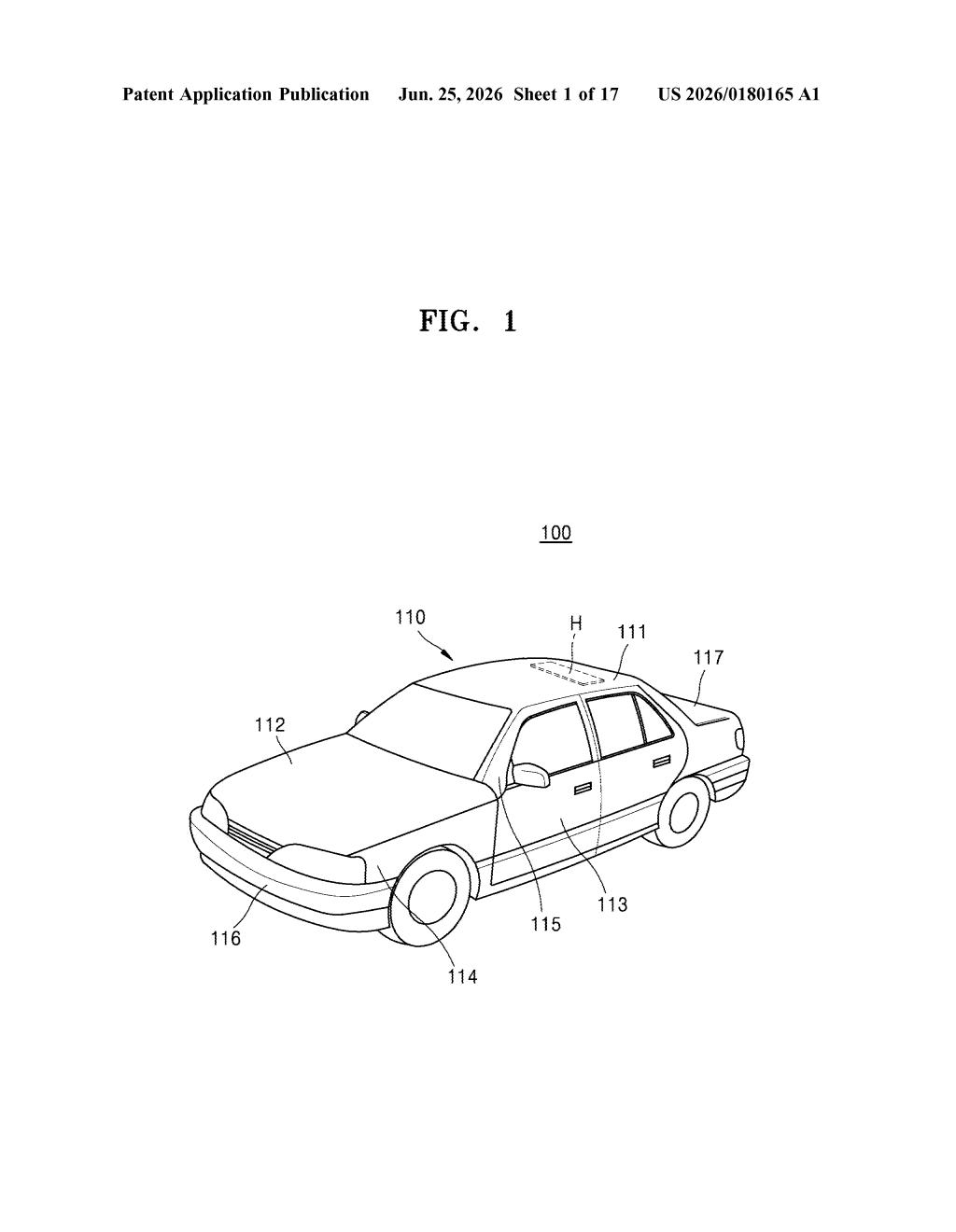
This patent describes an antenna made of three flat, tile-like pieces. Two of them handle the main job of sending and receiving signals. The third piece acts like a switch: when it's left alone, the antenna broadcasts in one direction; when a small grounding signal is applied to it, the whole radiation pattern shifts to a different direction.
The practical upside is that a device could pick the best signal direction for its surroundings, whether it's flat on a table, held in your hand, or tucked in a bag, without needing extra physical antennas or motors to rotate anything.
How the third element flips the radiation pattern
The system uses three patch-type antenna elements (flat, square or rectangular conductors printed on a substrate, similar to those inside most modern phones and routers). The first element receives the feed signal (the actual radio-frequency energy being transmitted), while the second element is held at ground (the electrical reference point, essentially zero volts).
The third element is the clever part. It floats electrically when no signal is applied, producing a first directional radiation pattern. When a ground signal is switched onto it, the element changes how it interacts with the electromagnetic field around the other two, steering the combined output into a second directional radiation pattern.
- Two states, one hardware layout: no new physical antenna is needed for the second direction.
- Switching is purely electronic, meaning it can happen in microseconds.
- The third element acts as a parasitic radiator (an element that shapes the beam without being directly driven by the transmitter).
This approach is a compact take on a classic technique called a switched parasitic array, which has long been used in larger antenna systems but is tricky to shrink into consumer electronics.
What this means for phones and wireless devices
For everyday devices like phones, routers, or wearables, signal direction matters more than most people realize. An antenna that always radiates in a fixed direction can lose performance the moment you rotate the device or move near a reflective surface. A two-state switchable pattern means the device's radio software could test both orientations and stick with whichever gives a stronger, cleaner connection.
For Samsung specifically, this kind of design would be useful anywhere space is tight: think earbuds, smartwatches, or the increasingly thin phone bodies the company ships. Instead of cramming in two separate antennas pointing different directions, one compact assembly handles both jobs.
Source: US 2026/0180165 A1 at the USPTO (PDF). Full patent text and figures are in the official publication.
Get our take in your Top Stories
Liked this breakdown? Add Patentlyze as a preferred source on Google, and our plain-English take shows up more often in your Top Stories the next time Samsung patent news breaks.
Add Patentlyze on Google
One click.
There are more where this came from
We read every patent application Big Tech publishes and send you the ones worth knowing. Plain English, free, every week.
More from Samsung
All 1,629 Samsung patents →
More in Antenna & radio
All 32 Antenna & radio patents →
Qualcomm
Qualcomm Patents a Way to Process Phone Calls While the Modem Sleeps
Google
Google Patents a Way to Connect Devices by Pointing Your Phone at Them

Apple
Apple Patents a System to Sort Nearby Device Signals Before Your Phone Responds

Google