
IBM Patents a Way to Fill Your Virtual Study Room With AI-Generated Classmates
Studying alone in a virtual classroom is its own kind of lonely. IBM has filed a patent for a system that fills empty VR study sessions with AI-generated participants tailored to your own learning history.
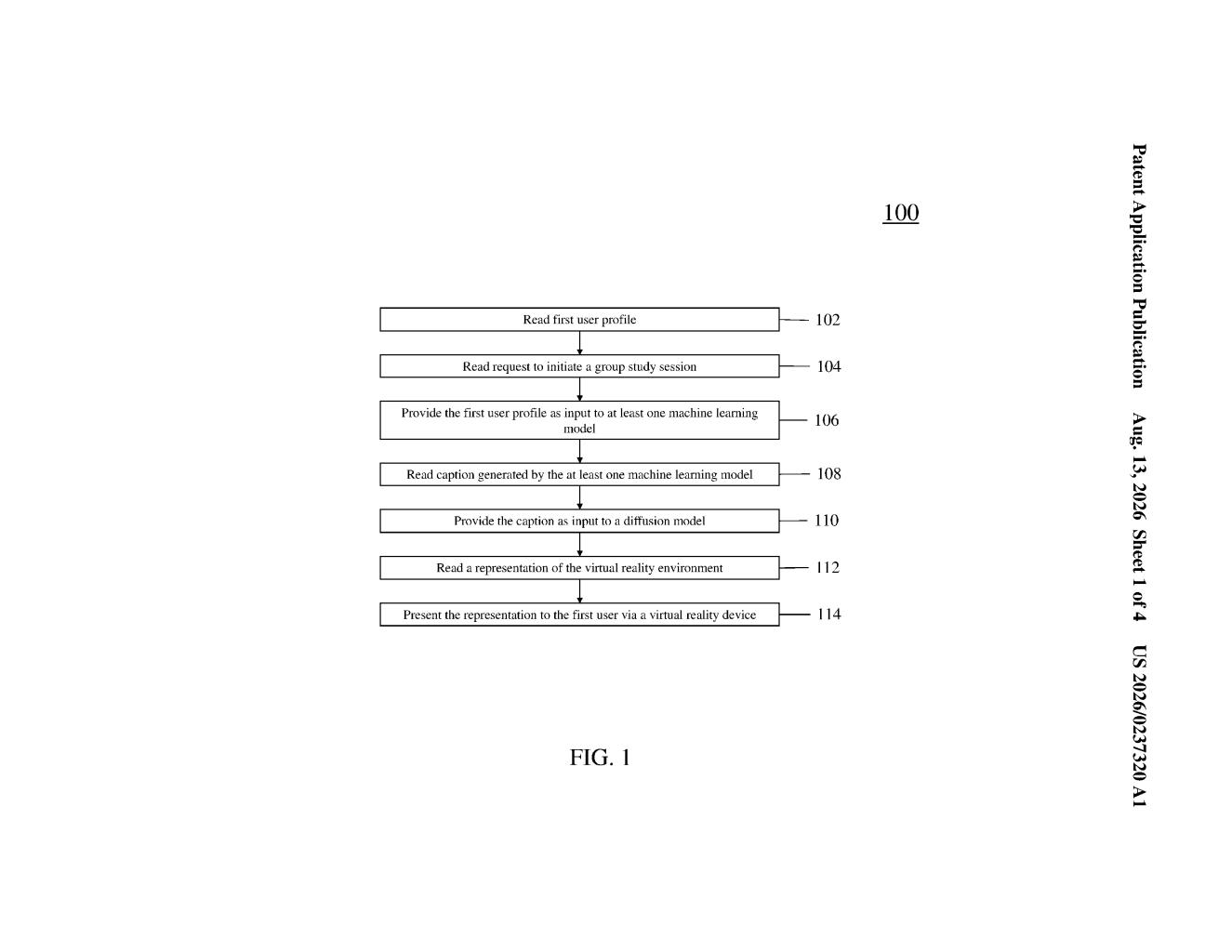
How IBM's VR study session AI actually works
Group study works better than solo study for a lot of people, but scheduling a group in a virtual reality learning app is hard when everyone's calendars don't line up. IBM wants to fix that by generating fake-but-plausible study partners on the fly, so your VR classroom never feels empty.
Here's how it works at a high level: the system looks at your past activity in the VR environment, like what you've studied, how long, and in what style, then uses that information to create simulated participants who feel like they belong in a session with you. The AI conjures up visual representations of those companions inside the virtual room.
The goal is to preserve the social feel of group study even when no real group is available. Whether that actually helps retention is a separate question, but the idea is that the presence of other "students" keeps you engaged the same way a library or coffee shop does for some people.
reading a first user profile comprising information characterizing previous activity of a first user in a virtual reality environment; reading a request to initiate a group study session in the virtual reality environment; providing the first user profile as input to at least one machine learning model …
Translation: The system analyzes your past virtual reality habits to help create study partners for your next session.
How the diffusion model builds each simulated student
The patent describes a multi-step pipeline that starts with reading the user's profile, a structured record of their previous VR activity. That profile gets fed into a machine learning model, which produces a text caption describing one or more simulated users (think: a brief written sketch of who each AI classmate should look like and how they should behave).
That caption is then handed to a diffusion model (the same class of AI that powers image generators like Stable Diffusion or DALL-E, which creates images from text descriptions) to render a visual representation of the VR environment, complete with the simulated participants placed inside it. The final rendered scene is what gets displayed to the real user through their VR headset.
Key components the patent describes:
- User profile ingestion: past session data shapes what kinds of peers get generated
- Caption generation: an ML model converts profile data into a text description of the simulated student
- Diffusion-based rendering: a generative image model turns that description into a visual VR scene
- VR device delivery: the finished scene is presented through a headset in real time
The system is personalized in that your own history drives who shows up in the room, though the patent doesn't specify exactly what behavioral traits the simulated participants display once rendered.
… a caption characterizing at least one simulated user is read, the caption being generated by the at least one machine learning model; the caption is provided as input to a diffusion model; a representation of the virtual reality environment is read, the representation being generated by the diffusion model …
Translation: An AI writes a description of a fake student and then uses an image generator to place them into your virtual room.
What this means for solo learners and online education
For anyone using VR for corporate training, language learning, or test prep, the biggest barrier to group-session formats is coordination: real people have to show up at the same time. A system that generates convincing stand-ins could let platforms offer group-style learning without requiring any scheduling at all, which is a real product problem worth solving.
The approach leans entirely on software, specifically on ML models and a diffusion rendering pipeline, so there's no new hardware required beyond a standard VR headset. That makes the path to a shippable feature shorter than most VR patents, though IBM would still need to validate that AI companions actually improve study outcomes before any serious EdTech partner would build around this. IBM's EdTech and VR AI work sits alongside a wider wave of generative AI filings tracked in the latest Big Tech patents, where several companies are testing AI-populated virtual spaces for training and collaboration.
The shortest path to a real product here is licensing or partnership with an existing VR learning platform rather than IBM shipping a consumer app itself. The pipeline is plausible with today's off-the-shelf diffusion models, and the personalization angle (generating companions from your own study history) is the one differentiating detail in the claim. The open question is behavioral depth: a rendered image of a classmate is very different from a classmate who asks questions, reacts, or keeps you accountable, and the patent describes only the visual generation step. Any interactive behavior layer would have to come from somewhere else.
There are more where this came from
We read every patent application Big Tech publishes and send you the ones worth knowing. Plain English, free, every week.
The drawings
4 drawing sheets from US 2026/0237320 A1 · click any drawing to enlarge


Want this weekly breakdown for a company we don't cover? Patentlyze Pro →
Be the first to weigh in