
Google Files Patent for AI System That Corrects Earthquake Sensor Timing Errors
Earthquake sensors only tell you something useful if they all agree on when a tremor arrived. A new X Development patent trains an AI to correct those timing disagreements automatically, even when the sensor networks feeding it were built to different standards.
What X Development's seismic AI actually corrects
Ever wondered why earthquake warnings sometimes come too late or miss smaller tremors entirely? A big part of the problem is timing: seismic sensors scattered across a region record when a shockwave arrives, but different networks of sensors often use slightly different clocks or reference points, making their readings hard to combine.
X Development (the research arm of Alphabet, Google's parent company) has patented a way to train an AI to fix those timing mismatches automatically. The system learns from simulated earthquakes, practicing with data from multiple sensor networks that have deliberately scrambled arrival times, so it gets good at figuring out the correct timestamps even when the raw data is messy.
The result is a neural network that can take readings from different sensor systems and adjust for the gaps between them, giving you a cleaner, more unified picture of what the ground is actually doing.
… training, using the plurality of graphs as input, the neural network such that the trained neural network generates a time value correction for each arrival time value of the first set of modified training data and the second set of modified training data.
Translation: The AI learns from these charts to figure out how much the sensor timestamps are off.
How the graph neural network syncs mismatched sensors
The patent describes a training pipeline for a graph neural network (a type of AI that works well with interconnected data points, like a web of sensors spread across a map) designed to improve seismic monitoring.
Here is how the training process works:
- Simulated earthquake data is generated, representing what a seismic event would look like.
- Two or more separate sets of sensor readings are created, each mimicking a different real-world monitoring network with its own quirks.
- The system deliberately introduces timing offsets (small, artificial clock errors) into those sensor readings, so the AI learns to recognize and correct misalignment.
- All of this data is organized into graphs, where nodes represent sensors and edges represent relationships between them, which the neural network then learns from.
The trained network's job is to output a time correction value for each sensor reading: essentially, telling the system "this reading was actually 0.3 seconds early" so downstream analysis can be more accurate.
The core technical challenge here is cross-network fusion, combining data from seismic monitoring systems that were not built to talk to each other. The AI learns to bridge that gap through simulation rather than requiring real-world labeled examples, which are hard to collect at scale.
… introducing a time offset to each arrival time value of each second set of seismic values to generate modified seismic training data; generating a plurality of graphs, each graph based on one set of training data from the first set of training data and the at least two sets of sensor values; and training the neural network using the plurality of graphs as input.
Translation: Researchers mess up the clock times on purpose to teach the AI how to spot and fix delays.
What this means for ground-based earthquake detection
Ground-based seismic monitoring is a patchwork: different countries, research institutions, and government agencies run their own sensor networks, and those networks rarely sync perfectly. When a major earthquake or underground event happens near the boundary of two networks, the timing disagreements can degrade location estimates or slow down early warnings. An AI that corrects for those disagreements in real time could make existing infrastructure meaningfully more useful without anyone having to replace hardware.
X Development sits inside Alphabet alongside Google, which has its own earthquake alert work (Google's Android Earthquake Alerts system uses phone accelerometers as a secondary sensor layer). This patent points toward more sophisticated backend analysis rather than consumer alerts, and it is the kind of filing that tracks with interesting tech patents in the geophysics-AI space, where simulation-driven training is becoming a standard tool for problems where real labeled data is scarce.
The shortest path from this patent to a shipped product runs entirely through software: no new sensors, no hardware changes, just a training pipeline and a model that sits on top of existing seismic data streams. That makes the deployment barrier low in principle. What will actually slow it down is validation: seismic agencies are conservative by necessity, and a model trained on simulated earthquakes has to prove itself against real events before anyone trusts it in a warning system. Expect it to surface first as internal research tooling or a commercial geophysical monitoring product, with consumer safety features years behind.
There are more where this came from
We read every patent application Big Tech publishes and send you the ones worth knowing. Plain English, free, every week.
The drawings
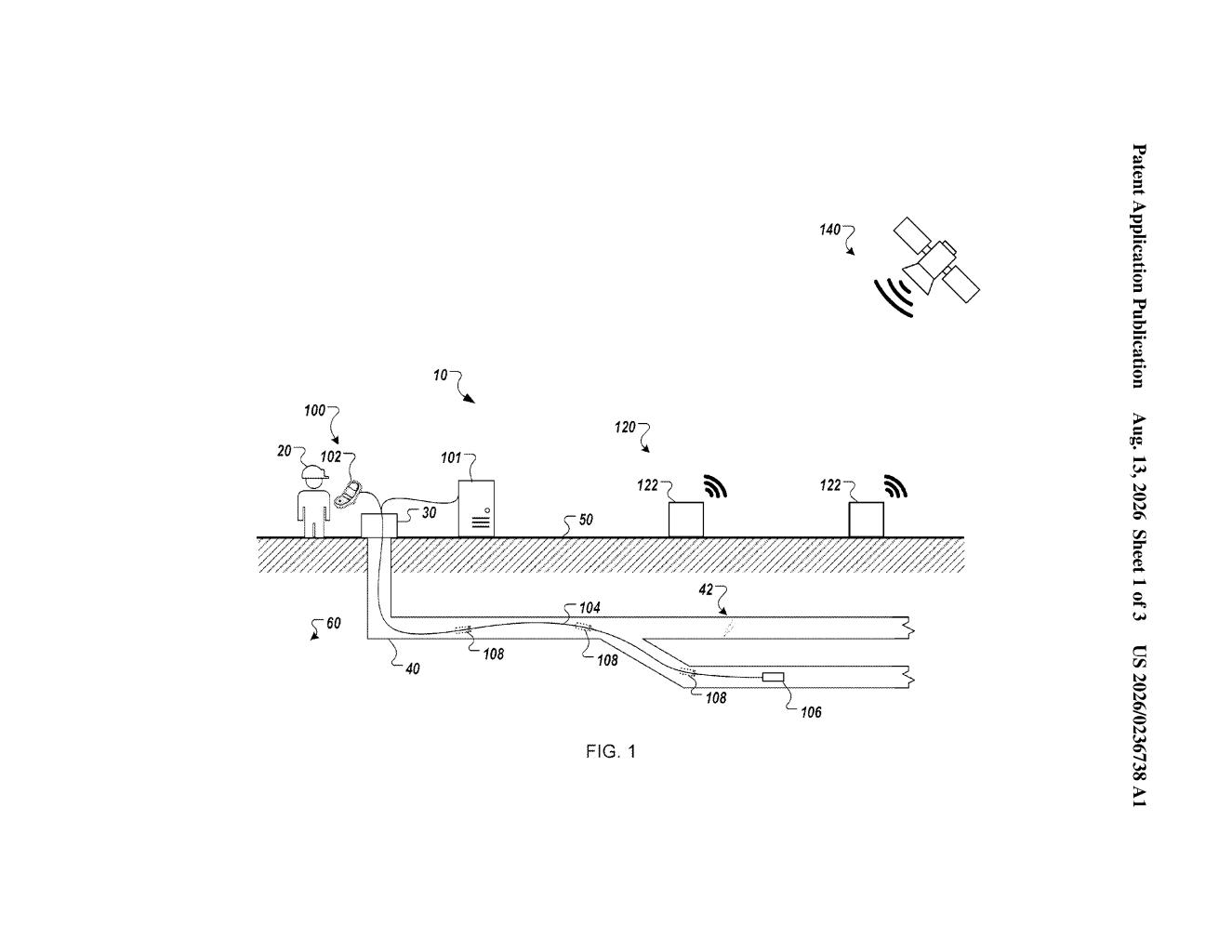
3 drawing sheets from US 2026/0236738 A1 · click any drawing to enlarge


Want this weekly breakdown for a company we don't cover? Patentlyze Pro →
Be the first to weigh in