
IBM Patents a Machine-Learning Method for Quieting Quantum Circuit Noise
Quantum computers make errors constantly, and a big reason is that calculations have to be rerouted around hardware limitations in ways that add noise. IBM is now using machine learning to make that rerouting smarter and quieter.
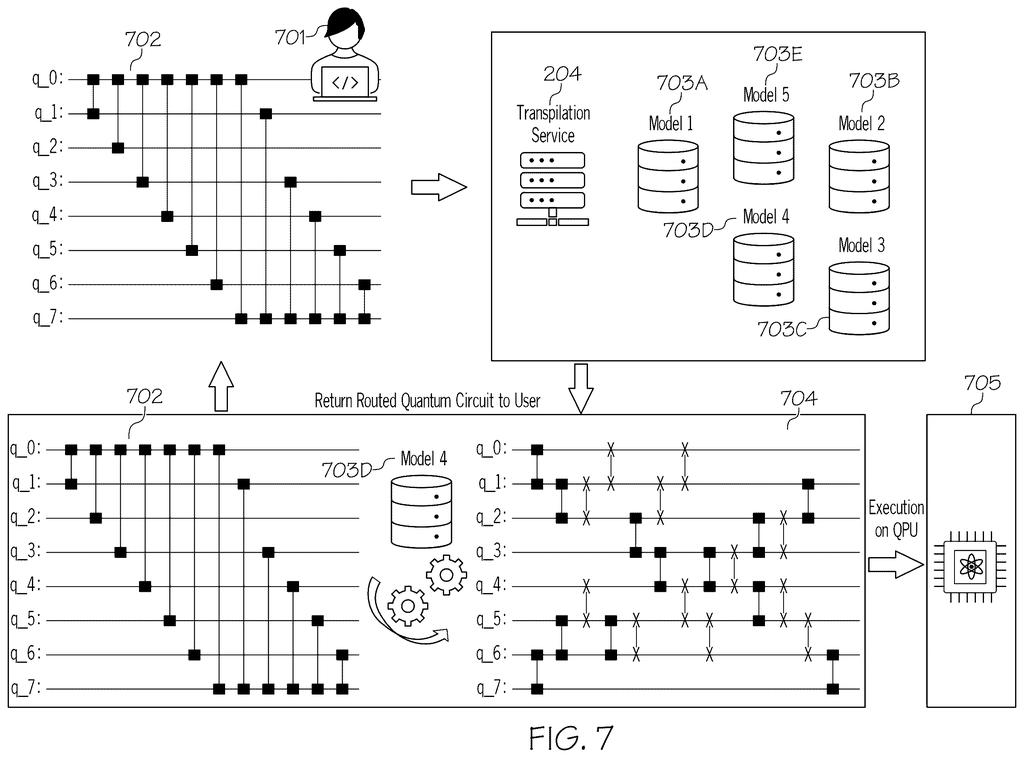
What IBM's quantum circuit routing fix actually does
You're running a calculation on a quantum computer, and the machine scrambles part of the answer because the instructions had to be reshuffled to fit the hardware. That reshuffling, called circuit routing, is one of the main reasons quantum computers produce wrong results today.
IBM's patent describes a system where a machine-learning model learns the best way to do that reshuffling. Instead of a static rule, the model is trained to find routes that keep the number of steps low and the noise low at the same time. It treats the whole problem like a game, scoring each possible route by how much error it introduces.
The practical upside is that the same quantum hardware could produce more accurate results without changing a single physical component. The fix is entirely in software, which matters because building better quantum chips is slow and expensive.
encoding a structure of a quantum circuit to route and noise of a built routed quantum circuit in a cost function; and performing quantum circuit routing using a trained machine learning model based on minimizing said cost function.
Translation: The system uses AI to map out quantum operations while simultaneously calculating how to reduce errors in the hardware.
How the reinforcement-learning agent routes qubits
Quantum computers run programs as sequences of quantum gates (operations on quantum bits, or qubits). The problem is that most quantum hardware only allows certain pairs of qubits to interact directly. When a program needs two qubits that aren't neighbors, the circuit has to be rerouted by inserting extra SWAP gates (operations that move quantum information around). Every extra gate adds noise and potential error.
IBM's method encodes the structure of the quantum circuit (the specific sequence and arrangement of gates) into a reinforcement-learning environment. Think of reinforcement learning like training a dog: an agent tries actions, gets scored on the results, and learns over time to prefer actions that score well.
The scoring function here, called a cost function, penalizes two things at once:
- High gate count (more gates means more chances for error)
- High noise, measured directly from the routed circuit's gate layers
A trained model then performs the routing by choosing moves that minimize that score. Because the model has learned from many examples, it can find good routes quickly at inference time, without re-solving the problem from scratch each time a new circuit arrives.
A noise of a built routed quantum circuit is encoded in a cost function, such as by measuring the noise in the layer(s) of gates of the built routed quantum circuit.
Translation: The software tracks how much interference occurs at each step of the process to help the computer find a cleaner path.
What this means for practical quantum computing reliability
For anyone using a quantum computer, whether a pharmaceutical researcher or a financial risk analyst, more accurate results from the same hardware is a concrete, immediate payoff. Routing errors today often force teams to run calculations many times and average the results to reduce noise, which is expensive and slow. A routing step that's already noise-aware at the software level reduces how much of that repetition is needed.
This is also a signal that IBM sees software-level optimization as a near-term path to better quantum performance, at a time when physical qubit quality improvements are still slow-going. The approach connects to a broader push across the industry to squeeze more from existing hardware, and IBM's quantum-related filings are among this week's Big Tech patents tracking that trend.
For the people actually running quantum workloads, the failure this patent targets is one they hit every time: results that are too noisy to trust without expensive repetition. Using a trained model to reduce that noise at the routing stage, before a circuit ever touches the hardware, addresses a real friction point that slows down quantum workflows in practice. The reader-impact case here is straightforward: fewer reruns, more reliable output, no new hardware required.
There are more where this came from
We read every patent application Big Tech publishes and send you the ones worth knowing. Plain English, free, every week.
The drawings
11 drawing sheets from US 2026/0236819 A1 · click any drawing to enlarge


Want this weekly breakdown for a company we don't cover? Patentlyze Pro →
Be the first to weigh in