
Samsung Patents a Technique to Train AI That Learns Your Preferences Faster
Training the AI that decides what to show you next on a shopping site or social feed is surprisingly expensive, mostly because of how much data has to shuttle in and out of memory. Samsung's new patent targets that exact bottleneck.
How Samsung's DLRM training shortcut actually works
Ever tried to find one email in a ten-year archive? Your computer slows to a crawl because it's pulling up giant files it wasn't ready for. AI recommendation systems face the same problem at massive scale: the model has to look up millions of stored data points during training, and memory can't keep up.
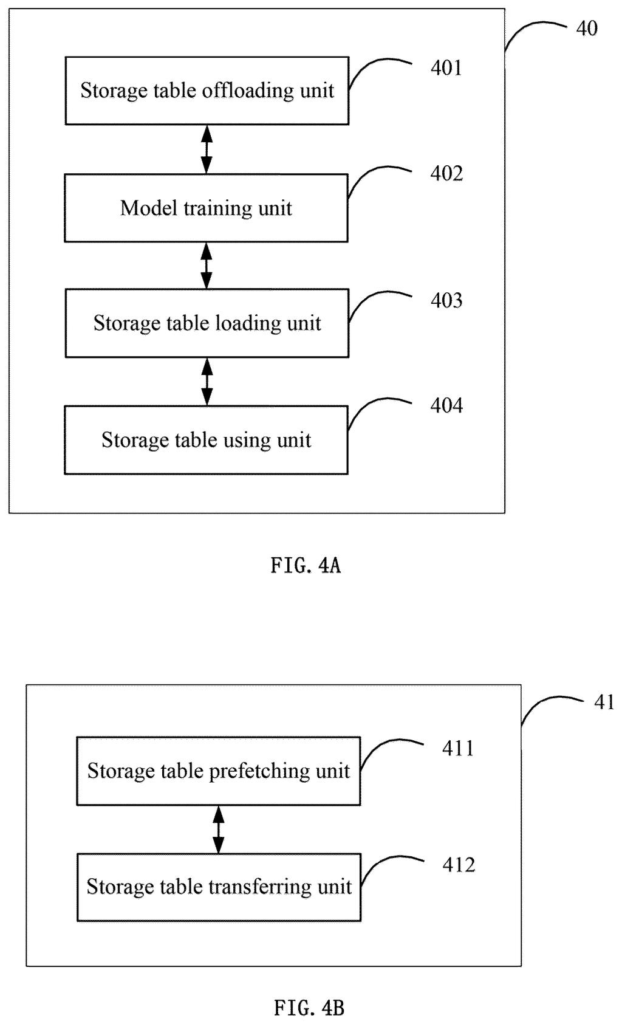
Samsung's patent describes a way to manage those lookups more efficiently. Instead of waiting until the data is needed and then fetching it, the system anticipates which lookup tables will be required next, loads them into faster memory in advance, and then stores updated data back into those tables as training progresses. It's a fetch-ahead, write-back loop designed to keep the processor busy instead of waiting around.
The practical payoff is that AI recommendation models, the kind that power product suggestions, video feeds, and search rankings, could train faster or run on hardware with less high-bandwidth memory, which is both expensive and power-hungry.
offloading one or more storage tables to a memory device; training a DLRM based on training data, wherein during the training, a storage table prefetched from the memory device is loaded according to a training phase …
Translation: The system moves data to a separate memory chip and pulls it back just when the AI needs it for a specific learning step.
How the prefetch-and-store loop cuts training bottlenecks
A deep learning recommendation model (DLRM) is a type of AI that maps your past behavior to things you might want next. Training one requires repeated lookups into enormous embedding tables (think of them as giant dictionaries that convert user IDs or product categories into numbers the neural network can process). Those tables can be hundreds of gigabytes, far larger than what fits in fast on-chip memory.
Samsung's patent describes a three-step approach:
- Offload: Move the large storage tables out of the main processor's local memory and into a separate memory device, freeing up fast memory for computation.
- Prefetch by training phase: The system anticipates which table will be needed at each stage of training and loads it into fast memory before the processor asks for it, eliminating the wait.
- Write back: Feature data computed during that training phase gets stored back into the same table, so the table stays current across the full training run.
The key phrase in the claim is "according to a training phase," meaning the system uses the known, predictable structure of the training loop to schedule memory transfers intelligently rather than reacting to requests as they arrive. This is a classic prefetching strategy (loading data before it's needed, like a chef prepping ingredients before dinner service) applied to the specific rhythm of DLRM training.
… storing feature data obtained during the training into the loaded storage table.
Translation: As the AI learns your habits, it saves those new details directly into the memory space it just prepared.
What this means for Samsung's AI chip ambitions
Recommendation AI is arguably the most commercially important category of machine learning right now: it drives e-commerce, streaming, social media, and digital advertising. The companies that can train better recommendation models faster have a direct revenue advantage. Samsung sits in an interesting position here because it makes both the memory chips (DRAM, HBM) and the processors (Exynos, NPUs) that these systems run on, so a patent about how memory and processors coordinate during AI training touches its core business.
This filing is primarily a software and firmware method, which means it could theoretically run on existing hardware with a driver or firmware update. That shortens the path to shipping it considerably compared to a patent requiring new silicon. Samsung's AI chip and memory businesses are actively competing for data-center customers, and new Big Tech patents in the memory-compute coordination space are arriving steadily as that competition intensifies.
The ship path here is shorter than most AI hardware patents because the core invention is a scheduling algorithm, and algorithms ship as software. If Samsung already has the hardware handshake between its memory devices and processors in place, this is essentially a firmware update away from being a real feature. The document describes a method rather than a chip design, which is the clearest indicator that a product team could pick it up without waiting for a new silicon tape-out. The limiting factor is probably integration work with specific DLRM training frameworks.
There are more where this came from
We read every patent application Big Tech publishes and send you the ones worth knowing. Plain English, free, every week.
The drawings
7 drawing sheets from US 2026/0236839 A1 · click any drawing to enlarge


Want this weekly breakdown for a company we don't cover? Patentlyze Pro →
Be the first to weigh in