
Microsoft Patents a Way to Spot People in Video Before Even Opening the File
Microsoft has filed a patent for a system that can detect whether a person appears in a video stream without ever fully decoding the footage, a trick that could dramatically cut the computing cost of video analysis at scale.
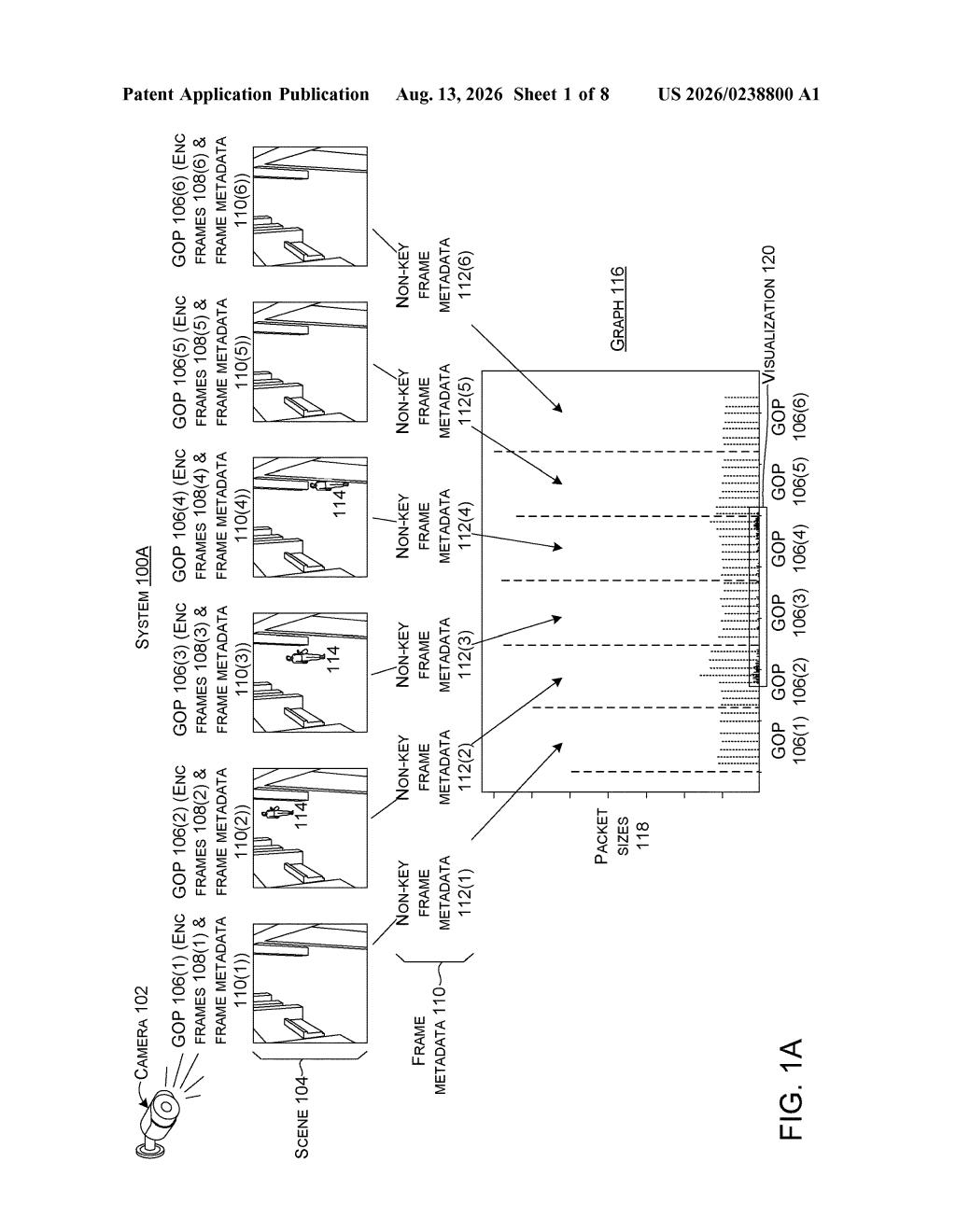
What Microsoft's frame-skipping detection actually does
You're watching a recorded security feed, and somewhere on a server, software is scanning thousands of hours of footage to find the moments a person walks into frame. Normally that means decoding every single video frame, which is computationally expensive and slow.
Microsoft's patent describes a shortcut: scan the encoded video data directly, before it's ever unpacked into actual images. Encoded video already contains compressed clues about what's in each frame, and the system learns to read those clues well enough to flag frames that likely contain a person, skipping the heavy decoding work entirely.
The result is that a server could process video using a fraction of the usual resources, or check far more footage in the same amount of time. That matters any time you need to find a person in a large library of video without having a human watch all of it.
The description relates to resource aware object detection for encoded video streams that can identify frames of the video stream that include an object of interest, such as a human, without decoding the frames.
Translation: Microsoft patented a method to find people in videos without actually playing or opening the files first.
How the system reads encoded data without decoding frames
Standard video analysis works like this: take a compressed video file, decode each frame into a full image, then run an object-detection model on that image to check whether a person (or any object) appears. It works well but burns through CPU and GPU resources fast, especially at scale.
Microsoft's patented approach cuts out the decoding step for the initial scan. Encoded video formats like H.264 or H.265 store data as a mix of compressed signals, including motion vectors (which describe how pixels move between frames) and residuals (the leftover differences after motion is accounted for). These compressed representations still carry meaningful structural information about scene content.
The system trains a detection model directly on this encoded-domain data rather than on decoded images. When a new video stream arrives:
- The system reads the encoded bitstream without decompressing it into frames.
- The model inspects the compressed signals for patterns associated with human figures.
- Frames flagged as likely containing a person can then be selectively decoded for full analysis.
The key tradeoff is accuracy versus speed: the encoded-domain model is probably less precise than a full-image detector, but it works as a fast filter that eliminates obviously empty frames before the expensive step begins.
What this means for Teams, Azure, and real-time video AI
For any service that processes video at scale, decoding is one of the biggest infrastructure costs. Microsoft runs Teams meetings, Azure Video Indexer, and a range of enterprise surveillance and media tools, all of which involve scanning video for people or objects. A system that can triage frames before decoding them could meaningfully reduce server load, which translates to lower costs and faster turnaround on video search tasks.
From a ship-path perspective, this is software-only work: no new hardware is required, and the core idea could slot into existing video-processing pipelines relatively quickly, assuming the encoded-domain model reaches acceptable accuracy thresholds. The latest Big Tech patents in the video-AI space show a clear push toward inference that happens earlier in the media pipeline, and this filing fits squarely in that direction.
The encoded-domain detection idea is technically clean and the path to a shipped feature is shorter than most AI patents. The software could, in principle, drop into Azure's existing video-indexing stack without new silicon or a hardware refresh cycle. The open question is accuracy: a model trained on compressed signals rather than full images will make more mistakes, and the patent's value depends entirely on how well that tradeoff holds up in practice across different video codecs and lighting conditions.
There are more where this came from
We read every patent application Big Tech publishes and send you the ones worth knowing. Plain English, free, every week.
The drawings
8 drawing sheets from US 2026/0238800 A1 · click any drawing to enlarge


Want this weekly breakdown for a company we don't cover? Patentlyze Pro →
Be the first to weigh in