
Samsung Patents Technology to Keep Smart Sensors Online When Battery-Saving Shutdown Kicks In
Billions of IoT sensors run on a stripped-down cellular mode called NB-IoT, and when they have to turn that mode off, they currently have no clean rulebook for finding a satellite fallback. Samsung's new patent writes that rulebook.
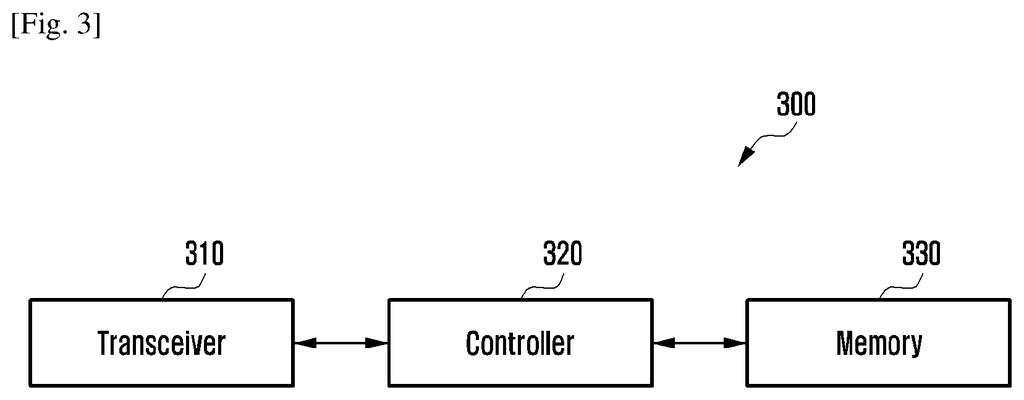
How Samsung wants IoT gadgets to find satellite signals
Every time a small IoT sensor, think a shipping tracker or a smart meter, switches cellular modes, it has to quickly figure out what kind of network to connect to next. Right now, the rules for what happens if that sensor is also supposed to talk to a satellite are patchy at best.
Samsung's patent fills in that gap. It defines exactly what a device should do when it turns off its narrow-band connection: check whether it can use a wider cellular band, and if it also supports a specific set of satellite optimizations, go find a satellite network instead. The patent covers low-orbit, medium-orbit, and geostationary satellites, so the handoff logic applies to the whole range of satellite options being built out right now.
For you, this matters most if you use tracking devices, industrial sensors, or any connected hardware that works in areas where regular cell towers are sparse. The goal is that your devices stay online even when they shift modes in the background.
identifying whether the UE supports disabling and re-enabling of UE's Narrow Band Internet of Things (NB-IoT) capability; selecting a first Radio Access Technology (RAT) in case that the UE is in NB-S1 mode and the UE is disabling the NB-IoT capability …
Translation: The device checks if it can turn off its low-power internet connection and then decides which network to use instead.
How the UE picks a satellite RAT after dropping NB-IoT
The patent describes a decision tree baked into the device's connection software. When a User Equipment (UE), which is the standards term for any phone, tablet, or IoT sensor, is running in NB-S1 mode (the operating state tied to Narrow Band Internet of Things, or NB-IoT, a low-power cellular standard built for simple sensors), it may need to disable NB-IoT for various network or regulatory reasons.
At that moment, the UE follows two possible paths:
- If it does not support a specific optimization called CIoT EPS optimization (a suite of efficiency tricks for IoT devices on 4G/LTE packet networks), it falls back to standard E-UTRAN, meaning regular LTE ground towers.
- If it does support CIoT EPS optimization, it is allowed to select a satellite E-UTRAN connection, tagged as one of three orbit types: LEO (low Earth orbit, like Starlink-style satellites), MEO (medium Earth orbit), or GEO (geostationary, the traditional high-altitude type).
The selected network must belong to the device's registered PLMN (Public Land Mobile Network, basically the carrier the device is subscribed to) or an equivalent carrier from an approved list. This keeps roaming and billing logic intact while extending reach into satellite coverage.
… if the UE supports Cellular Internet of Things, CIoT, Evolved Packet System, EPS, optimization it selects satellite E-UTRAN via “WB-E-UTRAN(LEO)”, “WB-E-UTRAN(MEO)”, or “WB-E-UTRAN(GEO)”, of the registered PLMN or a PLMN from a list of equivalent PLMNs.
Translation: If the device is optimized for cellular data, it will automatically connect to low, medium, or high orbit satellites.
What this means for satellite-connected IoT networks
IoT connectivity is increasingly expected to work anywhere, including oceans, deserts, and remote industrial sites where ground towers will never be cost-effective. The 3GPP standards body has been adding satellite access layers to both 5G and LTE precisely to cover those gaps, but the device-side logic for switching between terrestrial and satellite modes has lagged behind. Samsung's patent addresses that device-level behavior directly, which is the part that actually has to ship in firmware.
The shortest route to a product here is a firmware update to modem software, no new hardware required, which puts this closer to deployment than most radio-access patents. Still, it depends on satellite networks advertising themselves in a standardized way that carriers and regulators haven't fully locked down everywhere. The newest Big Tech patents in satellite IoT access show the whole industry racing to define these handoff rules before 6G standardization closes the window, and Samsung is clearly staking out its position in that process.
Firmware-level plumbing is what decides whether satellite IoT actually works in the field, and that's what this filing describes. The ship path is short on the device side: the logic is software, and Samsung already makes modems and chipsets that run NB-IoT today. The harder dependency is on carriers and satellite operators exposing the right network identifiers consistently, which is a standards-and-business problem more than an engineering one. That makes this a credible near-term candidate for modem firmware once 3GPP satellite standards mature.
There are more where this came from
We read every patent application Big Tech publishes and send you the ones worth knowing. Plain English, free, every week.
The drawings
2 drawing sheets from US 2026/0239185 A1 · click any drawing to enlarge


Want this weekly breakdown for a company we don't cover? Patentlyze Pro →
Be the first to weigh in