
Samsung Patents an AI System for Cleaner Wireless Signal Readings
Every wireless device constantly tries to measure its own connection quality, and that measurement process eats power and time. Samsung is patenting an AI model that could do this job more efficiently by stripping out a standard ingredient most neural networks rely on.
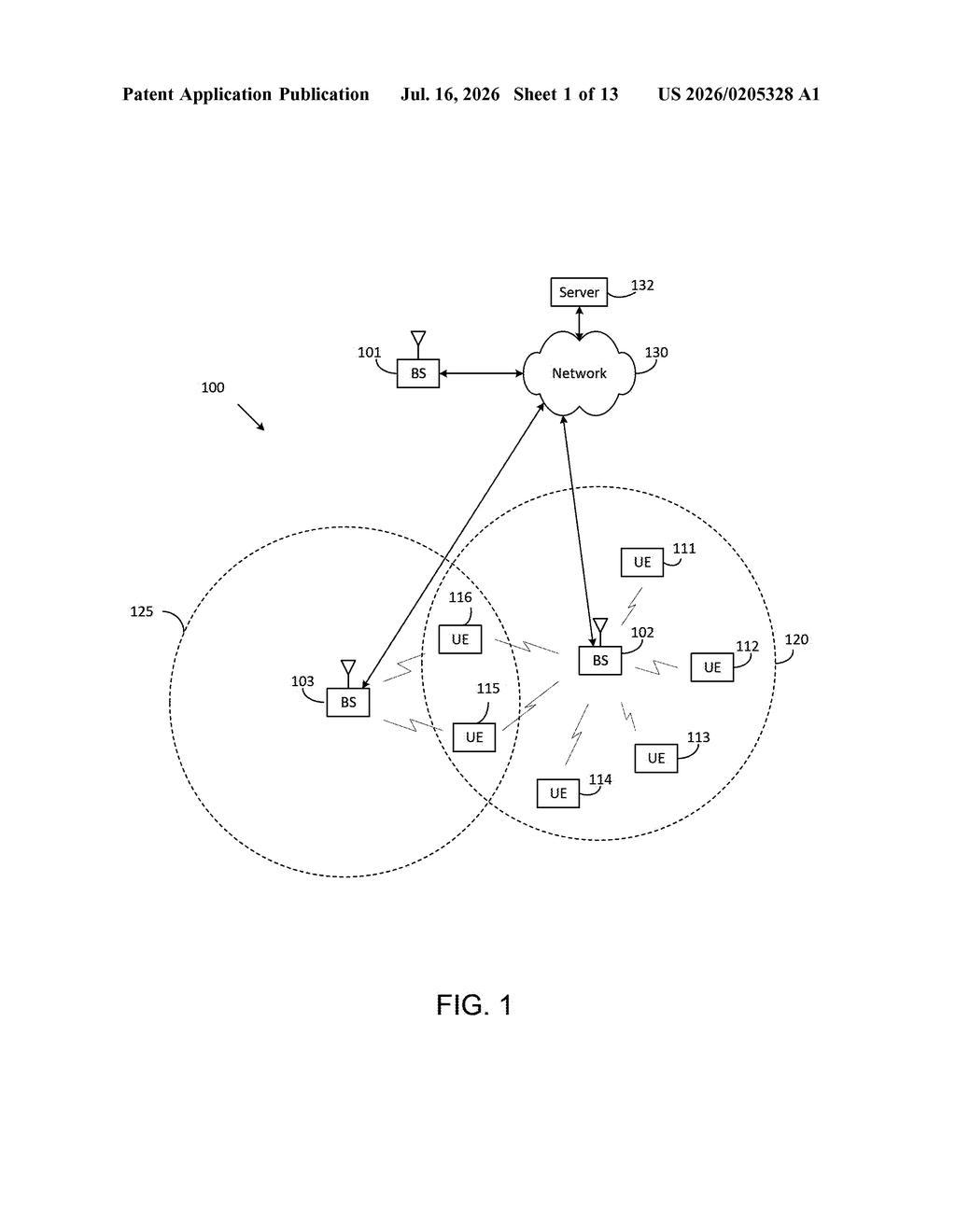
What Samsung's AI channel estimation actually does
Imagine your phone is like a person trying to hold a conversation in a noisy coffee shop. Before it can understand what anyone is saying, it has to figure out how distorted the sound is, how far away the speaker is, and what the room is doing to the audio. Wireless devices do something similar: before decoding any data, they estimate the condition of the radio signal path between two devices. That process is called channel estimation.
Samsung's patent describes using an AI model to handle this measurement step. The twist is the type of AI: most neural networks use mathematical "activation functions" to decide which information to pass forward, but Samsung's approach drops those functions entirely. The result is a simpler, faster model that can still figure out how noisy or distorted the wireless channel is.
This matters most inside your phone or a base station, where doing complicated math quickly and with minimal battery drain is always the goal. A leaner AI that does the same job is genuinely useful in that context.
How the NAFNet model processes raw signal data
Channel estimation is the process a wireless receiver uses to figure out how a transmitted signal has been warped by the real world, things like distance, walls, interference, and multipath reflections. Once a device knows the channel conditions, it can correct for them and decode data accurately. It happens constantly in every Wi-Fi, 4G, and 5G connection.
Samsung's patent applies a NAFNet (Nonlinear Activation Free Network) to this problem. A NAFNet is a type of neural network that removes the so-called activation functions (mathematical gates like ReLU that decide whether a neuron "fires") and replaces them with simpler operations. The architecture was originally developed for image restoration tasks like deblurring, but Samsung's filing adapts it to process input channel data, the preprocessed version of the raw received signal.
The claimed method has three steps:
- A device receives a signal from another device over a wireless channel.
- It preprocesses that signal into a structured data format the AI can read.
- It runs that data through the NAFNet-based AI model to estimate channel conditions.
By removing nonlinear activation functions, the model has fewer operations to perform per inference pass, which can mean lower computational cost on a chip that is already handling radio, baseband, and application workloads simultaneously.
What this means for 5G and future wireless devices
Channel estimation is one of those unglamorous background tasks that directly affects how fast and reliable your connection feels. If a phone misjudges channel conditions, it may request too many retransmissions, drop to a lower data rate, or burn extra power correcting errors. A more efficient AI model running this step could translate into better throughput or lower power consumption in 5G modems and base stations.
For Samsung specifically, this sits at the intersection of two areas where the company competes hard: it makes its own Exynos modem chips and is a major 5G network equipment supplier. An AI-based channel estimator that is cheap enough to run on-device could show up in both handsets and base station hardware, though nothing in this filing links it to a specific product.
This is a real engineering patent, not a concept. Applying NAFNet to channel estimation is a specific, testable idea that borrows a proven architecture from image processing and redirects it at a core modem problem. It is not flashy, but modem efficiency improvements are exactly the kind of incremental work that compounds into genuinely better devices. Worth tracking if you follow 5G silicon.
Get our take in your Top Stories
Liked this breakdown? Add Patentlyze as a preferred source on Google, and our plain-English take shows up more often in your Top Stories the next time Samsung patent news breaks.
There are more where this came from
We read every patent application Big Tech publishes and send you the ones worth knowing. Plain English, free, every week.
Want this weekly breakdown for a company we don't cover? Patentlyze Pro →