
Sony Patents a Robot Body That Walks and Rolls Using the Same Motors
Most robots that can both roll on wheels and walk on legs need a separate motor for each job. Sony's new patent describes a way to share the work, cutting down the motor count by linking leg movement directly to wheel rotation.
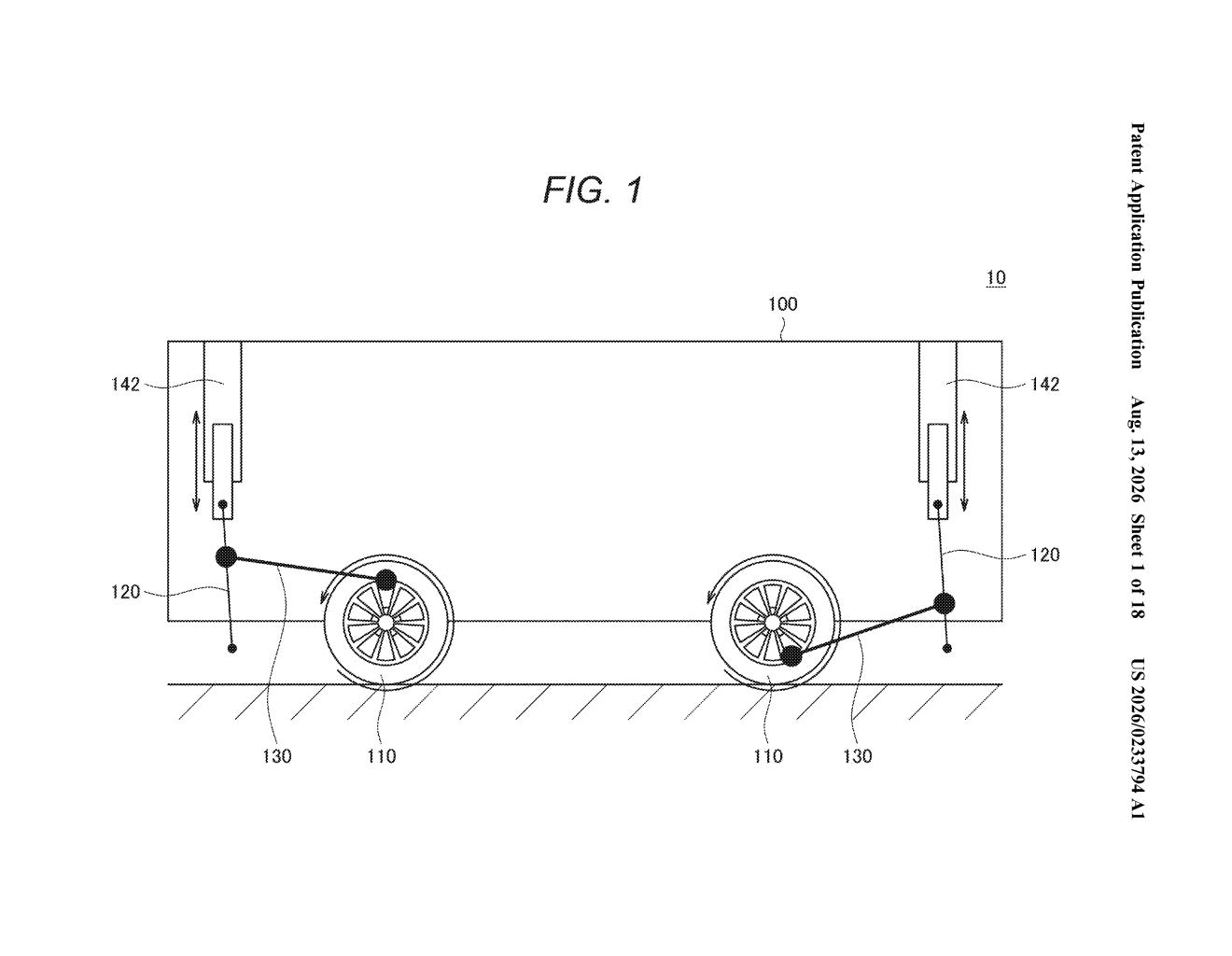
How Sony's wheel-and-leg robot shares its motors
Ever wondered why robots are so heavy and expensive? A big reason is that every joint or wheel that needs to move usually needs its own motor, and motors are bulky, heavy, and power-hungry.
Sony's patent describes a mobile robot that can both roll on wheels and walk on legs, but without doubling up on the motors normally required. The key idea is that the legs don't have their own separate drive system for moving forward and backward. Instead, they're mechanically linked to the same wheels already doing the rolling. A separate, smaller mechanism handles only the up-and-down motion of each leg.
The result is a robot that can wheel across a flat floor efficiently, then lift its legs and step over an obstacle, all while using fewer motors than you'd typically expect. That matters for real-world robots, where every extra motor adds weight, cost, and one more thing that can break.
… a leg part provided correspondingly to each of the drive wheels and moving forward and backward in accordance with rotation of the drive wheel …
Translation: Each wheel comes with a leg that moves back and forth as the wheel spins.
How the drive wheel controls the leg's forward-back motion
The patent describes a mobile body (Sony's term for the robot chassis) built around three main pieces working together.
- Drive wheels: Standard motorized wheels attached to the main body. Each wheel is spun by a motor, just like a wheeled robot you'd recognize.
- Leg parts: Each wheel has a corresponding leg. Critically, the leg's forward-and-backward motion (the stride) is driven by the rotation of that same wheel, not by a dedicated leg motor. The mechanical linkage converts wheel spin into a stepping motion.
- Leg part drive unit: A separate control system handles only the up-and-down direction of each leg, letting the robot lift its foot to clear an obstacle or plant it on the ground.
By splitting the job this way, the design avoids needing a full set of independent leg motors. The wheel motor does double duty: it propels the robot when rolling, and it drives the stride cycle when walking. The vertical lift mechanism is the only additional actuation (movement system) required per leg.
The claim is written at a fairly high level of abstraction, covering any mobile body where leg forward-backward motion follows wheel rotation and a separate unit governs vertical leg movement.
To reduce the number of motors mounted on a mobile body that can realize both wheel traveling and leg walking.
Translation: The goal is using fewer motors for a robot that can both roll and walk.
What this means for Sony's robotics ambitions
Fewer motors means a lighter, cheaper, and more reliable robot. For consumer or service robots that need to handle both smooth floors and stairs or uneven terrain, this kind of mechanical efficiency is a real design challenge. Sony has been investing in robotics for years, and patents like this point toward hardware that could eventually show up in home or logistics robots where cost and weight constraints are tight.
Claim 1 as written is broad. It doesn't specify the exact linkage mechanism, the number of legs, or the type of motor, which means, if granted, it could cover a wide range of wheel-walking hybrid designs. That breadth is worth noting for anyone building in this space, and it fits into the ongoing wave of Big Tech patent news around embodied robotics, where hardware architecture choices are becoming as contested as software ones.
Claim 1 is written broadly enough to potentially cover almost any wheeled robot whose legs take their forward motion from the wheel rather than a dedicated actuator. That scope, if the patent survives examination, could give Sony a surprisingly wide blocking position in hybrid wheel-leg robot design. The practical significance depends entirely on how the USPTO narrows the claim during prosecution, but as filed, this is a meaningful territorial stake in a crowded and fast-moving category.
There are more where this came from
We read every patent application Big Tech publishes and send you the ones worth knowing. Plain English, free, every week.
The drawings
18 drawing sheets from US 2026/0233794 A1 · click any drawing to enlarge


Want this weekly breakdown for a company we don't cover? Patentlyze Pro →
Be the first to weigh in