
IBM Patents a System That Predicts What You'll Click and Teaches You How to Do It on New Software
Every time a company switches software platforms, employees spend weeks relearning tasks they already know how to do, just in a different system. IBM's new patent tries to short-circuit that frustration by watching what you normally do and surfacing the right tutorial at the right moment.
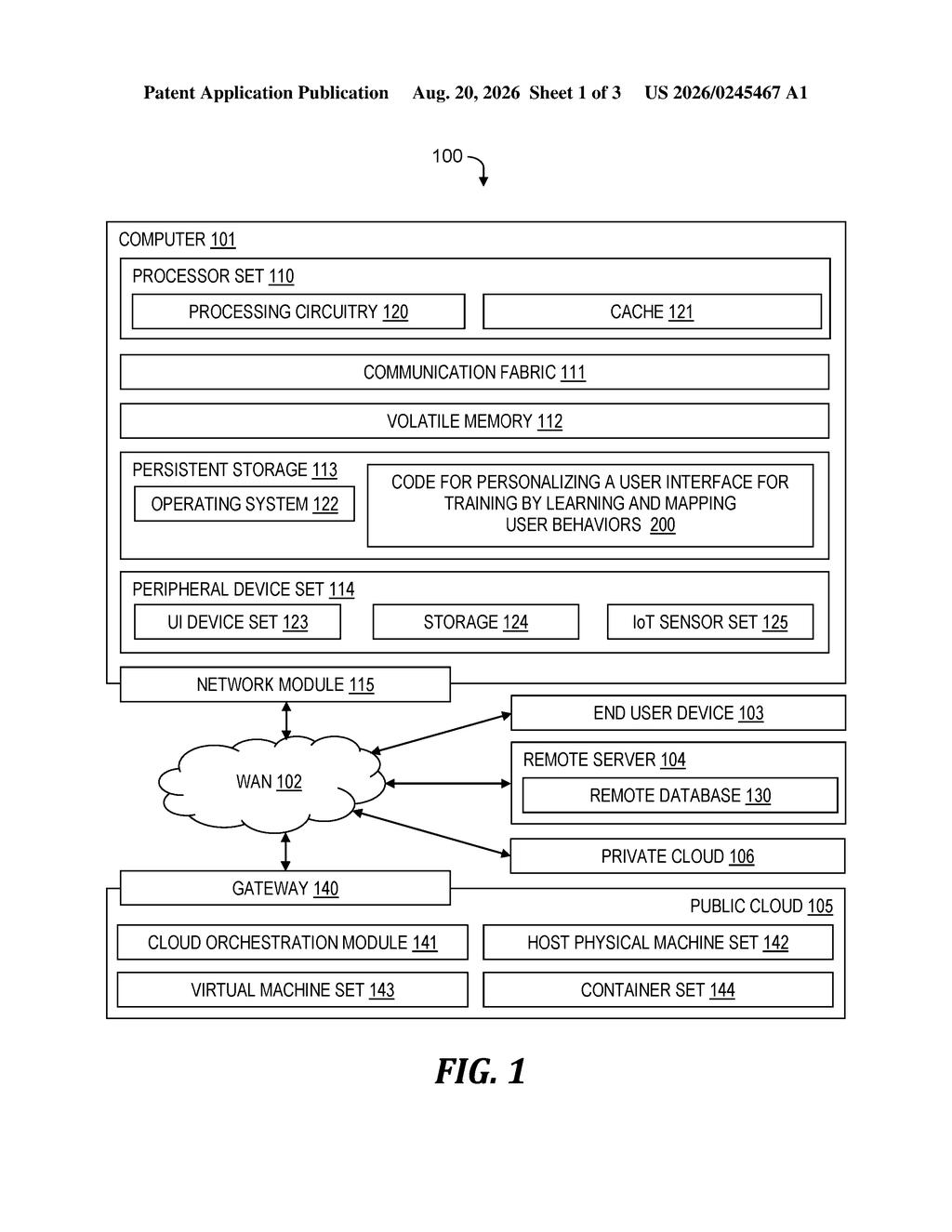
How IBM's behavior-prediction training tool works
A new employee sits down at an unfamiliar HR portal after their company just migrated away from the old one. They know what they want to do, but the buttons are in different places and the labels don't match what they remember. IBM's patent describes a system built for exactly that situation.
The idea is straightforward: the system studies how you use your current software, figures out what you're about to try, and then shows you a targeted tip in the new software before you go looking for help yourself. It's proactive training, not a wall of documentation you have to search through.
Instead of watching everyone the same way, the system builds a personal map, connecting your specific habits on the old platform to the equivalent steps on the new one. So if you always start your morning by pulling a sales report in the old tool, the new interface knows to show you exactly how to do that, right when you open it.
… predicting an action that the user will take on the second system, the predicted action being included in the mapped actions; based on the mapping of the actions, identifying an instructional feature as being mapped to the predicted action; …
Translation: The software figures out your next move and finds the exact tip you need to pull it off.
How the system maps old habits to new software instructions
At its core, the patent describes a three-step process. First, the system receives a mapping: a structured lookup table that connects actions a user takes on System A (say, an old CRM tool) to specific instructional features on System B (the new one). Those instructional features could be tooltips, guided walkthroughs, or inline help text.
Second, the system watches the user's behavioral patterns on System A to build a predictive model. When it sees a pattern, it predicts what action the user is about to attempt on System B. This is closer to a behavior-prediction engine than a simple recommendation engine, it's trying to get ahead of the user's next move, not just respond to it.
Third, once the predicted action is matched against the mapping, the system generates a personalized user interface on System B that surfaces the corresponding instructional feature. The user sees the right tutorial content without having to ask for it.
- Watches behavior on the old system to learn habits
- Predicts the next action the user will try on the new system
- Pulls the matching tutorial or tip and shows it proactively
- Works through a pre-built action-to-instruction mapping, not generic help content
The identified instructional feature is presented to the user on a user interface generated on the second system, so the user utilizing the user interface to perceive the identified instructional feature is trained on how to perform the predicted action on the second system.
Translation: New software displays helpful tutorials right when you need them so you learn on the fly.
What this means for software migration and onboarding
Software migrations are expensive in ways that rarely show up on the budget line. The licensing costs are obvious, but the productivity loss when thousands of employees relearn familiar tasks on unfamiliar interfaces is harder to measure and just as real. A system that personalizes onboarding to each user's actual habits could shorten that adjustment period meaningfully.
IBM sits in a market where it sells large-scale enterprise software transitions to big organizations, so the commercial logic here is easy to follow. For the average worker, the practical benefit is fewer moments of staring at a new interface wondering where a feature went. For Big Tech patent news watchers tracking enterprise AI filings, IBM's approach to behavior-driven onboarding is a concrete example of how companies are trying to make AI useful inside the workday, not just in consumer apps.
IBM's fourth filing we've tracked since July in our assistants that remember you watchlist builds on one that predicts your next question and one helping staff aid disabled customers.
Moving workers to new software wastes months of productivity because generic training ignores what each person already knows. IBM's approach fixes that by watching how each user works and showing them only what they personally need to learn.
The real test is whether the system can keep up with the messy, unpredictable variety of real jobs. But the problem is big enough that even getting it halfway right saves companies serious time and money.
Get our take in your Top Stories
Liked this breakdown? Add Patentlyze as a preferred source on Google, and our plain-English take shows up more often in your Top Stories the next time IBM patent news breaks.
There are more where this came from
We read every patent application Big Tech publishes and send you the ones worth knowing. Plain English, free, every week.
The drawings
3 drawing sheets from US 2026/0245467 A1 · click any drawing to enlarge


Want this weekly breakdown for a company we don't cover? Patentlyze Pro →
Be the first to weigh in