
Adobe Patents Automatic Widow and Orphan Removal for Digital Documents
Every writer has seen it: a single bullet point or heading stranded alone at the top of a new page, cut off from the rest of its list. Adobe has filed a patent to catch and fix those awkward breaks automatically.
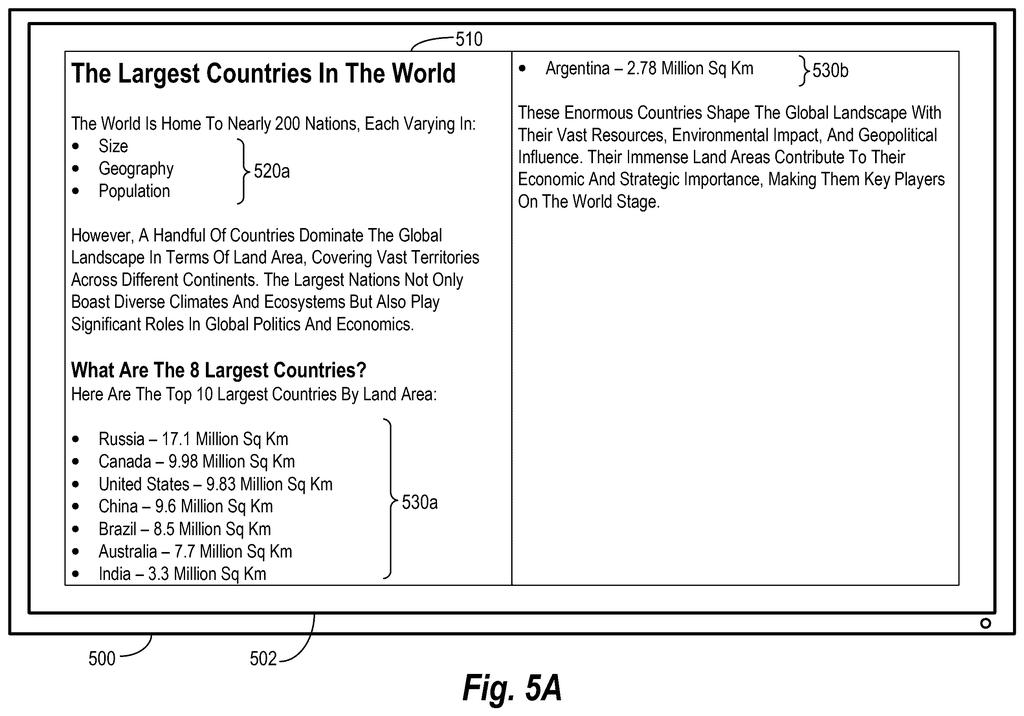
What Adobe's layout-penalty fix actually does to your doc
A designer finishes a report, hits print preview, and finds a lone bullet point marooned at the top of page four, separated from the rest of its list. It looks sloppy, but hunting it down manually takes time.
Adobe's patent describes a tool that scans your document for exactly this kind of problem. It looks for hierarchical content (think numbered lists, multi-level outlines, nested bullet points) and flags any item that has been split off onto a different page or column from its parent. The system assigns a penalty score to that break based on how bad it looks, then automatically adjusts spacing, indentation, or other formatting to pull the stray item back into place.
You trigger it through the regular editing interface, the same way you'd run a spell check. The document fixes itself, and you never have to nudge margins by hand to make a list look tidy.
… detecting, within the digital document, an isolated element of the hierarchical segment positioned on a separate page or a separate column from other elements of the hierarchical segment …
Translation: The software identifies text that has been awkwardly split across different pages or columns.
How the system scores and fixes isolated text elements
The patent describes a three-stage pipeline built into a document layout analysis tool accessible from the graphical user interface.
Stage 1: Hierarchy detection. The system identifies hierarchical segments within the document. These are structured groups of text that have a parent-child relationship, such as a numbered list, a nested outline, or a multi-level table of contents. It recognizes that these elements belong together as a unit.
Stage 2: Isolation detection. The system then checks whether any element in that group is isolated, meaning it sits on a different page or in a different column than the rest of its siblings or parent. In typography, a single line or item left behind this way is called a widow (last line of a paragraph stranded at the top of a new page) or an orphan (first line left at the bottom of the old page). The patent extends this concept to structured lists and outlines, not just flowing prose.
Stage 3: Penalty scoring and correction. The system calculates a document layout penalty, a numeric measure of how disruptive the isolated element is to reading flow. It then modifies document attributes (spacing, column breaks, font scaling, or similar properties) to reduce that penalty score. The goal is the smallest change that brings the stray element back in line with its group.
The disclosed systems determine a document layout penalty for the digital document based on a disruption to text flow within the digital document associated with the isolated element.
Translation: The system assigns a numerical score to the document based on how much these layout errors interrupt the reader.
What this means for Adobe's document-editing tools
For anyone who regularly produces long reports, proposals, or structured documents in Adobe tools, this kind of automation removes a genuinely tedious part of the finishing process. Manually hunting widow and orphan lines is one of those tasks that takes longer than it should and is easy to miss entirely before a document goes to a client or a printer.
The feature is software-only and builds on layout analysis capabilities Adobe already ships in Acrobat and InDesign, which puts it closer to a product update than a research project. Adobe's document tools compete on polish and automation, and a reliable auto-fix for hierarchical text breaks fits that direction. Readers who follow the latest Big Tech patents in document and publishing software will recognize this as part of a steady push toward tools that clean up formatting decisions automatically rather than leaving them to the user.
Adobe's 120th filing we've tracked since May in our Adobe coverage follows work like the AI email template picker and the database code fix.
Adobe already has the tools to read and organize document layouts baked into products like Acrobat. This patent just adds a scoring system on top of what already exists, with no new hardware required.
The scoring system works like a dial, not an on/off switch. That means tricky edge cases, like an unusually long list, get handled smoothly instead of breaking the whole thing.
That combination makes this one of the more likely patents to actually ship as a real product feature, and soon.
There are more where this came from
We read every patent application Big Tech publishes and send you the ones worth knowing. Plain English, free, every week.
The drawings
14 drawing sheets from US 2026/0244841 A1 · click any drawing to enlarge


Want this weekly breakdown for a company we don't cover? Patentlyze Pro →
Be the first to weigh in