
Apple Patents a System That Decides Whether Your Tap Actually Counts
Moving your head while tapping a button in augmented reality is a recipe for phantom clicks. Apple's latest patent describes a system that watches how your device is moving and decides, based on that motion, whether your tap should actually do anything.
How Apple's motion-aware tap filter works for AR
Every time you tap a button on a screen while walking, there's a small gamble: did you mean to press it, or were you just jostling the phone? In an augmented reality headset, that problem gets much worse, because your entire view shifts as your head turns.
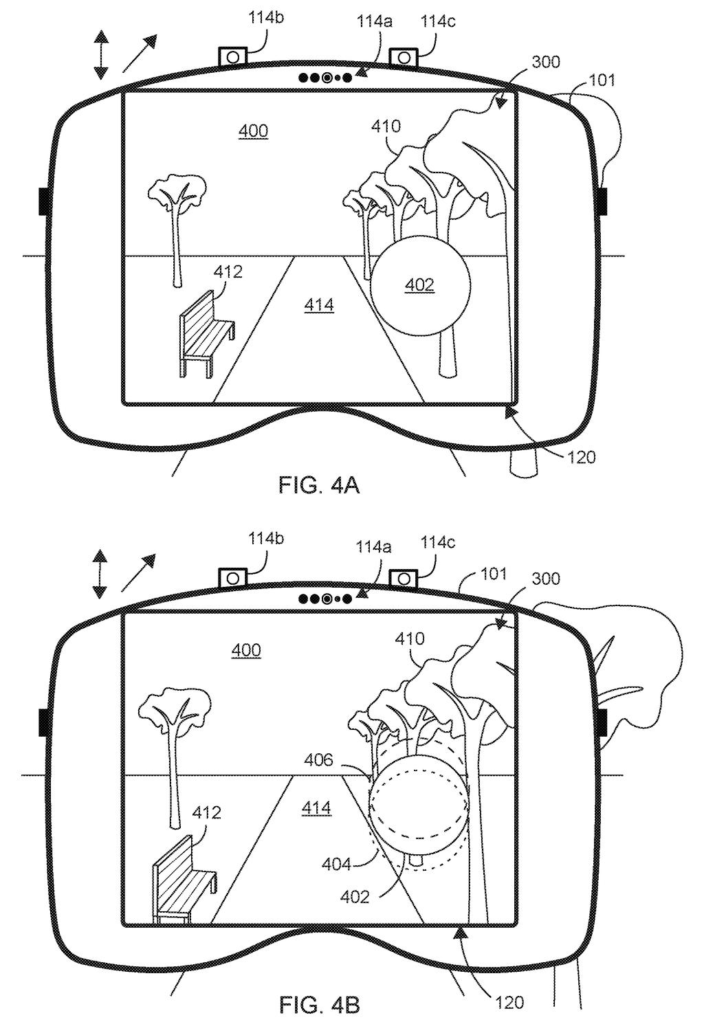
Apple's patent describes a system that tracks how the device is moving in real space while also tracking the floating UI buttons you see in front of you. If you tap a button while the device is moving in a way that crosses a certain threshold, the system can decide your tap doesn't count and skip the action entirely.
The idea is that context matters. A tap during a calm, steady moment means something different than a tap during a sudden head turn. This system tries to tell the difference automatically, so you don't have to think about it.
… moving the user interface element relative to the three-dimensional environment in accordance with the movement of the electronic device …
Translation: The system shifts the on-screen button or menu as you physically move your device around.
How movement data gates a UI action in Apple's system
The patent describes a method running on a device connected to one or more displays and input sensors. The device shows the user a three-dimensional environment anchored to the real physical world around them, with floating UI elements (buttons, menus, controls) positioned in that space relative to the user's viewpoint.
As the user moves, the device tracks that movement and updates where those floating UI elements appear, keeping them locked relative to the 3D scene. When the user provides an input (a tap, a gaze selection, a gesture), the system checks whether the device's motion at that moment satisfies a set of criteria (essentially: was the device moving in a way that suggests an intentional action, or not?).
- If the movement passes the criteria, the system performs the action linked to that UI element.
- If the movement fails the criteria, the system deliberately skips performing the action, treating the input as unintentional or ambiguous.
The claim is deliberately broad, covering any electronic device paired with displays and input sensors, which means it could apply to headsets, phones, or any device with motion sensors and a mixed-reality layer. The specific thresholds and criteria for what counts as "acceptable" motion are left to implementation.
… in response to detecting the input, the electronic forgoes performing the operation in accordance with the user interface element.
Translation: Even if you tap a button, the system ignores it if you were shaking or moving too much.
What this means for AR headsets and spatial computing
Accidental inputs are one of the most common complaints in any hands-free or head-tracked interface. If Apple is building spatial computing products where you interact with floating menus, a system that can distinguish intentional taps from incidental ones is a basic quality-of-life requirement, not a luxury.
The patent sits squarely in Apple's broader push into spatial interfaces, and it reflects a design problem that every AR platform will eventually have to solve. Patentlyze covers plain-English patent summaries across Apple's AR and spatial-computing filings, where this motion-gating approach appears as a recurring thread in how the company thinks about input reliability in 3D space.
Apple's 36th filing we've tracked since May in our AR glasses work, following dimming 3D content controls and per-eye image feeding, adds another piece to the picture.
The real cost of suppressing inputs during motion is that the system will sometimes ignore taps the user fully intended to make, with no clear indication from the patent that the device communicates a blocked action back to the user. That silent failure, a tap that simply does nothing, is a friction point that could erode trust in the interface faster than the occasional accidental input it was designed to prevent. Whether the tradeoff pays off depends entirely on threshold calibration, and that hard problem is precisely what this filing leaves unresolved.
There are more where this came from
We read every patent application Big Tech publishes and send you the ones worth knowing. Plain English, free, every week.
The drawings
12 drawing sheets from US 2026/0244307 A1 · click any drawing to enlarge


Want this weekly breakdown for a company we don't cover? Patentlyze Pro →
Be the first to weigh in