
Apple Patents a System That Changes How AR Objects Look Based on Where You Put Them
Apple has filed a patent describing an AR system that doesn't just move virtual objects around a space, it reshapes how those objects look depending on exactly where they land.
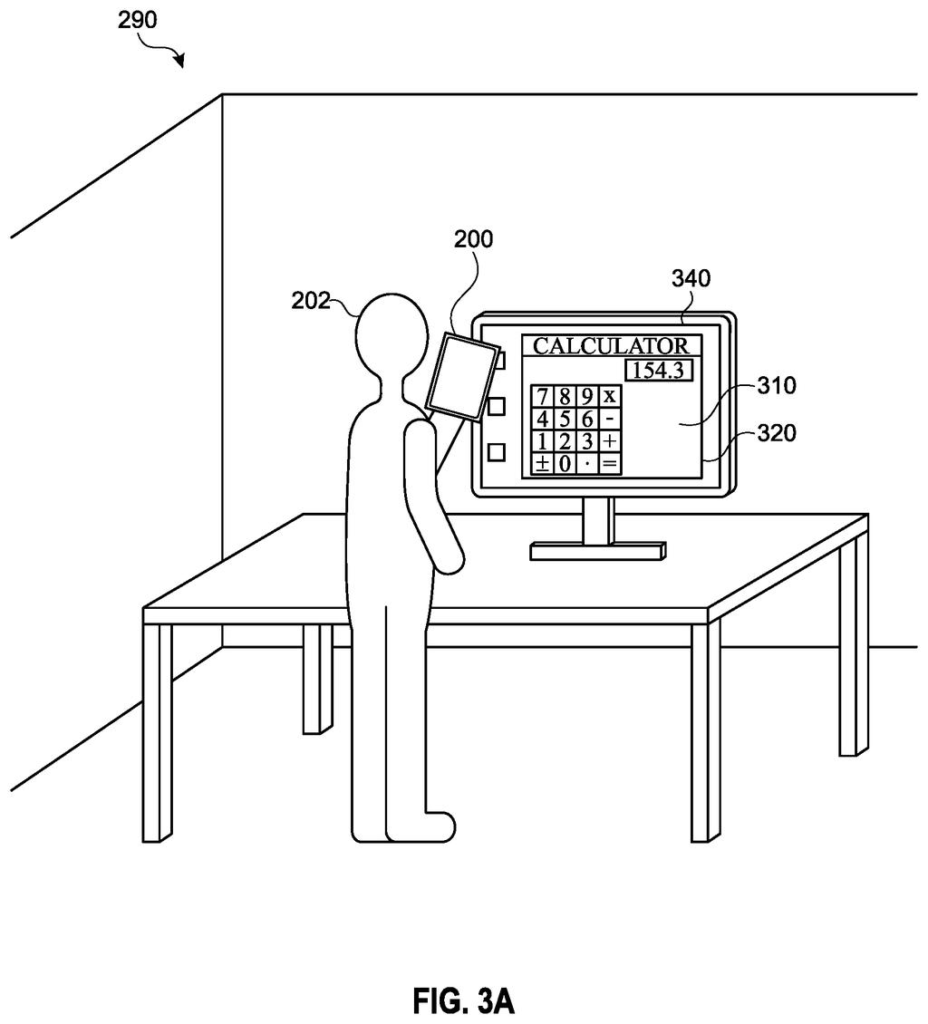
What Apple's location-aware AR objects actually do
Have you ever rearranged an app on your phone's home screen and wished it could automatically change to fit the new spot? Apple is working on something like that, but for the world of spatial computing, where virtual objects float in the space around you.
The idea is straightforward: when you drag a virtual object from one place in an AR environment to another, the system checks what kind of zone that new spot belongs to. If it's a certain type of zone, you see one version of the object alongside an immersive surrounding environment. If it's a different kind of zone, the object looks different and that surrounding environment disappears entirely.
Think of it like placing a work app in your "office corner" versus your "relaxation corner", the same app could show up in a focused, stripped-down style in one spot and a richer, more immersive style in another, all without you doing anything extra.
in accordance with a determination that the second location corresponds to a first use context of a plurality of use contexts, concurrently displaying, via the display: at the second location, a second representation of the respective virtual object based on the first use context; and a portion of a respective immersive environment …
Translation: The system detects where you place an object and automatically changes its appearance and background to fit that spot.
How the system reads location context to swap object views
The patent describes a system with a display, one or more processors, and software that tracks virtual objects inside a computer-generated reality (CGR) environment (Apple's umbrella term covering both augmented and virtual reality).
When a user moves a virtual object from one location to another, the system evaluates what use context (think: a predefined zone with its own rules, like a work mode or a media mode) governs the destination. Based on that evaluation, one of two things happens:
- If the destination belongs to a first use context, the system simultaneously shows a new version of the object tailored to that context and a portion of an immersive surrounding environment.
- If the destination belongs to a second use context, the system shows a different version of the object tailored to that context, but removes the immersive environment entirely.
The practical effect is that the same underlying virtual object can have multiple representations, and the environment itself can turn on or off, purely as a function of where in the space the object has been placed. The system is doing this automatically, triggered by the move request, not by a separate user command.
… an exemplary process for controlling representations of virtual objects based on respective user contexts that each correspond to different respective locations in a computer-generated reality (CGR) environment …
Translation: This patent describes a method for making digital objects look different depending on where you place them in a virtual space.
What this means for spatial computing on Apple Vision Pro
For anyone using a spatial computer like Apple Vision Pro, this kind of behavior could make the headset feel far more context-aware. Right now, switching between focused work mode and a fully immersive experience requires deliberate steps. If Apple builds this into the OS, simply dragging a window across your virtual space could silently reconfigure the whole visual environment around you.
The AR and spatial computing space is seeing a steady stream of new Big Tech patents that inch toward this vision of environments that respond to intent rather than explicit commands, and this filing is a concrete example of the interaction design work happening under the hood at Apple.
Claim 1 is broad. It covers any system that displays different object representations based on destination context, and toggling an immersive environment on or off as a side effect of that context check. That scope is wide enough to describe a large portion of how any context-aware spatial OS might behave when users rearrange content. If granted as written, it could give Apple a strong position over competitors building similar zone-based or mode-based AR interfaces, because the claim doesn't restrict itself to a specific visual style, input method, or hardware platform. The question is whether prior art in adaptive UI or existing spatial computing research narrows what Apple can actually enforce.
There are more where this came from
We read every patent application Big Tech publishes and send you the ones worth knowing. Plain English, free, every week.
The drawings
29 drawing sheets from US 2026/0236090 A1 · click any drawing to enlarge


Want this weekly breakdown for a company we don't cover? Patentlyze Pro →
Be the first to weigh in