
Sony Patents a Kitchen Device That Reads Ingredient Flavors to Suggest Better Pairings
Sony is building a patent around a kitchen computer that doesn't just look up recipes but actually sniffs your ingredients and cross-checks what it detects against both chemical data and real people's taste opinions.
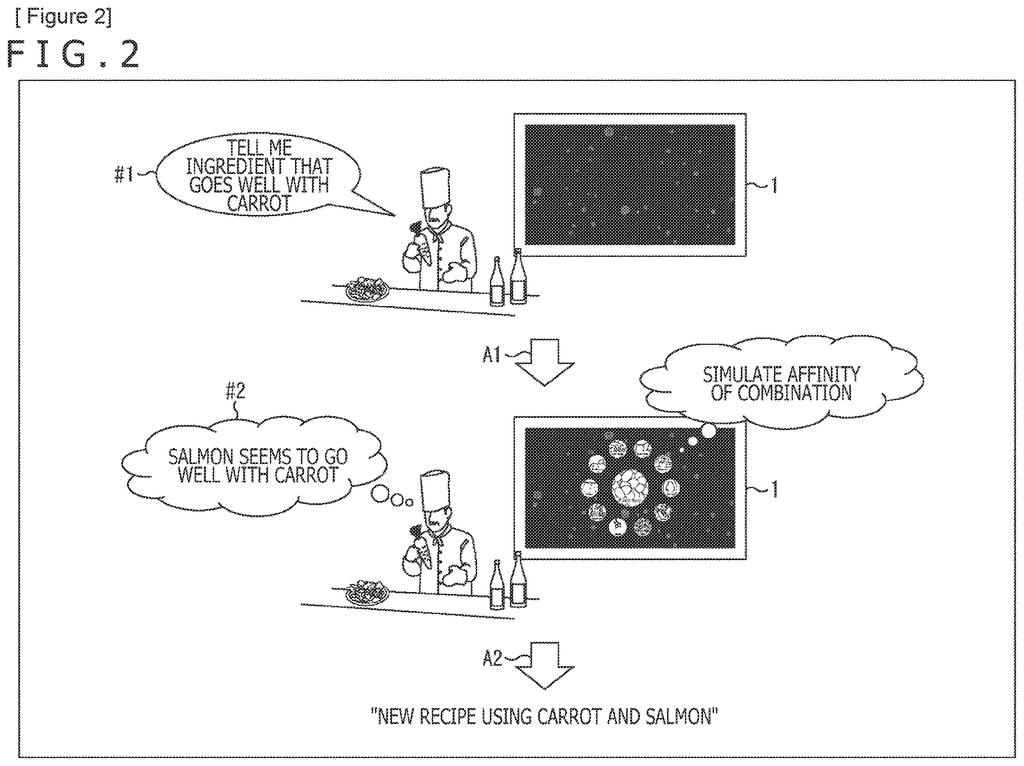
What Sony's flavor-sensor pairing system actually does
A cook reaches for two ingredients and wonders whether they'll taste good together. That moment of uncertainty is exactly what this Sony filing is aimed at.
The idea is a kitchen device with a flavor sensor, something that can measure the actual chemical makeup of an ingredient in real time. It then combines that reading with a database of known ingredient affinities (which foods tend to complement each other chemically) and a layer of subjective human taste ratings, how real people have described those flavors. The result is a verdict on whether your combination is likely to work.
Instead of relying on a recipe or a chef's intuition, you'd get a data-backed suggestion that accounts for both the science of flavor and the messiness of human preference. It's a narrower, more focused take on AI in the kitchen than a general cooking assistant, and that specificity is actually what makes it interesting.
… sensor information obtained by measuring, by a sensor, a flavor of an ingredient that is used in cooking, ingredient affinity information indicating an affinity of the ingredients in combination, and flavor subjective information indicating a subjective evaluation by people regarding the flavor of the ingredient or a flavor of the ingredients in combination …
Translation: It combines physical sensor data with human reviews to figure out which foods taste good together.
How sensors, databases, and crowd ratings combine
The patent describes a presentation unit, a system that surfaces pairing recommendations by pulling together three separate data streams at once.
- Sensor information: A physical sensor measures the flavor profile of an ingredient directly. Think of it as a chemical reader that identifies taste compounds rather than relying on a barcode or user input.
- Ingredient affinity information: A database that encodes which ingredients are known to work well together, likely based on molecular gastronomy research or culinary databases.
- Flavor subjective information: Crowd-sourced or survey-based human evaluations of how ingredients or combinations actually taste to people, capturing the gap between chemistry and perceived flavor.
By fusing all three, the device can present the state of affinity between ingredients, meaning it doesn't just say "yes" or "no" but presumably conveys how strong or conditional the pairing is. The patent explicitly says the technology is applicable to a kitchen computer, placing it clearly in a countertop or embedded appliance context rather than a smartphone app.
The present technology is applicable to a computer that is provided in a kitchen.
Translation: The system is designed to run on a computer built right into your kitchen.
What this means for AI-assisted home cooking
For home cooks and food-tech developers, the interesting move here is the three-source fusion. Most recipe apps rely on fixed databases. Adding a live sensor reading means the system could theoretically account for ripeness, freshness, or batch variation in a way a static lookup never could. That's a meaningful architectural difference, even if the hardware to pull it off at consumer scale is still a serious engineering challenge.
Sony is not primarily known as a kitchen appliance company, which makes this filing an outlier worth noting. The pairing of sensor hardware with AI-driven taste modeling sits at an intersection that food-tech startups have been exploring for years, and new Big Tech patents in AI-assisted cooking signal that larger players are starting to stake out this territory more formally.
Sony's 345th filing we've tracked since May in our Sony coverage joins work like the dual-image screen and the AI training data method.
Claim 1 is broad enough to be ambitious but specific enough to be coherent. It locks in the three-input structure (sensor reading, affinity database, human subjective data) as the core of the invention, which means any competitor system doing all three in combination for ingredient pairing would land inside this claim's territory if it were granted. That breadth could matter in a food-tech space where startups are building exactly this kind of multi-signal flavor platform. The subjective-data layer is the most distinctive piece: requiring human taste evaluations as a formal input, not just a training artifact, gives the claim a hook that pure chemistry-based systems wouldn't infringe.
There are more where this came from
We read every patent application Big Tech publishes and send you the ones worth knowing. Plain English, free, every week.
The drawings
39 drawing sheets from US 2026/0240365 A1 · click any drawing to enlarge


Want this weekly breakdown for a company we don't cover? Patentlyze Pro →
Be the first to weigh in