
Sony Patents a Faster Way to Generate AI Training Data From Two Probability Models
Generating enough training data for AI is one of the quieter bottlenecks in building image recognition systems. Sony's new patent takes a fresh approach by fusing two separate statistical models to guide what an AI produces.
How Sony's dual-distribution AI generator works
Ever tried to teach a child to draw by showing them only a handful of pictures? AI systems face the same problem: they need enormous amounts of varied examples to learn from, and creating those examples by hand is slow.
Sony's patent describes a system that makes an AI generator much more efficient at producing new images (like face photos) by giving it two sources of guidance at once. One source looks at an image you've already given it and tries to reconstruct what that image "should" look like statistically. The other source pulls from a broader library of training data the AI has already learned from. By blending these two guides, the system produces a richer, more varied set of outputs without needing as many starting images.
The practical idea is that you feed in one piece of data, the system consults both statistical guides, and the AI generator uses that combined signal to produce many new, realistic variations. For engineers building face-recognition or image-analysis tools, that means less manual data collection and faster iteration.
generates a generation probability distribution used for generation of a latent variable for generating output data in a generation model of the output data that outputs the output data with respect to an input of input data …
Translation: The system calculates the mathematical odds needed to create hidden variables for new data output.
How the two probability distributions shape the latent variable
At the center of this patent is a generative model (an AI system designed to create new data, not just classify existing data). The key challenge it addresses: how do you steer that generator toward outputs that are both faithful to a specific input and varied enough to be useful as training material?
Sony's system solves this by constructing what the patent calls a generation probability distribution, a statistical map the AI uses to decide what to generate. That map is built from two components:
- First probability distribution: derived by encoding the input image and estimating what range of outputs could plausibly reconstruct it (this is similar to how a variational autoencoder works, where an image is compressed into a statistical description rather than a fixed value).
- Second probability distribution: derived from the broader pool of learning data the generative model was trained on, reflecting what the model "knows" about the world.
The system merges these two distributions into a single generation distribution, then samples a latent variable (think of it as a random seed drawn from that merged map) from it. The generative model takes that seed and produces output data, such as a face image.
The effect is that each output is anchored to the input but influenced by the model's wider knowledge, producing diverse yet coherent variations efficiently.
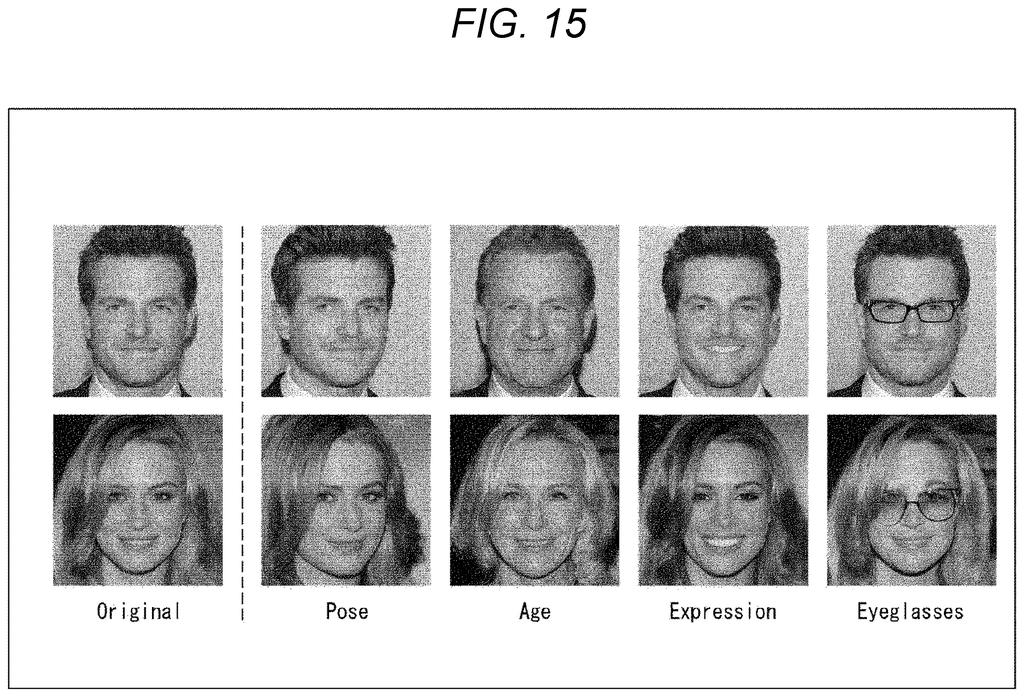
The present technology can be applied to, for example, a data generation device that generates data such as a face image.
Translation: This method can be used by AI tools to create realistic digital portraits of human faces.
What this means for AI image generation at scale
For teams building AI systems that depend on large, labeled image datasets, data scarcity is a real constraint. Generating synthetic training data is an established workaround, but naive generation often produces outputs that cluster too tightly around a few examples or drift too far from the desired distribution. Sony's dual-distribution approach directly addresses that tension by keeping outputs tethered to real input data while pulling in variety from learned patterns.
The patent names face images as an explicit use case, which connects directly to Sony's semiconductor business and its image sensors used in cameras and phones. Generating controlled, varied face data has applications in camera autofocus tuning, facial recognition training, and image quality testing. Researchers and developers working in computer vision and Big Tech patent news around synthetic data generation will recognize this as part of a broader effort by sensor and chip companies to own the full pipeline from image capture to AI training.
Sony's 343rd filing we've tracked in our Sony coverage since May joins a run that includes a dual-mode pixel design and glare-based light sourcing.
The real win for anyone building this kind of software shows up before training even starts, in the hours saved not photographing or tagging thousands of faces. By mixing two mathematical guides, the system squeezes more variety out of each starting image, so you need fewer starting images overall.
Whether that saving is huge or modest depends on details the patent leaves open. But the core idea is solid, and it targets a real, well-known headache in building AI systems.
There are more where this came from
We read every patent application Big Tech publishes and send you the ones worth knowing. Plain English, free, every week.
The drawings
25 drawing sheets from US 2026/0244920 A1 · click any drawing to enlarge


Want this weekly breakdown for a company we don't cover? Patentlyze Pro →
Be the first to weigh in