
Sony Patents a Pose-Matching System That Scores You the Same From Any Angle
Sony is patenting a pose-evaluation system that gives you the same score whether you're facing the camera head-on, standing off to the side, or crouching — a deceptively hard problem that trips up most body-tracking software today.
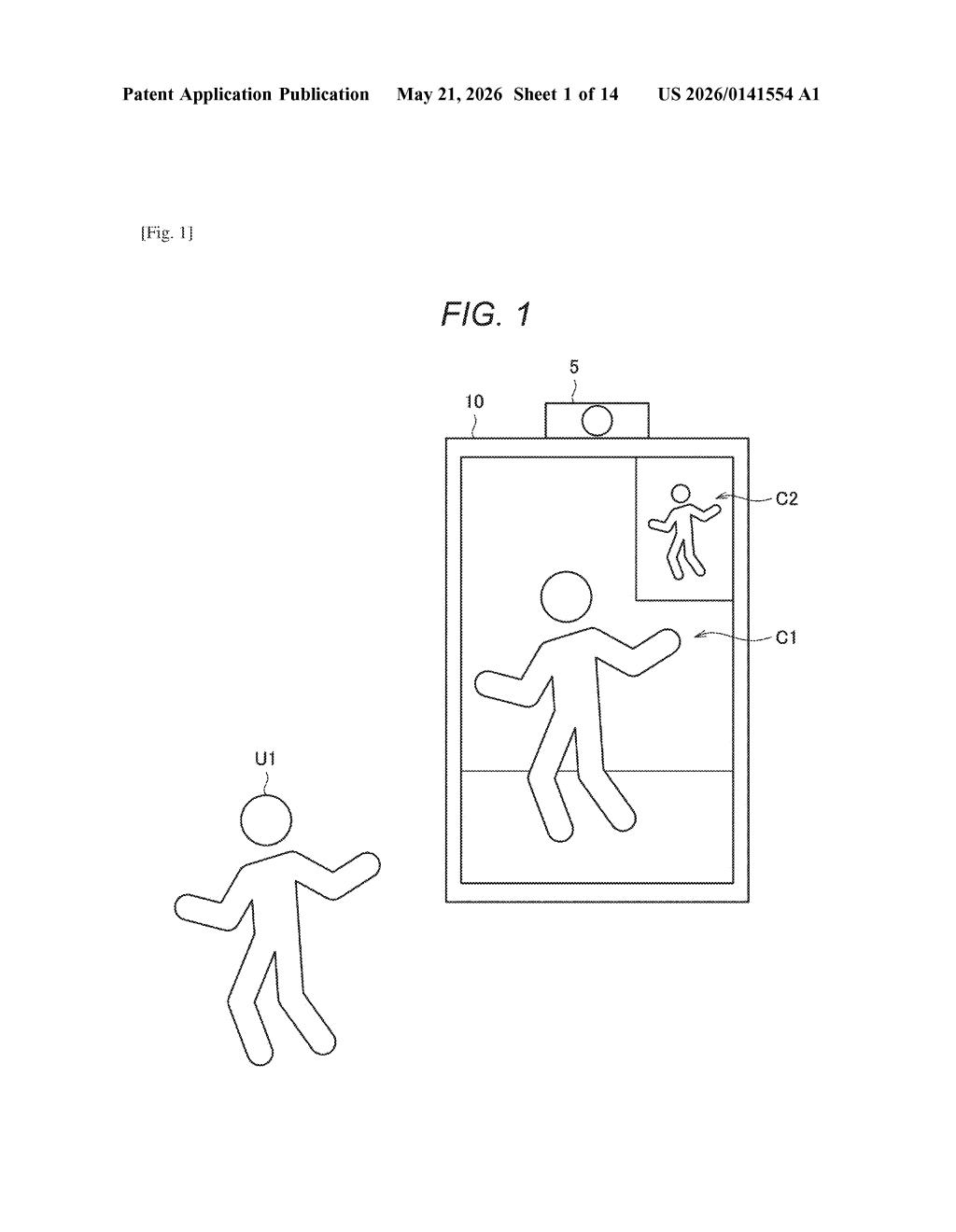
What Sony's angle-independent pose scoring actually does
Imagine you're following a yoga tutorial on your TV and the app grades how well you're holding a pose. You nail the warrior stance — but then you shift a few feet to the left to avoid the coffee table, and suddenly your score tanks. The app doesn't know you moved; it just sees different joint positions and calls it wrong.
That's the problem Sony is trying to solve here. This patent describes a system that tracks your body, builds a skeleton model of your joints, and then compares your pose against a reference — but normalizes for where you're standing and which way you're facing. Whether you're in front of the sensor, off to the side, or rotated, the system should output the same similarity score for the same pose.
The practical upshot: fitness coaching apps, dance games, physical therapy tools, or any AR/VR experience that grades your movement could become far more forgiving — and far more accurate — about where you're actually standing in the room.
How the skeleton estimator normalizes position and posture data
The system has four core jobs running in sequence:
- Acquire model data — load a reference pose (think: the "correct" warrior stance or dance move) that the user is supposed to match.
- Capture pose data — using the user's current position and body orientation (posture), gather raw positional data about how their body is arranged in space.
- Estimate skeleton data — convert that raw data into a structured skeleton: a set of joint positions (shoulders, elbows, hips, knees, etc.) that describe the body's configuration.
- Output a similarity score — compare the estimated skeleton against the model and return a score representing how closely the user's pose matches.
The key claim is the invariance guarantee: even when the user moves to a different spot in the room (different position) or rotates their body (different posture), the system should produce the same similarity result for the same underlying pose. In practice, this likely means the skeleton estimation step applies a normalization or transformation — such as converting joint positions into a body-relative coordinate frame — so that absolute position and facing direction are factored out before comparison.
What this means for fitness apps and motion-capture tools
Most body-tracking systems today are sensitive to where you're standing relative to the sensor. A score that fluctuates because you stepped sideways is frustrating and misleading — it makes pose-grading feel arbitrary rather than helpful. Sony's approach, if it works robustly, removes that friction entirely and makes the evaluation about your actual body shape, not your real-estate in the room.
Sony already ships products like PlayStation's camera-based move controllers and has deep ties to fitness and entertainment. A reliable, position-invariant pose scorer would be a natural fit for PSVR 2 fitness content, rhythm games like Just Dance competitors, or physical therapy applications where precise feedback matters. It's also the kind of foundational technology that could quietly underpin a lot of future spatial-computing experiences.
This is a solid, practical patent tackling a real pain point in body-tracking UX — the 'you moved two feet and now you're failing' problem is genuinely annoying in every fitness game that exists. It's not flashy computer vision research, but if Sony's normalization approach is robust enough to handle real-world sensor noise and partial occlusion, it's exactly the kind of invisible infrastructure that makes consumer products feel polished.
Get our take in your Top Stories
Liked this breakdown? Add Patentlyze as a preferred source on Google, and our plain-English take shows up more often in your Top Stories the next time Sony patent news breaks.
There are more where this came from
We read every patent application Big Tech publishes and send you the ones worth knowing. Plain English, free, every week.
Want this weekly breakdown for a company we don't cover? Patentlyze Pro →