
Samsung Patents a Thin VR Headset Optic That Sharpens Focus as Your Eye Moves
One of the most persistent complaints about VR headsets is that everything looks crisp at exactly one distance and blurry everywhere else. Samsung's new patent describes a compact optical stack designed to fix that, letting the display refocus the way your eyes naturally do.
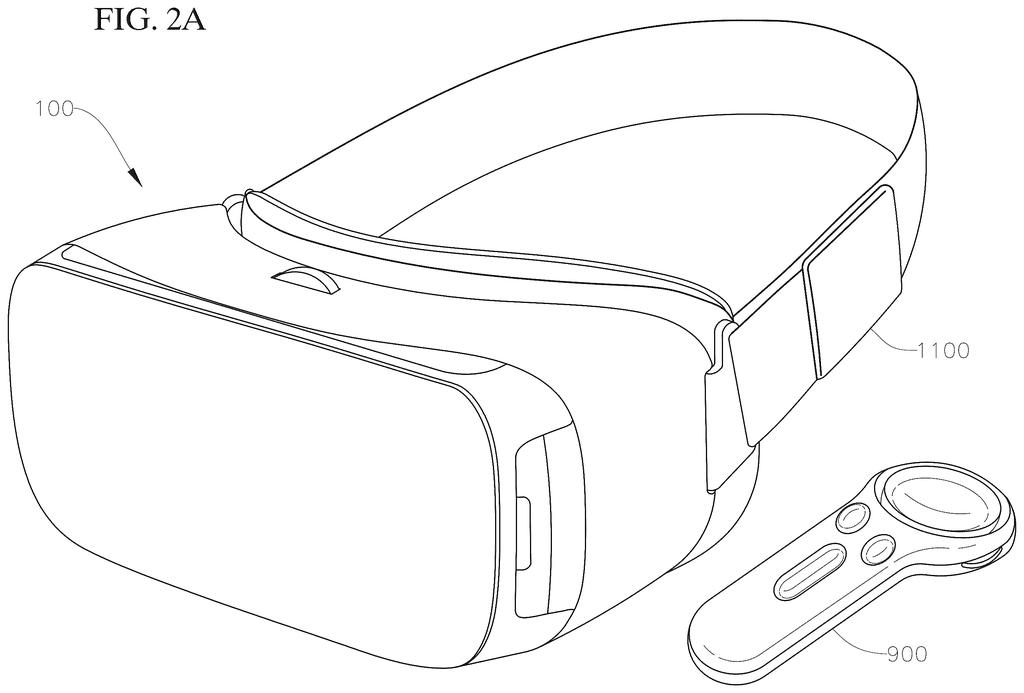
What Samsung's variable-focus VR optics actually do
Ever struggled to read a menu in VR while the virtual world behind it looks sharp, or vice versa? That discomfort comes from a fundamental flaw in most headset optics: they can only focus at one fixed distance, forcing your brain to do awkward work the whole time you're wearing the device.
Samsung's patent describes a system of three lenses, several special optical films, and a type of electrically switchable lens called a geometric phase lens that work together to let the headset shift focus dynamically. The goal is to show you something close up and something far away in the same session without your eyes feeling like they're being pulled in two directions.
For you as a user, this could mean less eye strain on long VR sessions and a display that feels more like a window than a screen. The patent is focused on the optical engineering underneath the experience, not a specific product, but the problem it targets is very real.
a first lens comprising a first curved surface and a second curved surface; a second lens comprising a concave first surface and a flat second surface; a third lens comprising a first surface and a convex second surface; …
Translation: The headset uses three specialized lenses with different curved and flat shapes to bend light.
How the lens stack folds light to shift focus
The optical system in this patent uses three lenses arranged in sequence, each with specific curved or flat surfaces designed to bend and shape light precisely. Sandwiched between and around these lenses are several specialized optical components.
The key players are:
- A reflective polarizer on the first lens, which bounces light back and forth inside the stack instead of letting it pass straight through. This "folded" path lets the whole system be much thinner than a traditional lens of the same optical power.
- A quarter waveplate on the second lens, which rotates the polarization state of light (essentially flipping which direction the light waves are oriented) each time light passes through it, enabling the bounce-back trick to work.
- A circular polarizer on the display itself, which controls which light enters the system in the first place.
- At least one geometric phase lens (GPL) between the third lens and the display. A GPL is a thin film that acts as a lens whose power can be switched on or off depending on the polarization state of incoming light. By stacking or switching GPLs, the system can shift its effective focal length, meaning it can refocus.
The combination of the folded light path (catadioptric, meaning it uses both lenses and mirrors/reflectors) with switchable GPLs is what makes the variable focus possible in a compact form factor.
… at least one geometric phase lens between the third lens and the circular polarizer.
Translation: Specialized liquid crystal layers help steer and focus the image as your eyes move.
What this means for the next wave of VR headsets
Eye strain is one of the top reasons people take off VR headsets after 20 or 30 minutes. A display that can actually shift its focal plane to match where you're looking could make extended use far more comfortable, which matters a lot if headsets are going to be used for work, not just gaming.
The optical approach here, folding light to keep the stack thin while using switchable phase lenses to handle focus, is the kind of problem that new Big Tech patents in the AR and VR optics space are increasingly trying to solve from multiple angles. Samsung Display filing this specifically means the display panel side of the industry, not just the headset makers, is investing in solving the optics problem at the source.
Samsung's new filing is the 30th we've tracked since May in the AR glasses race, building on ideas like adapting content to surroundings and showing real keyboards in virtual space.
Claim 1 describes a very specific arrangement of lenses and light-controlling layers inside a virtual reality headset. The combination is narrow enough to match a real product, but broad enough to cover several ways a factory might build it.
If approved, this claim would make it much harder for rivals to build a similar headset using the same layout of lenses and polarizing filters without paying for a license. The exact reach of the claim depends on how a patent examiner defines one key component, but as written, this gives the filing company real power to protect its production design.
Get our take in your Top Stories
Liked this breakdown? Add Patentlyze as a preferred source on Google, and our plain-English take shows up more often in your Top Stories the next time Samsung patent news breaks.
There are more where this came from
We read every patent application Big Tech publishes and send you the ones worth knowing. Plain English, free, every week.
The drawings
10 drawing sheets from US 2026/0244020 A1 · click any drawing to enlarge


Want this weekly breakdown for a company we don't cover? Patentlyze Pro →
Be the first to weigh in