
Nvidia Patents a Way to Map Road Hazards Point by Point for Self-Driving Cars
Before a self-driving car can decide how fast to take a curve, it needs to know whether the road is wet, uneven, or crumbling. Nvidia's new patent describes a system that builds a precise, point-by-point picture of the road surface in real time using both cameras and laser sensors.
How Nvidia's road-reading AI helps self-driving cars feel the ground
Every time a self-driving car rolls over a pothole or hits a wet patch, its sensors have to figure out what just happened, and fast. Most cars do a decent job spotting large obstacles, but the subtle stuff, slight dips, water film, loose gravel, is harder to catch before the wheels are already on it.
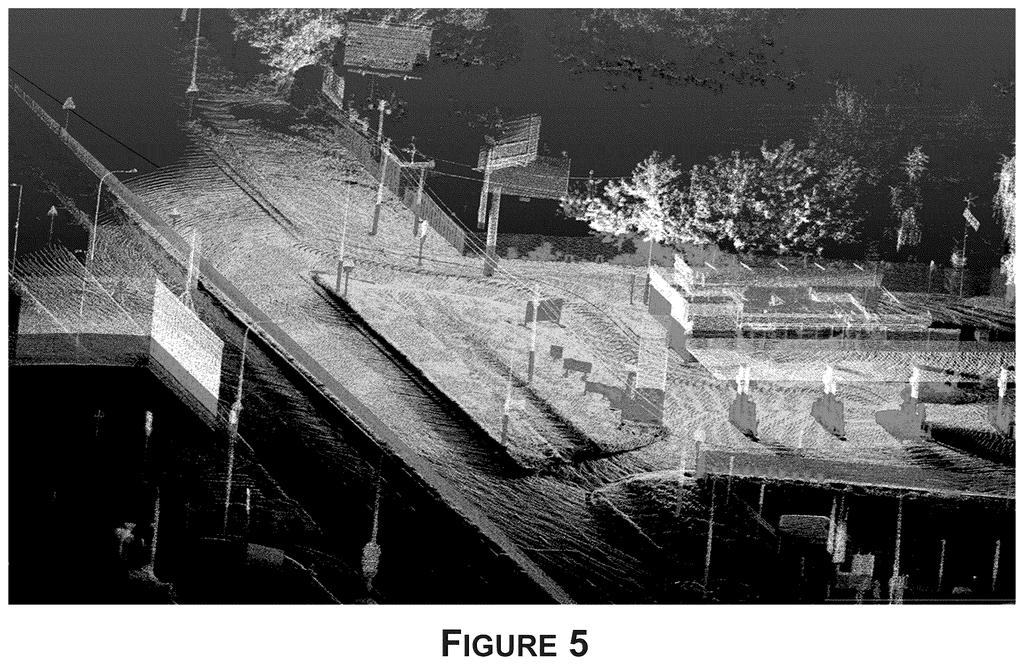
Nvidia's patent describes a system that takes data from laser sensors (LiDAR) and cameras, then builds a detailed map of the road surface ahead along the exact path the car is expected to travel. It flags things like surface height changes, driving conditions, and potential hazards at individual points on the road, not just as rough zones.
The system also includes a way to automatically generate training data from real sensor logs collected by test vehicles, so the AI can keep learning what different road conditions actually look like without engineers having to label everything by hand.
… generating a ground truth representation of one or more features of the detected ground surface at the one or more sampled points.
Translation: Creating a reliable baseline of road conditions based on specific points along the path.
How the transformer fuses LiDAR and camera data into a road map
At the core of the patent is a transformer model (the same class of AI architecture behind large language models, adapted here for sensor data) that takes in two kinds of input: laser range readings from a LiDAR sensor, which measures precise distances by bouncing light pulses off the road, and image features from a camera. The transformer combines those two streams and produces a detailed description of the road surface.
The system samples specific points along one or more predicted driving trajectories, meaning it focuses its attention on where the car is actually going rather than scanning everything equally. For each of those points it estimates:
- Refined height (is the road flat, raised, or sunken here?)
- Driving condition (wet, dry, icy?)
- Artifact labels (sensor noise, reflections, or other data glitches that could mislead the car)
A separate pipeline tackles the problem of training data. Collecting labeled examples of every road condition by hand would take years. Instead, the patent describes an automated process that ingests raw sensor logs from data collection vehicles (test cars driving real routes) and derives ground truth labels automatically, producing surface height models, condition tags, and per-point artifact flags without human annotators doing the heavy lifting.
The resulting detections feed directly into the vehicle's planning and control stack, letting the car adjust speed, steering, or trajectory before it reaches a problem spot.
A transformer may use sampled image and LiDAR features to extract and decode a representation of one or more features of each point …
Translation: An AI model combines camera and laser data to analyze individual points on the ground.
What this means for autonomous vehicle safety pipelines
For anyone riding in or relying on autonomous vehicles, road surface awareness is one of the less-discussed but very real gaps between current systems and true all-weather reliability. A car that can only detect potholes after driving over them, or that doesn't distinguish between a wet road and a dry one, is leaving meaningful safety margin on the table. This patent pushes that capability further down the road, literally, by predicting what the surface will be like at each point along the planned path rather than just reporting what's directly in front of the sensor.
Nvidia's approach also matters because it tackles the data problem alongside the detection problem. Autonomous driving teams spend enormous resources labeling training data, and an automated pipeline that generates ground truth from real-world sensor logs could speed up the development cycle considerably. Autonomous driving sensor fusion is one of the more active areas covered among interesting tech patents, and this filing sits squarely in that stream, showing where the effort to make road-surface perception more reliable is heading.
Nvidia's 40th filing we've tracked since May in our self-driving sensor race watchlist builds on one that fills sensor blind spots and one on syncing multiple sensors.
Getting this technology working in the real world first needs several things to line up: cameras and laser sensors that are precisely tuned together, all feeding data at exactly the same moment, plus a reliable way to verify the system is actually right. That chain is achievable, but it is not quick.
The part about automatically creating labeled training images may arrive first. Better training data helps any detection system, no matter what software runs on top.
Nvidia already owns the computing power and sensor networks that self-driving programs run on. The building blocks are nearby. Putting them together still takes time.
There are more where this came from
We read every patent application Big Tech publishes and send you the ones worth knowing. Plain English, free, every week.
The drawings
16 drawing sheets from US 2026/0241954 A1 · click any drawing to enlarge


Want this weekly breakdown for a company we don't cover? Patentlyze Pro →
Be the first to weigh in