
Qualcomm Patents a Way to Pre-Map Roads So Cars See Farther Ahead
Self-driving assist systems have a blind spot: they only see what's directly in front of them, right now. Qualcomm's new patent describes a system that scouts a route in advance using panoramic photography and 3D reconstruction, so a car's driver-assist features know what's coming long before the car gets there.
How Qualcomm's route pre-scan helps cars see road signs
You're driving down a highway you've never taken before, and a speed-limit change is posted around a blind curve. Your car's camera doesn't see it until you're almost on top of it. That reaction window is the problem Qualcomm wants to solve.
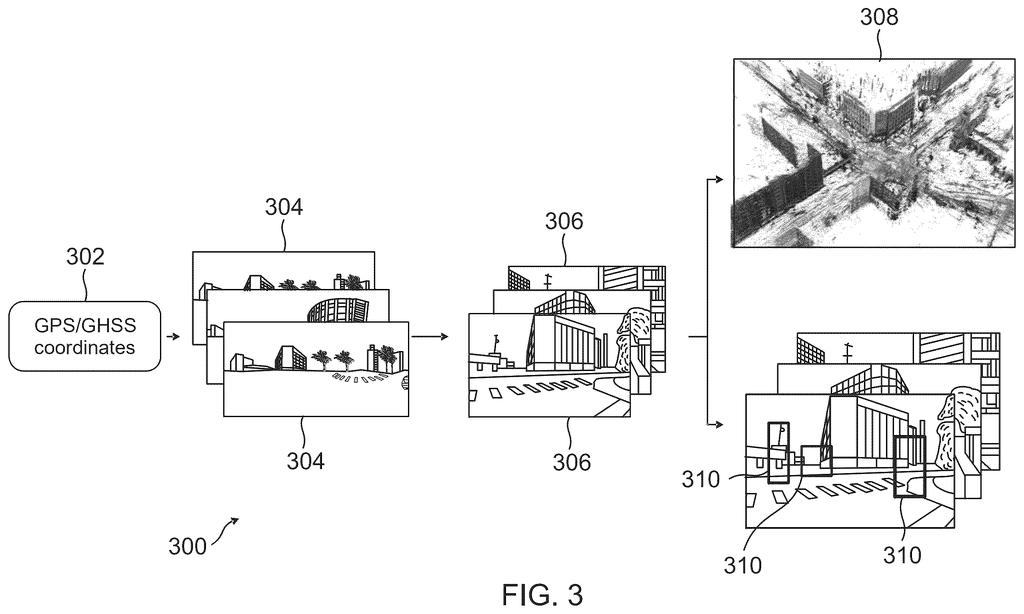
The idea is to pre-scan a planned route using 360-degree panoramic photos, the kind you'd find on a mapping service like Google Street View. Those photos get converted into ordinary flat images, fed through an AI model that identifies static road objects (signs, lane markings, barriers), and then processed again to produce a 3D model of the road. The result is a detailed map of where every fixed object sits along your route, built before your trip even begins.
While you drive, your car's driver-assist system uses that pre-built map as a guide, combining it with live camera feeds. Instead of reacting to a sign when it appears, the system already knows the sign is there and roughly where. That gives it more time to respond accurately.
… converting each of the plurality of panoramic pictures into a plurality of perspective pictures; applying one or more machine learning models to the plurality of perspective pictures to generate information related to a plurality of static road objects …
Translation: The system turns wide-angle camera views into standard images so AI can identify fixed items like signs and barriers.
How the 360-degree photos become a 3D road map
The method starts with panoramic pictures tied to a specific planned driving route. These could come from mapping databases that have already photographed roads in 360 degrees. The system converts each panoramic image into multiple perspective pictures (flat, forward-facing frames), because most AI vision models are trained on that kind of image rather than wide-angle panoramas.
An AI model then analyzes those flat frames to identify static road objects: traffic signs, lane markings, guardrails, and similar fixed infrastructure. Separately, the system runs a 3D reconstruction on the same set of images, building a point cloud (a dense collection of 3D coordinates that describes the geometry of the environment, like a spatial dot-map of the real world). That point cloud lets the system extract precise locations for every identified object.
The output is essentially a geo-referenced inventory: object type plus 3D position, locked to the route. Once the vehicle starts moving, the vehicle assistance system draws on that pre-built inventory alongside its live sensor data.
- Panoramic source images converted to flat perspective frames
- AI model identifies static objects (signs, markings, barriers)
- 3D point-cloud reconstruction pins each object to a location
- Live driver-assist system uses the map while driving
… generating a 3D point cloud corresponding to the intended travel trajectory of the vehicle by performing a 3D reconstruction on the plurality of perspective pictures; extracting, using the 3D point cloud, locations of the plurality of static road objects …
Translation: The car builds a 3D map of the road ahead to pinpoint exactly where obstacles are located before it reaches them.
What this means for driver-assist chips in production cars
For drivers, the practical upside is a driver-assist system that reacts to road features earlier and more reliably, especially on unfamiliar roads or in poor visibility. Pre-mapped object locations reduce the workload on in-car cameras at the moment the car actually passes a sign, which matters in fast-moving highway driving where a fraction of a second counts.
For Qualcomm specifically, this sits squarely in its automotive chip business, where it supplies the processors that run driver-assist software in many production vehicles. A patented pipeline for pre-route mapping could become part of the software stack bundled with those chips, making it harder for car makers to swap in a competitor's solution. The automotive sector is one of the more active areas among new Big Tech patents in computer vision, and Qualcomm is filing steadily to defend its position there.
Qualcomm's 30th filing we've tracked since July in our self-driving sensing race watch builds on earlier work, including 3D maps of changing places and a 3D graphics surroundings trick.
Claim 1 is written broadly. It doesn't specify where the panoramic photos come from, how many are needed, which AI model does the detection, or what "vehicle assistance system" means in practice. That breadth is a deliberate choice: a claim this wide could potentially cover any pipeline that (1) takes route-linked panoramic images, (2) converts them to perspective frames, (3) runs a machine learning model on those frames, (4) builds a 3D point cloud, and (5) uses the result to operate a driver-assist feature while driving.
That scope is ambitious. Prior art in this space is dense. Google's Street View infrastructure, academic multi-view 3D reconstruction research, and existing HD-mapping systems used by companies like Mobileye all touch parts of this pipeline. The USPTO will likely push back and force Qualcomm to narrow the claim before it grants. The question is how much specificity survives that process.
If a narrowed version does grant, it could still matter commercially. Qualcomm's leverage here isn't blocking every self-driving company; it's establishing IP ownership over a specific pre-drive workflow that runs on the kinds of chips and software stacks Qualcomm sells to auto manufacturers. Even a narrow granted claim can be useful in licensing negotiations with car makers who want a legal clean bill of health for their driver-assist features.
Get our take in your Top Stories
Liked this breakdown? Add Patentlyze as a preferred source on Google, and our plain-English take shows up more often in your Top Stories the next time Qualcomm patent news breaks.
There are more where this came from
We read every patent application Big Tech publishes and send you the ones worth knowing. Plain English, free, every week.
The drawings
6 drawing sheets from US 2026/0251470 A1 · click any drawing to enlarge


Want this weekly breakdown for a company we don't cover? Patentlyze Pro →
Be the first to weigh in