
Nvidia Patents an AI System That Adds Realistic Sounds to 3D Scenes Automatically
Sound design in 3D environments is still largely a human job, with artists manually hunting for audio clips and placing them on every door, footstep, and waterfall. Nvidia's new patent hands that chore to a language model.
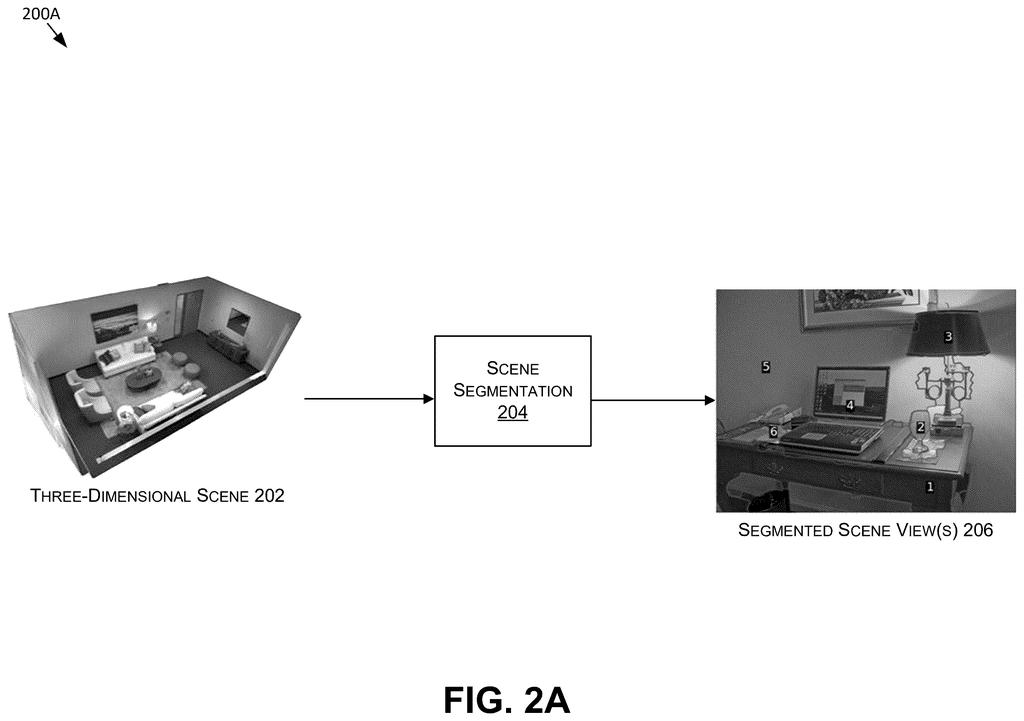
How Nvidia's AI picks sounds for objects in a scene
Every time you walk into a room in a video game, dozens of tiny decisions are behind every sound you hear: the creak of a floorboard, the hum of a refrigerator, rain tapping a window. A human audio designer chose each one, found a recording that fit, and attached it to the right object. That process takes enormous time and expertise.
Nvidia's patent describes a system that would let an AI handle much of that work. You feed the system a scene description, whether that's a 3D virtual room, a game level, or a simulation environment, and it reads the objects and features in that scene. Then, using a language model (the same family of AI behind tools like chatbots), it selects an appropriate audio sample for each object or feature and attaches it to the scene.
The result is a scene that already has sound mapped to it, ready for further refinement. Think of it as auto-filling a spreadsheet with reasonable first guesses, rather than starting from a blank page. The patent doesn't claim the sounds will be perfect, but getting a strong first draft automatically could save audio teams real hours.
… determine, using a language model, a selection of an audio sample for the at least one object or environmental feature based on at least one attribute of the one or more attributes …
Translation: The system uses AI to pick the right sound effects for objects in a 3D scene based on their specific characteristics.
How the language model selects and places audio samples
The system works in three steps:
- Scene analysis: The system takes in one or more representations of a scene, such as text descriptions, 3D geometry data, or metadata about objects in the environment. It extracts attributes from these representations, identifying what objects and environmental features are present (a wooden door, a gravel path, a running stream).
- Language model selection: A language model (an AI trained on large amounts of text and, in this context, audio-text pairings) takes those attributes as input and selects an audio sample from a library that best fits each object or feature. The model uses its learned associations between descriptions and sounds to make that match, rather than relying on hardcoded lookup tables.
- Scene update: The system outputs an updated scene representation that now includes the chosen audio sample attached to the relevant object or feature. This updated scene can then be rendered or passed to downstream tools.
The patent's claim is deliberately broad about what counts as a scene representation, meaning the same pipeline could apply to text-described environments, rendered 3D worlds, or simulation outputs. The language model's role here is as a retrieval and matching engine, mapping scene semantics to audio assets rather than generating audio from scratch.
In various examples, systems and methods are disclosed relating to implementing language models for spatial sound synthesis.
Translation: Nvidia is developing new ways to use AI to automatically generate realistic 3D audio for virtual environments.
What this means for game and simulation audio pipelines
Audio is one of the most labor-intensive parts of 3D content creation, and it scales badly. A game world with thousands of distinct objects technically needs a sound decision for each one. Automating even the first-pass selection step could compress timelines significantly for studios building games, virtual reality environments, or simulation platforms, all areas where Nvidia has deep product interests through its Omniverse platform.
For Nvidia specifically, this fits neatly into a broader push to automate every layer of 3D scene creation, not just geometry and lighting but now audio too. Game developers, simulation engineers, and VR content teams are the readers this filing actually touches, and for them the value is straightforward: less manual tagging, faster iteration. Nvidia's audio work sits alongside other latest Big Tech patents in spatial computing and AI-driven content generation, a cluster of filings that suggests the industry is building toward fully AI-assisted 3D production pipelines.
Nvidia's 406th filing among the patents we've tracked since May adds to a self-driving thread that includes road hazard mapping, sensing blind spots, and our Nvidia coverage.
Making sound effects fit a 3D scene takes real time. Every object and every room needs the right audio clip, and finding those clips by hand eats hours on every project.
An AI text tool is a logical fit here because matching words to meaning is exactly what those tools do well. Feed it a scene description, and it ranks which sound clips belong.
The real question is whether its choices are actually correct. A confident wrong pick can waste more time than getting no suggestion at all.
There are more where this came from
We read every patent application Big Tech publishes and send you the ones worth knowing. Plain English, free, every week.
The drawings
9 drawing sheets from US 2026/0247097 A1 · click any drawing to enlarge


Want this weekly breakdown for a company we don't cover? Patentlyze Pro →
Be the first to weigh in