
Qualcomm Patents a Way for Phones to Switch Between Cell Towers and Satellites Automatically
Your phone doesn't know if it's talking to a cell tower or a satellite orbiting hundreds of miles overhead, and that confusion wastes battery and drops data. Qualcomm's new patent tries to fix that by giving devices a clear signal about which type of network they're on.
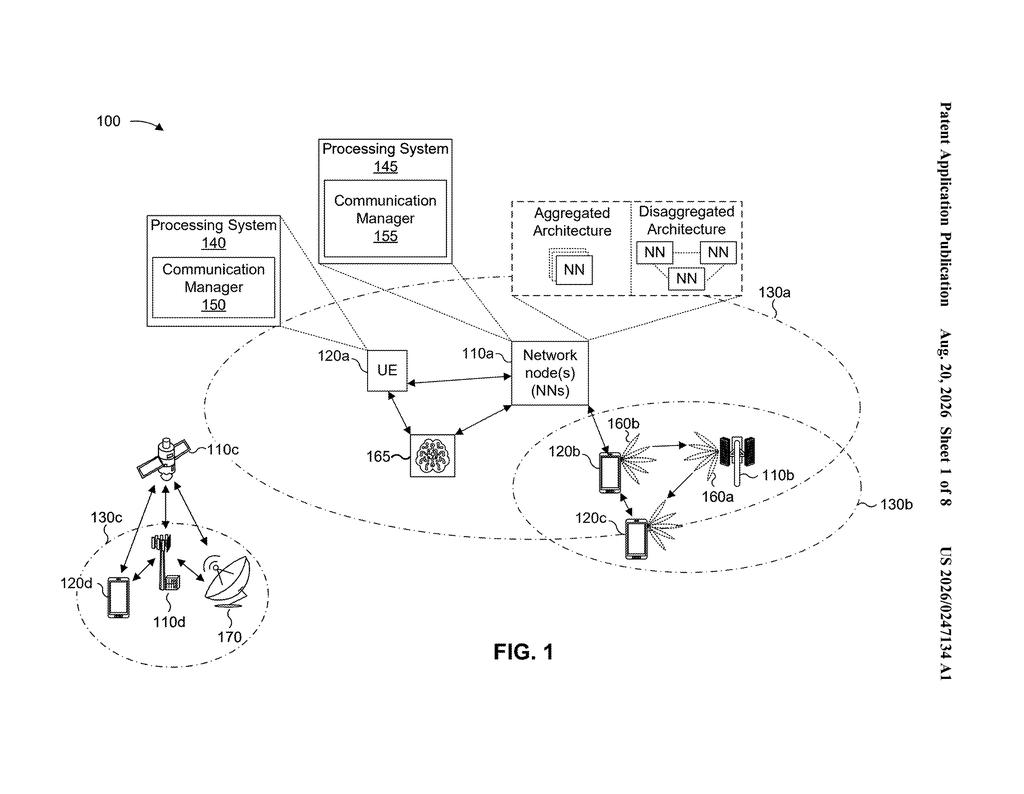
What Qualcomm's satellite-cell switching patent actually does
Ever lost your signal driving through a dead zone, even when your carrier advertises satellite backup? The problem isn't the satellite itself. It's that your phone doesn't automatically know it has switched from a normal cell tower to a satellite connection, so it keeps trying to communicate the wrong way.
Qualcomm's patent describes a system where the network sends your phone a small piece of information called a cell type indication. That label tells your phone whether it's connected to a regular ground-based tower or a satellite. Once the phone knows, it adjusts its transmission settings to match what that type of connection actually needs, rather than guessing.
The result, in theory, is a phone that talks to satellites as efficiently as it talks to towers, without you having to do anything. No toggling modes, no dropped handoffs. The device just adapts.
receive a cell type indication for cell type information associated with a network node that supports communication via one or more of a terrestrial network mode or a non-terrestrial network (NTN) mode …
Translation: Your phone reads a signal telling it whether it is talking to a regular cell tower or a satellite in space.
How the phone reads cell type signals and adjusts its settings
The patent covers a method for handling what the wireless industry calls non-terrestrial networks (NTN), which is the technical label for satellite-based mobile connections. The problem it targets is a real one: satellites and ground towers have very different physics. A satellite is hundreds or thousands of kilometers away, which means signals take longer to arrive (higher latency) and require different timing and power settings.
Right now, a phone connected to a hybrid network node (one that can operate in either tower mode or satellite mode) may not know which mode is active at any given moment. The patent proposes that the network node sends a cell type indication, essentially a short tag embedded in the network signal, telling the device exactly what kind of connection it has.
Armed with that tag, the device applies the correct NTN parameters (settings tuned for satellite physics, like adjusted timing offsets and signal tolerances) even when the physical node it is connected to is nominally listed as a terrestrial cell. This matters because a terrestrial-labeled node might actually be relaying data through a satellite backhaul, and the device would otherwise use the wrong settings.
- The network node broadcasts a cell type tag alongside normal network signals.
- The phone reads that tag and selects the matching parameter set.
- The phone transmits using those parameters, keeping the link stable regardless of what is underneath the connection.
… transmit, to the network node, a communication in accordance with one or more parameters for the NTN mode, wherein the one or more parameters for the NTN mode are associated with the cell type information …
Translation: The device then adjusts its settings automatically to use satellite communication rules based on that tower's details.
What this means for satellite-connected phones and tablets
For everyday users, the practical payoff is fewer silent failures when your phone hands off between a cell tower and a satellite link. Carriers are building out satellite connectivity fast, and the weakest link right now is often the device side: phones that don't adapt their behavior to the link they are actually on. This filing addresses that gap at the chip and firmware level, which is where Qualcomm operates.
The broader picture is that satellite-to-ground handoffs are one of the messier unsolved problems in the push to make satellite connectivity feel as reliable as LTE. Qualcomm's modem chips sit inside the majority of flagship Android phones, so a fix at the modem layer could reach a large share of devices. Readers who follow the wireless side of this industry will find this alongside other plain-English patent summaries covering how chipmakers are rewriting the rules for satellite and terrestrial coexistence.
Qualcomm's 330th filing among the patents we've tracked since May joins earlier applications on reading multiple fingerprints through a display and splitting graphics work across frames.
When a phone shifts to a satellite connection in a rural or at-sea area, the timing between the phone and the network goes slightly out of sync. That mismatch forces data to resend, drains the battery, and slows everything down. This happens millions of times a day, invisibly.
Qualcomm's fix works by slipping a small label into signals the network already sends, telling the phone what kind of connection it is on. No new hardware. No new airwaves needed. A real problem, fixed at the source.
Get our take in your Top Stories
Liked this breakdown? Add Patentlyze as a preferred source on Google, and our plain-English take shows up more often in your Top Stories the next time Qualcomm patent news breaks.
There are more where this came from
We read every patent application Big Tech publishes and send you the ones worth knowing. Plain English, free, every week.
The drawings
8 drawing sheets from US 2026/0247134 A1 · click any drawing to enlarge


Want this weekly breakdown for a company we don't cover? Patentlyze Pro →
Be the first to weigh in