
Apple Patents a Way for iPhones to Switch Between Cell Towers and Satellites on the Same Frequency
Most people assume cell towers and satellites operate on completely separate channels. Apple is filing patents to change that, describing a phone that can simultaneously measure signals from both on the same frequency band and decide which one to connect to.
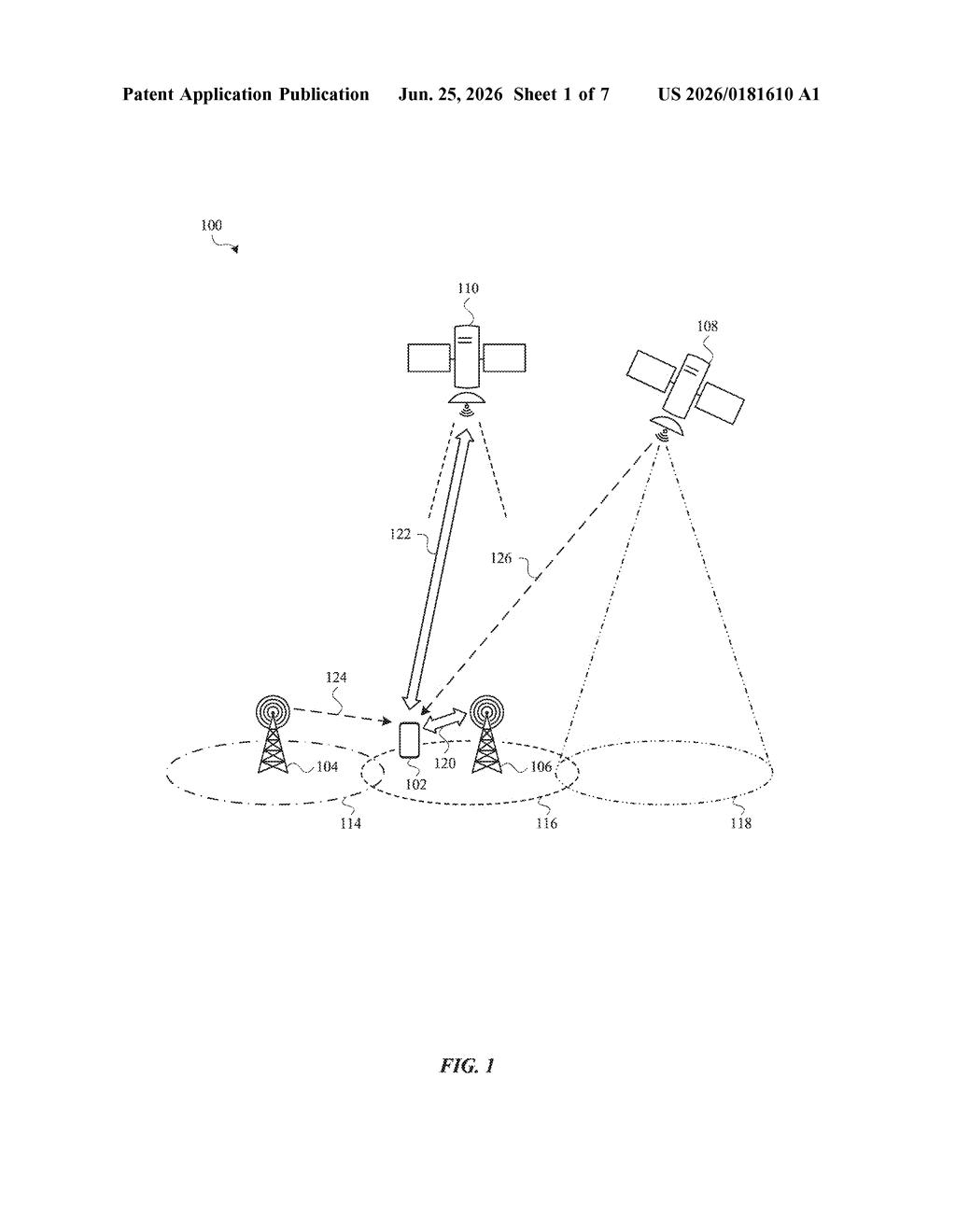
What Apple's shared-spectrum handoff actually does
Imagine you're hiking and your phone keeps dropping calls because the nearest cell tower is too far away. A satellite overhead could pick up the slack, but today's phones treat those two networks as completely separate systems, often requiring you to manually switch or use a dedicated app.
Apple's patent describes a phone that handles this automatically. The device would receive a configuration from the network telling it to scan a single radio frequency band for signals from both a ground-based cell tower and a satellite at the same time. It then measures the strength of both, and uses that information to decide where to connect or whether to hand off the connection.
This is different from the emergency satellite texting that exists today, which is a separate, limited system. This approach would treat satellite and cellular as two options on the same dial, letting the phone pick the best one in real time.
How the phone reads tower and satellite signals simultaneously
The patent describes a user equipment (UE, meaning any phone or device) that receives a neighbor cell measurement configuration. In plain terms, that's a set of instructions from the network telling the device which frequency band to scan and what kind of signals to look for.
Under this configuration, the phone listens for reference signals (standardized radio pulses used to gauge signal quality) from two different types of sources on the same band:
- A terrestrial network (TN) device: a conventional ground-based cell tower or base station
- A non-terrestrial network (NTN) device: a satellite or high-altitude platform in orbit
Once it has measurements from both, the phone performs a mobility operation, which covers decisions like staying connected to the current cell, handing off to a better cell, or initiating a connection. The key innovation is that both terrestrial and satellite signals are treated as inputs to the same decision, rather than being evaluated by separate systems that never talk to each other.
The claim is intentionally broad: the mobility decision can be based on the tower signal, the satellite signal, or a combination of both.
What this means for satellite connectivity in iPhones
Carriers and standards bodies have been working toward integrated terrestrial-satellite networks under the 3GPP standards that govern modern cellular. Today, satellite connectivity on phones is largely a separate, bolt-on feature. A system that measures both signal types on shared spectrum could enable much smoother, faster fallback to satellite when ground coverage disappears, without the user noticing any gap.
For Apple, this fits a clear direction: the iPhone 14 introduced emergency satellite SOS, and subsequent models have expanded that capability. A patent like this suggests Apple's engineers are working on making satellite connectivity less of a last-resort button and more of a routine part of how your phone manages its connection.
This is a cellular standards patent, and those are rarely exciting on their own. But this one slots directly into Apple's existing satellite-connectivity roadmap, and the claim is broad enough to cover the core handoff logic that would make satellite feel like a real network tier rather than an emergency feature. Worth tracking.
There are more where this came from
We read every patent application Big Tech publishes and send you the ones worth knowing. Plain English, free, every week.
Want this weekly breakdown for a company we don't cover? Patentlyze Pro →