
Apple Patents a Way for iPhones to Hand Off Between Cell Towers Without Draining the Battery
Every time your phone silently checks whether a nearby cell tower has a stronger signal, it burns battery. Apple is patenting a system that lets the phone use a tiny, low-power beacon instead of waking up its full radio hardware.
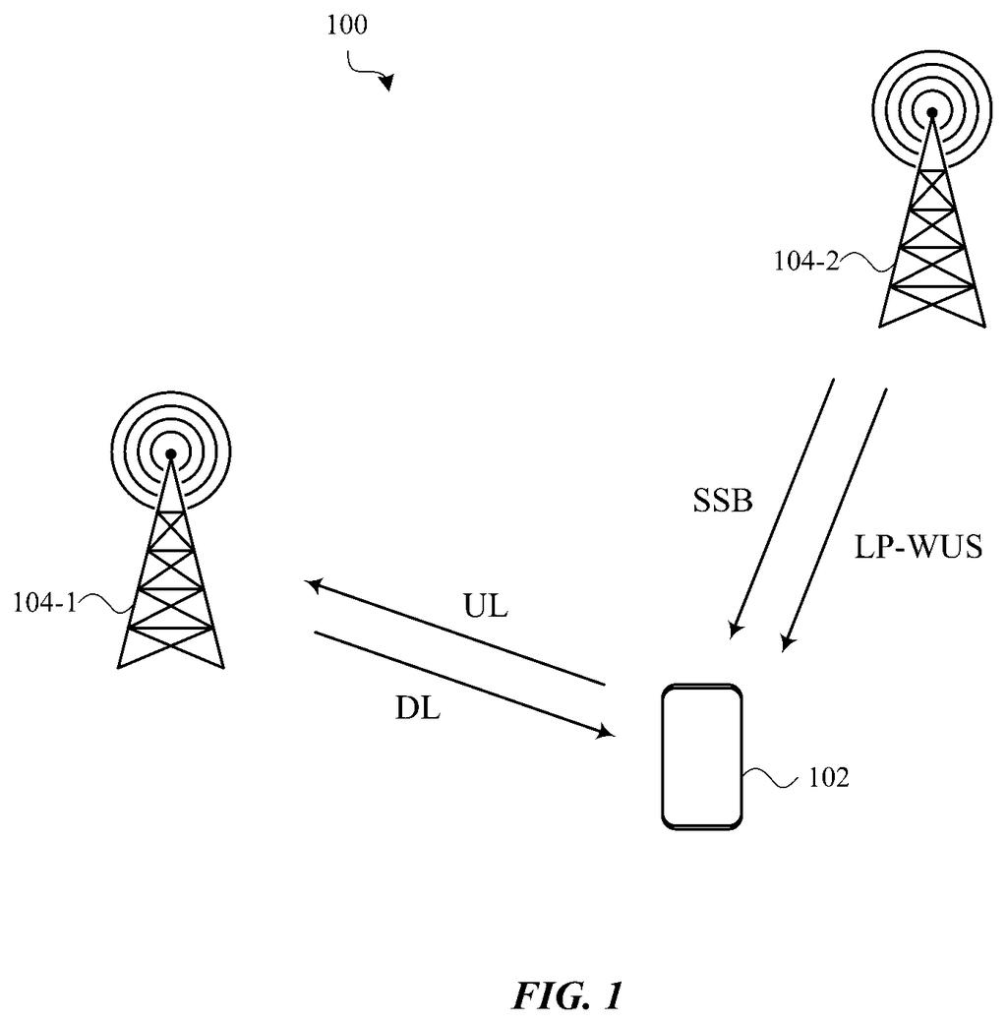
How Apple's low-power cell-switching idea actually works
You're on a long video call, moving around your house or office, and your phone is deciding every few seconds whether to stay connected to the current cell tower or switch to a closer one. That process, called mobility measurement, normally requires your phone to fire up its main radio, listen for a reference signal, and compare signal strength. Each of those checks eats battery.
Apple's patent describes a smarter handoff process. Instead of always using the main radio for this check, the phone could listen to a much weaker, low-power "wake-up" signal broadcast by a neighboring cell tower. The phone figures out whether switching over to that signal for measurement purposes makes sense, and if it does, it asks the network for permission to use it.
The practical win is that your phone's main radio stays asleep longer. Less radio activity means less power used, which is a real concern on 5G networks where radios are power-hungry.
… determine, based at least in part on whether the first measurement of the SSB requires the first measurement gap, whether to transmit, to a network, a request to use the LP-WUS for mobility measurement.
Translation: The phone decides whether to ask the network to use a low-power signal for switching towers based on its measurement needs.
How the chip decides which signal to measure and when
The patent centers on a piece of hardware called a low power wake-up receiver (LP-WUR), a secondary, energy-efficient radio chip that can listen for signals without waking up the device's main cellular transceiver.
Here is how the logic works:
- The phone receives a configuration for a low power wake-up signal (LP-WUS), a lightweight beacon broadcast by a neighboring cell tower.
- The phone then checks whether measuring the neighboring tower's main reference signal (called a synchronization signal block, or SSB) would require a "measurement gap," meaning it would need to pause its current connection to listen on a different frequency or timing window.
- Based on whether that gap is needed, the phone decides whether to ask the network to use the LP-WUS as a substitute measurement tool instead.
The key trade-off the patent is managing: if the main radio already has to pause to measure a neighbor cell (the gap scenario), it may be more efficient to offload that job entirely to the low-power receiver. The device communicates its preference back to the network, which keeps the network in the loop about how the phone is handling mobility.
A user equipment (UE) includes a transceiver, a low power wake-up receiver (LP-WUR), and a processor.
Translation: The device contains a special low-power receiver alongside its main transceiver to save battery life.
What this means for battery life on 5G devices
5G radios consume substantially more power than their 4G predecessors, and one underappreciated reason is the constant background work of checking nearby towers. If Apple can shift even some of that measurement work to a low-power secondary receiver, the result is longer battery life between charges, particularly in areas with many overlapping cell signals where handoff checks happen frequently.
Apple keeps filing on cellular power management at the chip and protocol level. For everyday users, the downstream benefit would show up as your phone lasting longer during calls and commutes, not as any visible feature, which is usually how the best battery improvements work.
Apple's 462nd filing in our Apple coverage since May follows applications like phones finding each other offline and screen as car key.
Claim 1 is narrower than it first appears. It covers the decision logic: specifically, using whether a measurement gap is required as the input that triggers a request to the network to switch measurement methods. That is a specific conditional flow, not a broad claim over all low-power cell measurement.
In practice, that narrowness matters. The claim would not block a competing phone from using LP-WUS for measurements in general; it would only be relevant if a competitor's device follows the same gap-check-then-request sequence. That is a meaningful but limited scope.
For readers, this is the kind of engineering work that never shows up in a feature list but extends battery life. Whether it survives patent examination unchanged is another question, since the underlying LP-WUS framework is defined by 3GPP standards, and Apple's contribution here is specifically in the device-side decision logic layered on top of that standard.
There are more where this came from
We read every patent application Big Tech publishes and send you the ones worth knowing. Plain English, free, every week.
The drawings
6 drawing sheets from US 2026/0292695 A1 · click any drawing to enlarge


Want this weekly breakdown for a company we don't cover? Patentlyze Pro →
Be the first to weigh in